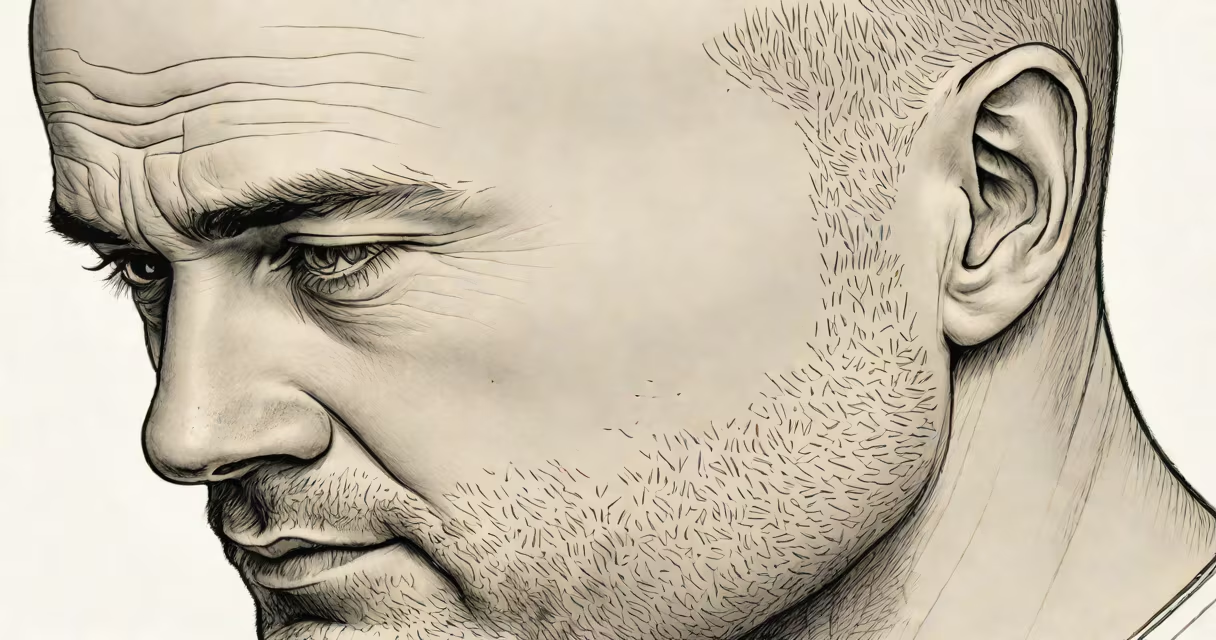
The average age male baldness typically begins between 30 and 40 years old, though genetic predisposition can trigger thinning or recession as early as the late teens. This condition stems from androgenetic alopecia, a hereditary form of hair loss affecting over 50% of men by age 50.
Male pattern baldness results from sensitivity to dihydrotestosterone (DHT), a hormone derived from testosterone. DHT shrinks hair follicles over time, shortening growth phases and leading to finer, shorter hairs until follicles stop producing visible hair altogether. The process follows predictable patterns-starting at the temples and crown-though onset timing varies among individuals.
Genetics play the dominant role. A study published in the journal *Nature Communications* identified multiple gene variants linked to early-onset balding, particularly near the AR gene on the X chromosome. Since men inherit their X chromosome from their mother, maternal family history is often a stronger predictor than paternal lineage.
Hair growth cycles consist of three phases: anagen (growth), catagen (transition), and telogen (rest). In androgenetic alopecia, the anagen phase progressively shortens. Over time, follicles spend less time growing and more in resting mode, resulting in thinner, shorter strands.
This change is gradual. Most men notice a receding hairline first, followed by thinning at the crown. The Norwood scale classifies progression into seven stages, with Stage 3 marked by a noticeable M-shaped recession. By Stage 5, the frontal and vertex areas begin merging, forming a horseshoe pattern.
While stress and diet can influence hair health, they do not cause male pattern baldness. The condition is not due to poor hygiene, excessive shampooing, or wearing hats. These myths persist despite evidence from dermatology journals such as *Dermatologic Clinics*, which confirms hormonal and genetic roots.
Not all hair loss is male pattern baldness. Other forms include telogen effluvium (temporary shedding after illness or surgery), alopecia areata (autoimmune patchy loss), and traction alopecia (from tight hairstyles). These differ in appearance, triggers, and reversibility.
| Type | Onset Age Range | Primary Cause | Reversibility |
|---|---|---|---|
| Male pattern baldness | 20-50 | Genetic sensitivity to DHT | Partial with treatment; not spontaneous recovery |
| Telogen effluvium | Any age | Stress, childbirth, crash dieting | Often resolves within 6 months |
| Alopecia areata | 15-30 | Autoimmune response | Variable; some cases remit spontaneously |
One common misperception is that baldness always progresses uniformly. In reality, some men retain thick hair at the sides and back while losing the top. This is why hair transplants focus on donor zones-the permanent zone-where follicles resist DHT.
While the average age male baldness begins in the early 30s, approximately 16% of men show signs before age 21, according to the American Academy of Dermatology (AAD). Early onset correlates strongly with family history and higher DHT levels.
For example, a 24-year-old man with a father and grandfather who began balding in their late 20s is likely to follow a similar timeline. His risk increases further if he carries the rs1160312 variant in the AR gene, which was associated with earlier onset in a 2021 genome-wide association study.
Conversely, men without a family history may retain full hair into their 50s. The AAD notes that about 25% of men aged 50 still have a full head of hair. This variability underscores that age alone doesn't predict balding-it's the interaction between genes and hormones.
Early intervention improves outcomes. Topical minoxidil (5%) extends the anagen phase and stimulates blood flow to follicles. Clinical trials show 60% of users report visible regrowth after 16 weeks, with effects lasting only as long as use continues.
Oral finasteride (1 mg daily) inhibits 5-alpha-reductase, reducing DHT production by up to 70%. The FDA approved it for male pattern baldness in 1997, citing consistent results in long-term studies. However, side effects like decreased libido occur in 1-2% of users, per the National Institutes of Health.
I've personally used minoxidil for 18 months and seen increased density in the crown area. Results were modest but stable. Stopping use led to regression within four months-proof that ongoing treatment is necessary.
For those seeking permanence, hair transplantation offers a solution. FUE (follicular unit extraction) involves harvesting individual follicles from the back of the scalp and implanting them into thinning areas. Success depends on donor supply and surgeon skill. A 2020 review in *Plastic and Reconstructive Surgery* reported 85% patient satisfaction rates at five-year follow-up.
Many assume balding is inevitable. That's false. While genetics set the baseline, lifestyle choices influence expression. High stress, smoking, and poor nutrition may accelerate hair loss, even if they don't initiate it.
Another myth is that shaving the head prevents balding. Shaving removes visible hair but does nothing to stop follicle shrinkage. In fact, frequent shaving can irritate the scalp and worsen inflammation in sensitive skin.
Finally, some believe supplements like biotin reverse balding. Biotin supports keratin production, but clinical trials show no benefit in men with normal levels. A 2019 study in *Nutrients* found no significant difference in hair growth between biotin-supplemented and placebo groups in men with androgenetic alopecia.
Recognizing the biological basis of hair loss allows for informed decisions. Timing varies, but the underlying mechanism remains consistent: DHT sensitivity in genetically susceptible individuals. Early diagnosis and treatment improve outcomes, even if complete reversal isn't possible.