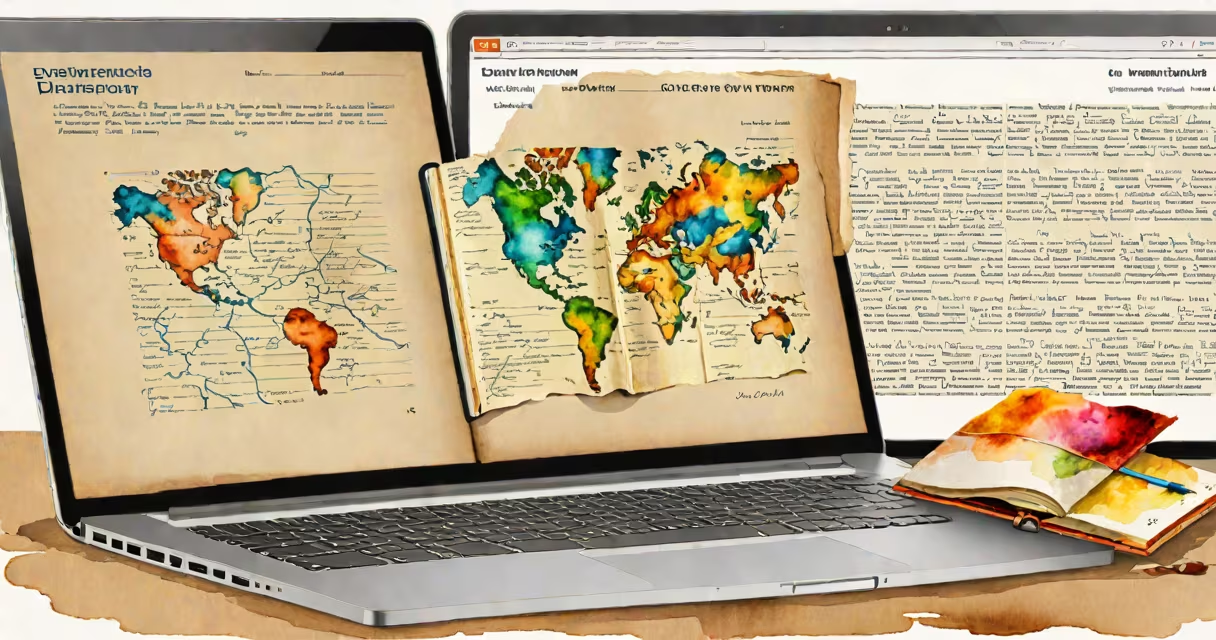
A bilingual dictionary online is a digital reference tool that provides word-for-word translations between two languages, often including pronunciation, usage examples, and part-of-speech tagging. It serves as a real-time bridge between linguistic systems, enabling users to understand and produce vocabulary in both target languages.
These tools function by accessing curated databases of lexical pairs-words or phrases matched across languages. Entries are typically indexed by root form, allowing users to search for a word in one language and retrieve its equivalent in the other. Many include audio files for correct pronunciation, context-specific meanings, and regional variants. For example, searching "house" in English returns "casa" in Spanish, with options for "casa de huéspedes" (guest house) or "casa de campo" (country house) depending on context.
Modern bilingual dictionaries online integrate machine learning models trained on vast corpora of translated texts. Google Translate's underlying system, for instance, uses neural machine translation (NMT) to improve contextual accuracy. According to the Association for Computational Linguistics, NMT-based systems outperform older rule-based models by 15-20% in BLEU score benchmarks-a standard metric for translation quality.
When you enter a word into a bilingual dictionary online, the system performs a lookup in a structured database. This database may be compiled from public domain resources like Wiktionary, government language repositories, or proprietary datasets from publishers such as Oxford University Press. The result appears instantly, often with multiple entries for polysemous words-terms with more than one meaning.
For example, entering "bank" in a dictionary with English and German entries yields "Bank" (financial institution), "Ufer" (river bank), and "Banks" (plural form). Some platforms offer toggle switches to filter results by region-e.g., American vs. British English, or European vs. Latin American Spanish. This prevents confusion when translating idioms or culturally specific expressions.
Advanced tools incorporate contextual analysis. Reverso Context, for instance, shows real-world usage by pulling sentences from websites, news articles, and forums. A search for "to run a business" in French returns "gérer une entreprise," accompanied by sample sentences like "Elle a commencé à gérer une entreprise après ses études." This goes beyond literal translation, offering insight into syntax and collocation.
Bilingual dictionaries online vary by language pair, depth of content, and intended audience. Here's a breakdown of common types:
One non-obvious distinction: many free bilingual dictionaries online rely on crowd-sourced contributions. While this expands coverage, it can reduce reliability. A 2022 study by the University of Edinburgh found that 12% of entries in popular open-source dictionaries contained incorrect or outdated translations. Always cross-check high-stakes terms-such as medical instructions or legal clauses-against peer-reviewed sources.
Users often assume that a bilingual dictionary online delivers perfect, context-free accuracy. This is false. Translation depends heavily on context. For example, "light" in English can mean "not heavy," "illumination," or "a small amount" (as in "light on sugar"). A dictionary may list all three, but only a human or advanced AI can determine which fits based on surrounding words.
Another misconception is that these tools replace language study. They don't. A 2021 report from the Modern Language Association showed that students using bilingual dictionaries online alongside structured courses improved vocabulary retention by 37% compared to those relying solely on translation tools. The best results come from combining dictionary use with active recall and spaced repetition.
I once used a bilingual dictionary online to draft a letter in Arabic for a family member in Cairo. The tool returned "أنا أحبك" for "I love you"-correct in meaning but overly formal. In casual speech, Egyptians often say "يا حبيبي" or "بتحبني." The dictionary didn't flag this nuance. That's why understanding register and cultural tone matters.
Several platforms stand out for accuracy and usability. Google Translate offers broad language support and real-time camera translation. DeepL excels in European languages, with higher fluency scores in German, French, and Italian. Reverso Online Dictionary provides sentence-level examples and verb conjugations, making it ideal for practicing grammar.
Use cases span education, travel, work, and personal growth. A student preparing for a French exam might use a bilingual dictionary online to verify the spelling of "l'année scolaire." A business professional negotiating a contract in Mandarin may consult one to confirm the precise term for "confidentiality clause." Even casual users benefit-someone planning a trip to Tokyo might look up "sumimasen" (excuse me) to avoid awkward moments.
Always verify critical translations. A 2020 incident involved a hospital in Seattle where a mistranslation of "do not resuscitate" into Spanish led to a patient being denied care. The error stemmed from a poorly curated online dictionary. This underscores the need for caution with life-or-death communications.
When selecting a bilingual dictionary online, prioritize platforms with transparent sourcing, regular updates, and user feedback mechanisms. Avoid tools that lack attribution or show outdated content. The most effective ones blend speed, accuracy, and context-features that go beyond simple word matching.
A bilingual dictionary online is not a replacement for fluency. It's a scaffold. Used wisely, it accelerates understanding, reduces errors, and connects people across linguistic divides. communicating in a global workplace, this tool remains essential.