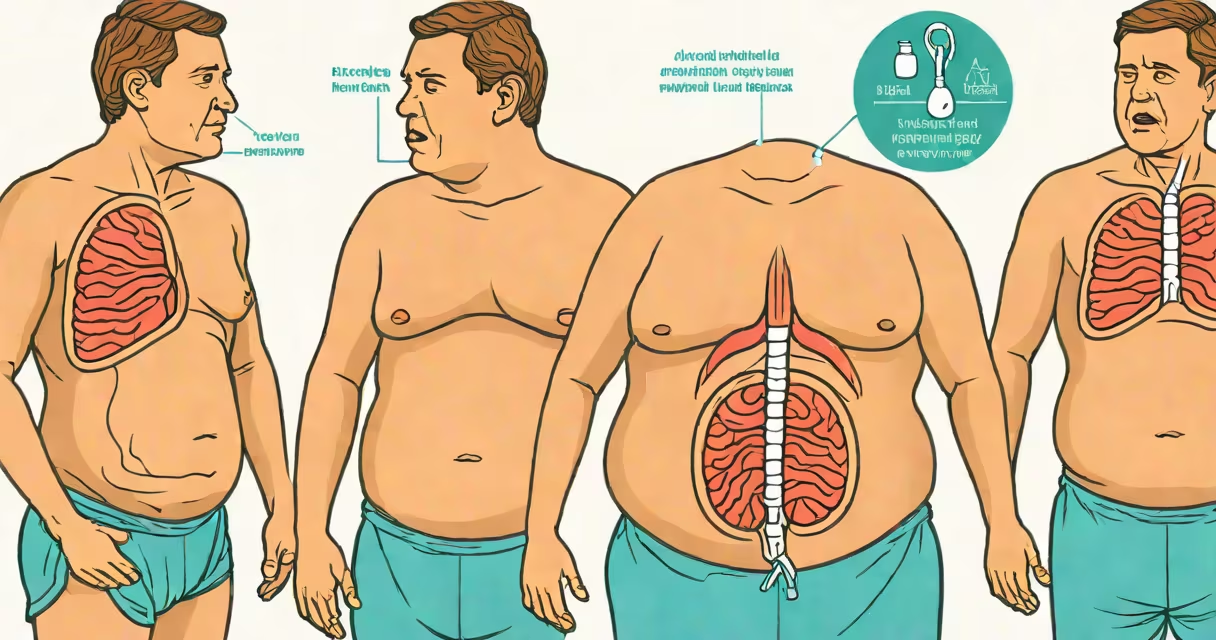
Bloated belly and shortness of breath describe a combination of physical symptoms where abdominal swelling accompanies difficulty breathing. This pairing often signals a serious medical condition requiring prompt evaluation, such as fluid buildup in the abdomen (ascites), heart failure, or chronic lung disease.
These symptoms rarely occur independently. When both appear together, they suggest a systemic issue affecting either the circulatory system, lungs, or digestive tract. The bloating typically results from excess fluid, gas, or organ enlargement, while shortness of breath arises from pressure on the diaphragm or impaired oxygen exchange.
A 62-year-old woman with a history of cirrhosis reported waking up gasping for air, noticing her abdomen had swollen to twice its normal size over three days. She could not lie flat and required emergency transport. Imaging confirmed 3 liters of fluid in the abdominal cavity (ascites), compressing the diaphragm and reducing lung capacity. After paracentesis (fluid removal), her breathing improved within hours.
The diaphragm separates the chest and abdominal cavities. When abdominal volume increases due to fluid, tumors, or gas, upward pressure reduces the space available for lung expansion. This mechanical restriction limits tidal volume-the amount of air moved during each breath-leading to dyspnea (shortness of breath).
Fluid accumulation in the abdomen, known as ascites, occurs most often in advanced liver disease. The portal vein becomes obstructed, increasing pressure in the splanchnic circulation. Fluid leaks into the peritoneal cavity. A single liter of ascitic fluid can displace the diaphragm by 2-3 cm, reducing lung compliance.
Studies show that patients with ascites and respiratory compromise have a 30% higher risk of hospitalization compared to those with ascites alone. The American Association for the Study of Liver Diseases (AASLD) recommends evaluating dyspnea in cirrhotic patients with imaging and diagnostic paracentesis.
Several conditions produce both bloating and breathing difficulty. The most frequent include:
Less common but critical: spontaneous bacterial peritonitis (SBP), an infection of ascitic fluid. Patients with SBP report worsening breathlessness and abdominal pain. Mortality exceeds 20% if untreated.
Healthcare providers assess bloated belly and shortness of breath through physical exam, imaging, and lab tests. A positive fluid wave test or shifting dullness on percussion suggests ascites. Ultrasound confirms fluid presence and guides paracentesis.
Diagnostic criteria differ by cause. For suspected heart failure, BNP levels above 400 pg/mL indicate significant cardiac strain. In liver disease, Child-Pugh scores help stage severity. A score of 10 or higher correlates with high mortality and increased risk of complications like hepatic encephalopathy.
One study found that 44% of patients presenting with both symptoms were misdiagnosed initially. The most common error was attributing dyspnea solely to asthma or COPD, overlooking abdominal pathology. Early recognition improves outcomes.
Many assume bloating and breathlessness stem from poor diet or anxiety. While stress can worsen symptoms, it doesn't explain sudden onset or progressive severity. True bloating from fluid or gas causes visible distension, not just discomfort.
Another misconception: that weight gain causes bloating. Rapid weight gain with edema in the legs and abdomen indicates fluid overload, not fat accumulation. A 10-pound increase in 48 hours suggests acute fluid retention.
Crucially, shortness of breath from abdominal pressure differs from pulmonary dyspnea. The latter improves with sitting upright. The former often worsens when lying down-patients adopt a "tripod position" (leaning forward with hands on knees) to reduce intra-abdominal pressure.
A 58-year-old man with type 2 diabetes presented with a 2-week history of abdominal swelling and exertional dyspnea. He could no longer climb two flights of stairs without stopping. On exam, his abdomen was tense, and he had bilateral ankle edema.
Labs showed elevated creatinine (1.8 mg/dL), low albumin (2.9 g/dL), and a BUN-to-creatinine ratio of 25. Abdominal ultrasound revealed 2.5 liters of free fluid. Paracentesis yielded turbid fluid with a protein level of 3.1 g/dL and a cell count of 500 WBCs/mm³-consistent with transudate and early SBP.
He was hospitalized, started on antibiotics, and received furosemide. His breathlessness resolved over 72 hours. He later learned his condition stemmed from undiagnosed diabetic nephropathy leading to fluid retention and secondary ascites.
Seek immediate medical attention if bloating and shortness of breath develop rapidly or are accompanied by:
These signs suggest infection, heart failure, or pulmonary embolism. Delaying care increases mortality risk.
Bloated belly and shortness of breath are not benign. They signal physiological imbalance requiring diagnosis and treatment. Ignoring them risks irreversible organ damage or death.