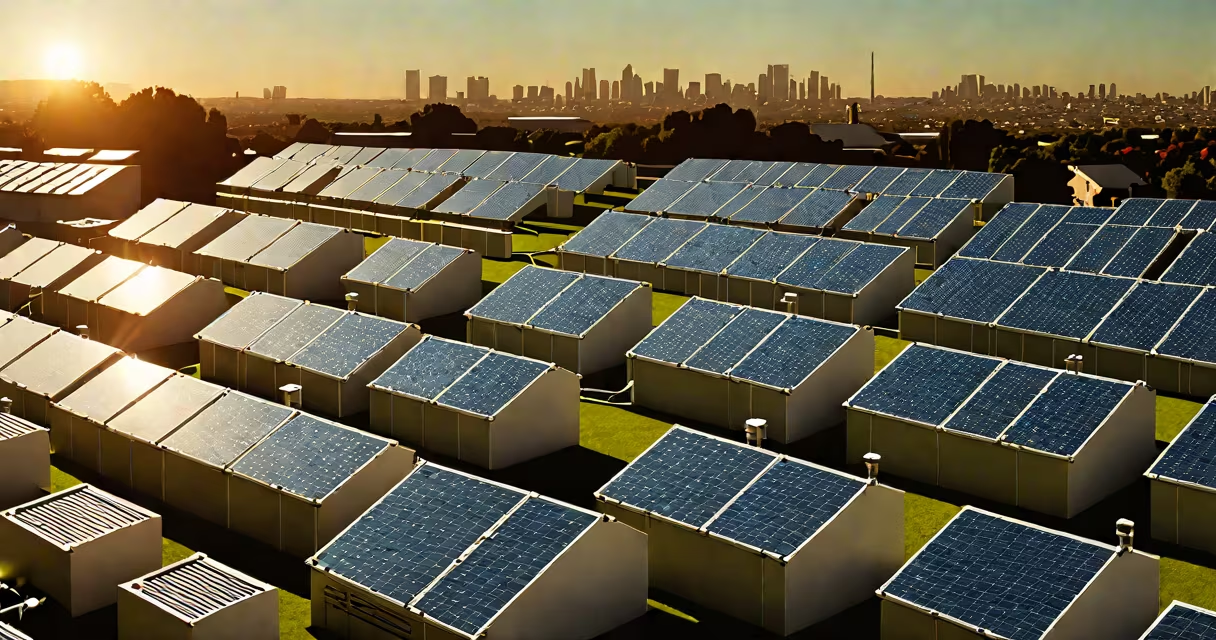
Distributed generation is the production of electricity at or near the point of consumption using small, modular power sources such as solar panels, wind turbines, or combined heat and power systems. It operates independently or in coordination with the central grid, reducing reliance on long-distance transmission lines.
This model shifts energy creation from large centralized plants to localized sites. Unlike traditional power stations that supply entire regions, distributed generation units serve homes, businesses, or neighborhoods directly. The U.S. Department of Energy defines it as "electricity generated close to where it is used, typically through renewable technologies."
For example, a shopping center installing rooftop solar panels to offset its daytime electricity use qualifies as distributed generation. The system produces power on-site, minimizing losses from transmission and lowering peak demand on the utility grid.
Distributed generation systems generate power locally using resources like sunlight, wind, or natural gas. They connect to the local electrical network via inverters, which convert direct current (DC) from solar panels into alternating current (AC) used by buildings and the grid.
When production exceeds local demand, excess electricity flows back to the utility grid under net metering agreements. Utilities credit the producer for this surplus, often reducing their monthly bill. In areas with time-of-use rates, this can yield significant savings during high-demand hours.
A residential solar installation in California illustrates this: a homeowner with a 6-kW system generates 8,000 kWh annually. On sunny days, the system may produce more than the household uses. That surplus feeds into the grid, earning credits applied later when solar output drops, such as during winter months.
Common forms of distributed generation include photovoltaic (PV) solar, small wind turbines, biomass systems, and fuel cells. Each uses different inputs and suits distinct environments.
| Type | Energy Source | Typical Scale | Best Use Case |
|---|---|---|---|
| Solar PV | Sunlight | 1 kW - 1 MW | Rooftop installations on homes and factories |
| Small Wind | Wind | 10 kW - 100 kW | Rural or coastal properties with consistent wind |
| Combined Heat and Power (CHP) | Natural gas or biogas | 50 kW - 5 MW | Hospitals, campuses needing both power and heating |
| Battery Storage + Solar | Stored solar energy | 10 kW - 100 kW | Backup power during outages or load shifting |
Microgrids represent advanced applications of distributed generation. These localized networks can disconnect from the main grid and operate autonomously during outages. A military base in Nevada uses a microgrid combining solar, batteries, and diesel generators to maintain operations during regional blackouts.
One overlooked detail: not all distributed generation is renewable. Natural gas-powered generators still count under the definition, especially in industrial zones where reliability matters more than carbon footprint. The International Energy Agency notes that 40% of global distributed generation capacity in 2023 came from fossil-fuel sources, primarily in developing nations.
Distributed generation reduces strain on aging transmission infrastructure. The National Renewable Energy Laboratory reports that widespread adoption could delay $20 billion in grid upgrade costs by 2030. This is especially valuable in urban areas where expanding substations faces zoning and environmental hurdles.
Many assume distributed generation replaces the grid entirely. That's incorrect. Most systems remain connected to the larger network for backup and surplus export. Even off-grid homes rely on inverters and charge controllers designed to interface with standard AC circuits.
Another misconception is that it's only for wealthy homeowners. In low-income communities, community solar programs allow residents to subscribe to shared solar arrays. In New York City, the "Solar for All" initiative provides free solar access to 100,000 households, with savings averaging $150 per year on electric bills.
I've observed this firsthand while volunteering with a nonprofit installing solar kits in rural Tennessee. Families with no prior access to reliable power now run lights, refrigerators, and water pumps using 3-kW systems. One household reduced their energy cost from $180/month to $35, even after accounting for maintenance and battery replacement.
Distributed generation differs from centralized generation in scale, location, and control. Centralized plants are large, remote, and managed by utilities. Distributed systems are smaller, localized, and often owned by consumers or third-party operators.
It also contrasts with "grid-tied" versus "off-grid" systems. Grid-tied systems feed excess power back to the utility. Off-grid systems rely solely on batteries and generators. Only the former qualify as distributed generation under most regulatory frameworks because they interact with the public grid.
Regulatory differences exist between states. California allows net billing, where surplus solar exports earn payments based on wholesale prices. Texas uses net metering, where credits equal retail rates. These policies affect return on investment-California's higher rates make solar projects more financially viable than in Texas, despite lower sun exposure.
As climate goals tighten, distributed generation offers a practical path to decarbonization. The U.S. Energy Information Administration projects that distributed solar capacity will grow from 120 GW in 2023 to 350 GW by 2050, driven by falling hardware costs and supportive state policies.
Distributed generation is not a niche concept-it's a foundational element of modern energy resilience. Its role in enabling clean, localized power makes it essential for meeting future energy demands sustainably.