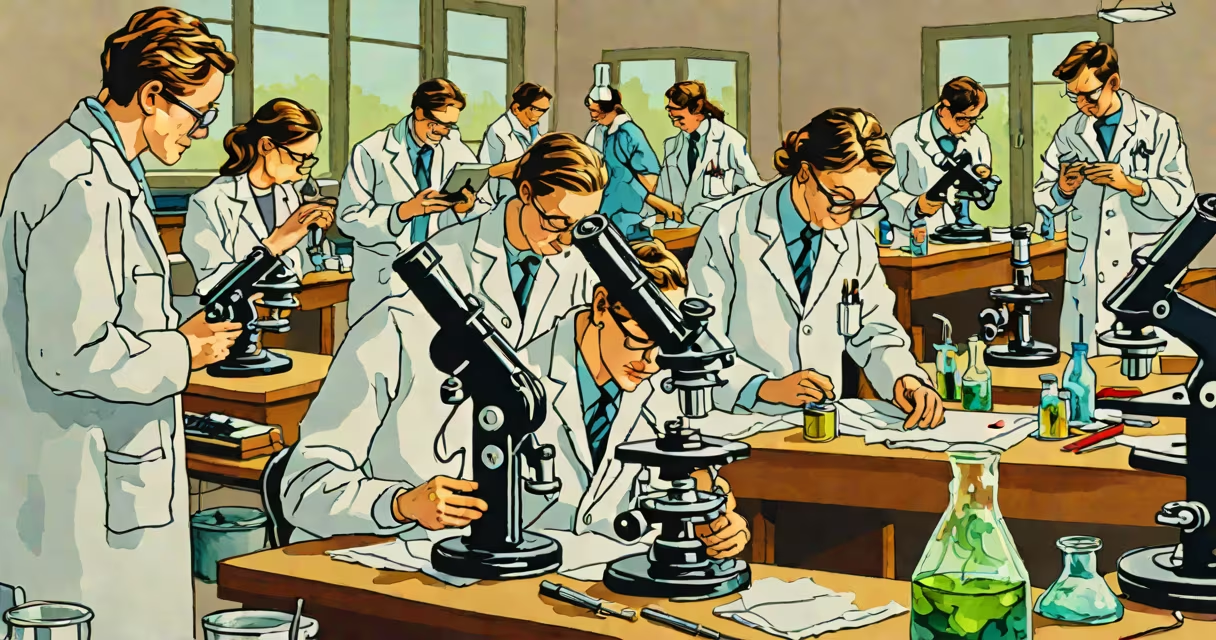
BSc forensic science colleges offer undergraduate programs that blend biology, chemistry, and criminal justice to train students in analyzing physical evidence from crime scenes. These programs prepare graduates for careers in crime labs, law enforcement, and private forensic consulting.
Students in BSc forensic science programs study DNA analysis, fingerprint identification, toxicology, and digital forensics. Courses often include hands-on laboratory work using real-world techniques such as PCR amplification, chromatography, and ballistics testing. Graduates earn a bachelor's degree in science with a focus on applied investigative methods.
The U.S. Bureau of Labor Statistics reports that forensic science technicians earn a median annual wage of $60,590, with employment projected to grow 14% from 2022 to 2032-faster than average. This growth reflects increasing demand for scientific analysis in criminal investigations, particularly in cases involving cybercrime, drug trafficking, and mass disasters.
These programs typically span four years and require a strong foundation in math and sciences. Core courses include general chemistry, organic chemistry, biochemistry, genetics, and statistics. Students take specialized classes in forensic anthropology, trace evidence analysis, and courtroom testimony procedures.
Many programs include internships with local police departments, medical examiners' offices, or federal agencies like the FBI's Laboratory Division. These placements provide direct exposure to casework, chain-of-custody documentation, and report writing under supervision.
A 2023 study by the National Institute of Justice found that 78% of forensic science graduates who completed structured internships were hired within six months of graduation, compared to 45% of those without field experience. This highlights the value of practical training in securing entry-level roles.
While most BSc forensic science degrees follow a standard curriculum, some schools offer concentrations that align with specific career goals. Common specializations include:
| Type | Focus Area | Example Institutions |
|---|---|---|
| General Forensic Science | Core disciplines: DNA, fingerprints, toxicology | University of Florida, Michigan State University |
| Digital Forensics | Data recovery, cybercrime investigation, network forensics | Johns Hopkins University, New York University |
| Forensic Anthropology | Human remains analysis, skeletal trauma, decomposition studies | University of Tennessee, Washington State University |
| Forensic Chemistry | Drug analysis, arson investigation, chemical residue testing | University of New Haven, California State University, Long Beach |
Some institutions offer dual-degree tracks. For example, the University of Central Florida allows students to pursue a BSc in forensic science alongside a minor in cybersecurity, preparing them for roles in cybercrime units.
Not all programs are created equal. The American Academy of Forensic Sciences (AAFS) maintains a list of accredited programs, though accreditation is voluntary. As of 2023, only 22% of U.S. forensic science programs held formal accreditation through the Forensic Science Education Programs Accreditation Commission (FSEPC).
Graduates from BSc forensic science colleges often enter roles in state and federal crime laboratories, medical examiner offices, law enforcement agencies, and private forensic consulting firms. The FBI's Criminal Justice Information Services Division employs over 1,200 forensic specialists nationwide, many of whom hold BSc degrees in forensic science or related fields.
Law enforcement agencies increasingly rely on forensic evidence to support prosecutions. A 2022 report by the National District Attorneys Association found that 87% of felony cases in major urban counties included at least one forensic test result, such as DNA profiles or firearm toolmark comparisons.
One common misconception is that forensic science is synonymous with television portrayals like CSI. In reality, actual forensic work involves meticulous documentation, peer review, and adherence to strict legal standards. A single error in sample handling can invalidate results in court.
Many students assume that a BSc in forensic science leads directly to a job as a crime scene investigator. While possible, most entry-level positions require additional certification and experience. The majority of crime scene technicians start as lab analysts or junior forensic scientists.
Another misunderstanding is that all forensic science jobs involve working with blood or bodies. In fact, only about 30% of forensic science roles focus on biological evidence. Many positions center on digital forensics, document examination, or explosives analysis.
A key distinction: BSc forensic science programs differ from criminal justice degrees. While both relate to law enforcement, forensic science emphasizes scientific methodology and analytical rigor. A criminal justice major may study policy and procedure, but not the technical skills needed to analyze a bullet fragment or recover deleted files.
I once observed a student at a public university in Texas struggle with lab protocols during a mock crime scene exercise. Despite strong grades in theory, they failed to maintain proper chain of custody. This incident underscored that classroom learning doesn't guarantee field competence-hands-on practice is essential.
When selecting a bsc forensic science college, prioritize schools with access to modern equipment, small class sizes, and faculty with industry experience. Look for programs that require capstone projects involving real-case simulations or collaborations with local law enforcement.
Consider location. Some states, like California and New York, have higher demand for forensic professionals due to larger populations and complex legal systems. Schools in these regions often partner with state agencies for internships and hiring pipelines.
For example, the University of Maryland's forensic science program partners with the Maryland State Police Crime Lab, providing students with guaranteed internship placements and early recruitment opportunities.
Students interested in advanced research or graduate study should consider schools with strong ties to the National Institute of Standards and Technology (NIST). NIST conducts ongoing validation studies on forensic methods, and institutions aligned with their research often lead in methodological innovation.
Bsc forensic science colleges provide a structured path into a demanding and impactful profession. Success depends not just on academic performance, but on attention to detail, ethical conduct, and consistent application of scientific principles.