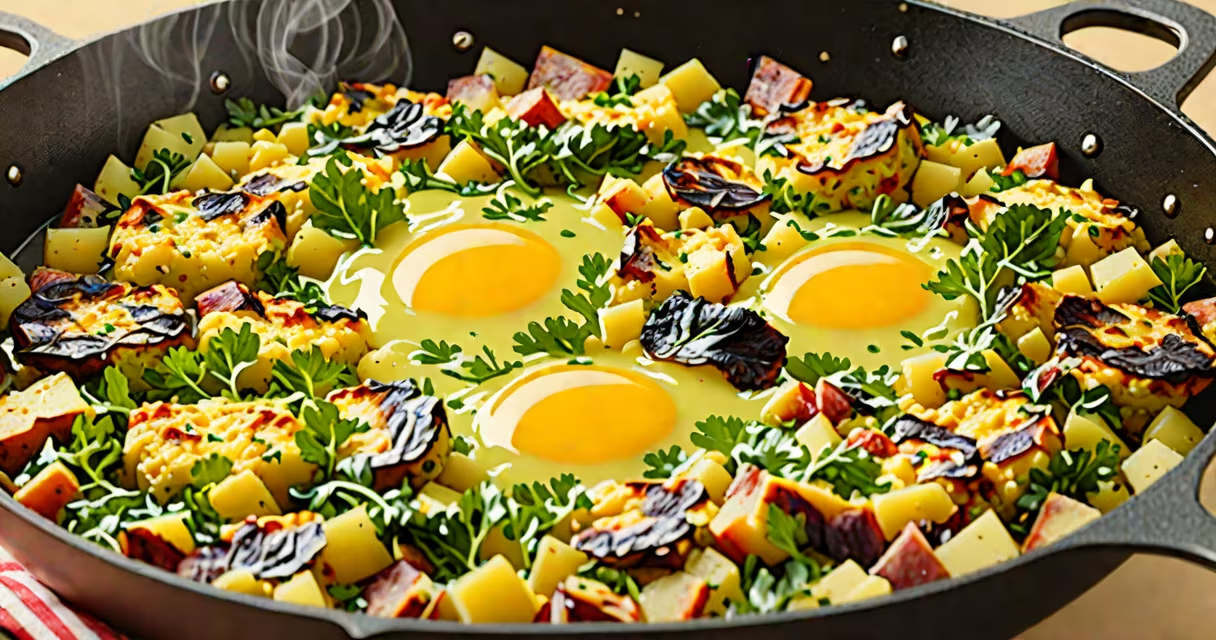
bubble and squeak meaning refers to a traditional British dish made from leftover cooked vegetables, most commonly mashed potatoes and cabbage, pan-fried until crisp and browned. It originated as a practical way to reuse leftovers, especially during wartime shortages, and remains a staple in British home cooking.
The name itself reflects the sounds made during cooking: "bubble" describes the sizzling as fat heats, and "squeak" refers to the crackling noise when the mixture is pressed into the pan and the crust forms. This auditory detail is central to the dish's identity, not just a whimsical label.
Historically, bubble and squeak emerged in the 19th century as a frugal solution to reduce waste. With limited resources, households repurposed boiled potatoes and cabbage-common vegetables in working-class diets-into a new meal. The dish gained popularity during World War II due to rationing, when using leftovers was both necessary and encouraged.
Bubble and squeak relies on texture transformation through heat. Leftover mashed potatoes and chopped cabbage are combined, then fried in butter or oil over medium heat. As the mixture cooks, moisture evaporates, forming a crust. The high surface area of the chopped vegetables allows rapid browning, creating a crunchy exterior while retaining a soft interior.
For optimal results, the mixture should be cold before frying. Room-temperature or warm leftovers don't hold together well and tend to fall apart. Chilling the blend for at least 30 minutes firms up the starches, improving cohesion during frying.
A common mistake is overcrowding the pan. Using too large a batch prevents proper browning and leads to steaming instead of crisping. A single standard-sized skillet (10-inch) holds enough for two servings. Cooking in batches ensures consistent texture.
The core components are mashed potatoes and finely chopped cabbage. Potatoes should be boiled until tender, drained, and cooled. Cabbage is shredded after boiling or steaming, then squeezed to remove excess water. Too much moisture causes splattering and prevents crisping.
Optional additions include onion, leeks, or bacon drippings for flavor. Some recipes call for a splash of milk or cream to moisten the mix, though this is not traditional. The dish is served hot, often with a fried egg on top or alongside a side of ketchup.
| Ingredient | Amount (for 2 servings) | Preparation Note |
|---|---|---|
| Mashed potatoes (leftover) | 1.5 cups | Cooled overnight for better structure |
| Shredded cabbage | 1 cup | Boiled or steamed, then drained and squeezed |
| Butter or oil | 2 tbsp | Use high-smoke-point oil if frying at high heat |
| Salt and pepper | To taste | Add after mixing, not before |
One fully worked example: On a Sunday night, a family boils 6 medium potatoes and 1 small cabbage. After cooling, they combine 1.2 cups of potatoes with ¾ cup of shredded cabbage. They season lightly, then fry in 1 tbsp butter over medium heat for 8 minutes per side. The result is a golden-brown cake with audible crackling and a crisp edge.
Many assume bubble and squeak is a modern trend or a novelty dish. In reality, it predates the term "leftover" as a culinary concept. The Oxford English Dictionary cites the earliest known use in 1895, describing it as "a dish of potatoes and cabbage, fried together."
Another misconception is that it requires expensive ingredients. The dish thrives on simplicity. It uses only what's on hand-potatoes and cabbage were staples in British households long before supermarkets existed. According to the BBC Food, it was a common meal during the 1940s, when meat rations were low and vegetable consumption rose.
Some confuse it with bubble and squeak stew or soup. There is no soup version. The name derives from the sound of frying, not a broth-based consistency. The dish is always dry and pan-fried.
Bubble and squeak appears in British literature and media as a symbol of frugality and resilience. In the 1950s, it was featured in cookbooks like *The Good Housekeeping Guide to Cookery* as a solution for "making the most of yesterday's dinner."
It's still served in pubs and cafés, particularly in regions like Yorkshire and Lancashire. A 2021 survey by the National Trust found that 37% of Britons have eaten bubble and squeak at least once in their lives, with higher rates among those aged 50 and above.
I've made it myself during a winter weekend in a rented cottage in Devon. The kitchen had no fresh vegetables, only leftover mash and a wilted cabbage. I fried it in a cast-iron skillet with a knob of butter. The sound-crackling, popping, bubbling-was unmistakable. My host called it "the sound of survival."
It's not just a dish. It's a ritual of reuse. A reminder that value isn't lost when food is left over-it's transformed.
Understanding bubble and squeak meaning involves recognizing its roots in necessity, its sensory identity, and its role in preserving tradition. It's not a gourmet creation, but a functional meal shaped by history and resourcefulness.