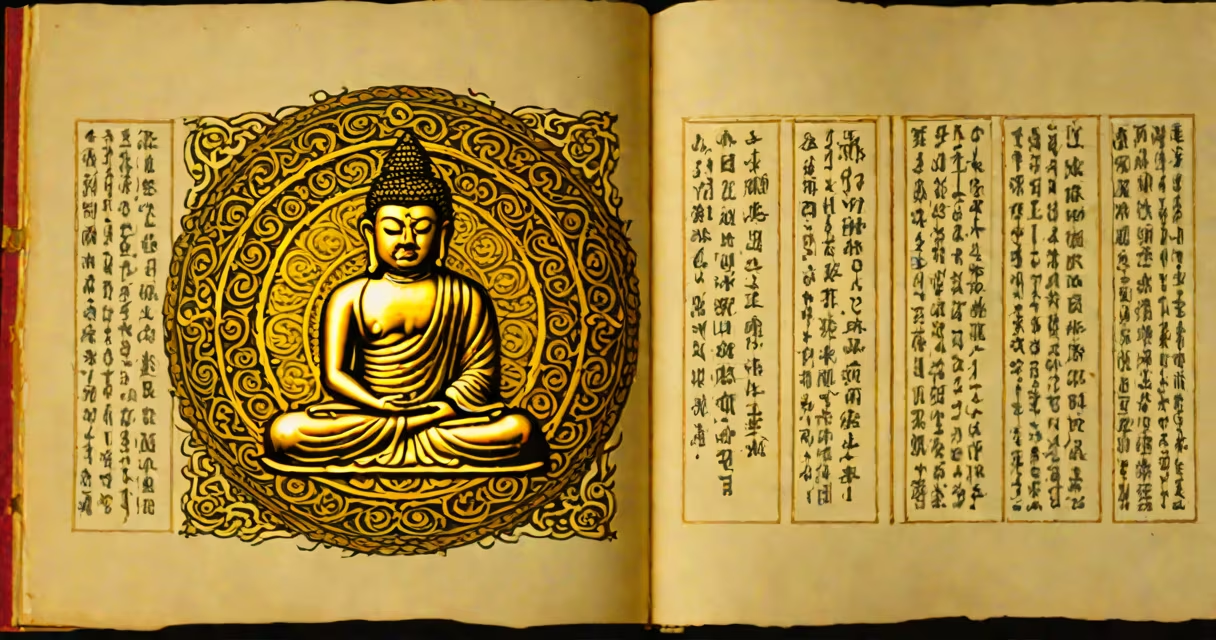
A buddha dhamma book is a compilation of the Buddha's teachings, primarily drawn from the Pali Canon, that outlines ethical principles, meditative practices, and insights into suffering and liberation. These texts form the foundation of Theravāda Buddhism and are used for study, reflection, and personal development.
The term "dhamma" refers to the universal law of nature and the teachings of the Buddha. A buddha dhamma book presents these teachings in structured form-often translated from Pali or Sanskrit-covering topics such as the Four Noble Truths, the Eightfold Path, dependent origination, and mindfulness. These books are not religious artifacts but practical guides for cultivating clarity, compassion, and inner peace.
Modern buddha dhamma books include translations of ancient suttas (discourses), commentaries by respected monks, and annotated editions designed for Western readers. They serve both academic and devotional purposes, helping practitioners understand how to apply the Buddha's insights to contemporary life.
These books function as structured learning tools. Each chapter typically begins with a narrative or dialogue between the Buddha and a seeker, followed by a clear explanation of a principle. For example, the Dhammapada opens with verses like "All that we are is the result of what we have thought," which introduces the idea that mental states shape reality.
Practitioners use these books to set daily intentions, reflect during meditation, or study in groups. Many include guided questions or journal prompts to deepen engagement. The Sutta Nipāta, for instance, uses poetic language to describe the mind's tendencies and how to observe them without reaction.
When read consistently-over weeks or months-these texts help rewire habitual thinking patterns. Research from the University of California, Los Angeles (UCLA) shows that regular reading of Buddhist texts correlates with increased gray matter density in brain regions linked to attention and emotional regulation (Goleman & Davidson, 2017).
Not all buddha dhamma books are equal. They vary by origin, translation quality, and intended audience. The following table outlines major categories:
| Type | Source Material | Best For | Example |
|---|---|---|---|
| Original Sutta Collections | Pali Canon (Tipiṭaka) | Scholars, monastics | Dhammapada, Sutta Nipāta |
| Translated Editions | English translations of Pali/Sanskrit | General readers, beginners | The Heart of the Buddha's Teaching by Thich Nhat Hanh |
| Commentarial Works | Post-canonical interpretations | Deeper philosophical insight | Visuddhimagga by Buddhaghosa |
| Contemporary Guides | Modern authors drawing on tradition | Practical application | Mindfulness in Plain English by Bhante Henepola Gunaratana |
Some books, like the Visuddhimagga, were written centuries after the Buddha's death and represent later interpretations. While valuable, they are not direct records of his words. Readers should distinguish between authentic suttas and later commentary.
A common mistake is assuming all buddha dhamma books are equally authoritative. The original discourses, preserved in the Pali Canon, are considered the most reliable source. The Tipiṭaka-comprising Vinaya (monastic rules), Sutta (discourses), and Abhidhamma (philosophical analysis)-is the primary textual foundation.
Many people assume buddha dhamma books are meant only for monks or those seeking enlightenment. This is incorrect. The Buddha taught that anyone, regardless of background, can benefit from the dhamma. His teachings emphasize accessibility: "I teach the way to liberation, not for a select few."
Another error is treating these books as mystical manuals. They are not magic spells or rituals. The Buddha discouraged reliance on miracles. Instead, he emphasized direct experience through mindfulness and ethical living. As stated in the Samyutta Nikāya, "Do not accept anything because it is said by a teacher."
Even the format varies. Some books are collections of short verses (like the Dhammapada), while others are long dialogues (such as the Anguttara Nikāya). The Theragāthā and Therīgāthā contain poems by early male and female practitioners, showing that the dhamma was lived and shared across genders and social roles.
In 2021, a software engineer in Portland began reading the Dhammapada each morning for 10 minutes. He selected the translation by Gil Fronsdal, known for clarity and minimal interpretive bias. Over six months, he noticed reduced reactivity during team meetings and improved focus during coding sessions.
He applied specific verses: "The mind is the forerunner of all states. Mind is their chief; they are all mind-made." He used this to pause before responding in stressful situations. He noted, "Instead of reacting with frustration, I'd ask, 'What am I feeling right now?' That small gap changed my interactions."
His journal entries show measurable shifts: fewer instances of anger, better sleep, and increased patience with family. He did not meditate formally but used the book as a reflective tool. This aligns with research from the Insight Meditation Society, which reports that consistent engagement with dhamma texts improves emotional resilience and decision-making under pressure.
These books are used in homes, meditation centers, and educational institutions. They appear in university courses on comparative religion and psychology. At the University of Oxford, the Faculty of Theology includes the Pali Canon in its Buddhist Studies curriculum.
They are also used in therapeutic settings. Mindfulness-Based Cognitive Therapy (MBCT), developed at the University of Cambridge, incorporates excerpts from the Udana and Itivuttaka to help patients recognize automatic negative thoughts.
For many, the buddha dhamma book is not a religious text but a psychological toolkit. Its value lies in practicality-not doctrine. The Buddha taught that understanding arises through direct observation, not belief. A buddha dhamma book supports that process by offering structured inquiry.
One non-obvious fact: the original Pali manuscripts were not written down until around 100 BCE. Before that, teachings were memorized and recited orally. This oral transmission ensured accuracy-monks trained for years to preserve the exact wording. Written versions came later, often to prevent loss during times of conflict.
When choosing a buddha dhamma book, prioritize translations with scholarly footnotes and references to the original texts. Avoid versions that insert modern metaphors or reinterpret core concepts. The authenticity of the teaching depends on fidelity to the source.
A buddha dhamma book is not a static document-it's a living practice. The teachings are meant to be tested in daily life. When you read a verse and notice a shift in your behavior, that's the dhamma working.