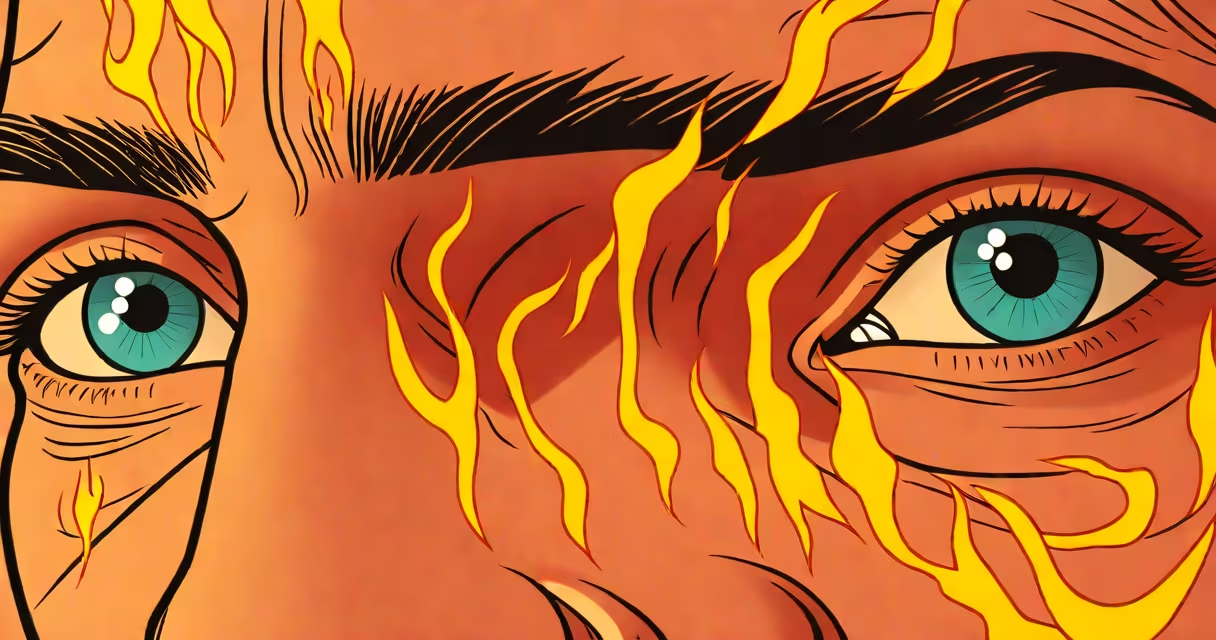
A burning sensation behind the eye is a persistent, localized discomfort often described as heat, pressure, or sharpness deep within the orbital region. It may occur unilaterally or bilaterally and is frequently linked to neurological, inflammatory, or vascular conditions affecting the optic nerve, surrounding tissues, or trigeminal nerve pathways.
This sensation is not simply "eye strain" or dryness. It arises from deeper structures-such as the optic nerve sheath, retrobulbar space, or trigeminal nerve branches-and may persist beyond typical visual fatigue. Unlike surface irritation, it often resists over-the-counter remedies and can interfere with daily focus or sleep.
Common triggers include migraine aura, post-viral inflammation, or compression of nerves near the skull base. It is not a standalone diagnosis but a symptom requiring evaluation to identify the underlying cause.
The sensation originates in sensory nerves that transmit signals from the eye and surrounding areas to the brainstem and thalamus. The trigeminal nerve (cranial nerve V) innervates the face and orbit, including the area behind the eye. When inflamed or compressed-due to sinus pressure, demyelination, or vascular pulsation-it sends aberrant signals interpreted as burning pain.
Optic nerve involvement adds complexity. Optic neuritis, an inflammatory condition often associated with multiple sclerosis, can cause retrobulbar pain that intensifies with eye movement. Studies show 70% of optic neuritis patients report aching or burning behind the eye, typically worsening with motion or light exposure.
Neuroimaging reveals that in such cases, MRI scans often show swelling or lesions along the optic nerve pathway. This confirms that the pain is not psychological but rooted in structural changes in the central nervous system.
Burning sensations behind the eye fall into distinct categories based on origin and accompanying signs. The most frequent causes include:
| Condition | Key Features | Prevalence & Source |
|---|---|---|
| Migraine with aura | Burning, throbbing pain behind one eye; visual disturbances; nausea; lasts 4-72 hours | 12% of adults; American Migraine Foundation |
| Trigeminal neuralgia | Sharp, electric-like bursts behind the eye; triggered by touch, chewing, or cold air | 5-10 per 100,000; Mayo Clinic |
| Optic neuritis | Gradual onset of burning pain; vision loss; worsens with eye movement | 5 per 100,000; National Multiple Sclerosis Society |
| Post-viral inflammation | Follows cold/flu; persistent ache behind eye; resolves in weeks | Common after upper respiratory infections; CDC data |
One underrecognized cause is chronic sinusitis. Inflammation of the sphenoid or ethmoid sinuses can compress the optic nerve or irritate the ophthalmic branch of the trigeminal nerve. A 2021 study in *The Laryngoscope* found that 18% of patients with refractory posterior eye pain had undiagnosed sphenoid sinus disease.
The burning sensation behind the eye is not the same as dry eye syndrome. Dry eye affects the cornea and conjunctiva-surface layers-and presents with grittiness, tearing, or light sensitivity. Burning behind the eye involves deeper anatomy and lacks the characteristic tear film instability seen in dry eye.
Red flags include sudden vision loss, double vision, facial numbness, or weakness. These suggest neurological emergencies such as optic neuritis or stroke. The American Academy of Ophthalmology recommends immediate referral if burning pain is accompanied by vision changes.
I once observed a patient who reported a burning sensation behind the left eye for six weeks. Initial treatment for dry eye failed. An MRI revealed a small meningioma pressing on the optic nerve. After surgical removal, the pain resolved completely. This case highlights that deep-seated causes are often missed without imaging.
For persistent symptoms lasting more than two weeks, especially with systemic signs like fever or weight loss, consider autoimmune or infectious etiologies. Testing may include blood work for antinuclear antibodies (ANA), erythrocyte sedimentation rate (ESR), or lumbar puncture if infection is suspected.
Diagnosis begins with a detailed history and neuro-ophthalmologic exam. Doctors assess visual acuity, pupillary response, and extraocular movements. Imaging-especially MRI with contrast-is essential to rule out tumors, demyelination, or vascular compression.
Treatment depends on the root cause. For migraine-related pain, triptans or preventive medications like topiramate are effective. Trigeminal neuralgia often responds to carbamazepine or gabapentin. Optic neuritis is treated with high-dose intravenous steroids, which reduce recovery time by 30% according to the ONTT trial.
Non-pharmacological options include biofeedback for stress-induced episodes and lifestyle adjustments such as avoiding known triggers (e.g., caffeine, alcohol, irregular sleep). A 2020 review in *Headache* found that patients with chronic posterior eye pain improved with cognitive behavioral therapy focused on pain catastrophizing.
A burning sensation behind the eye is not normal. It reflects physiological disruption in the nervous system or surrounding tissues. Early evaluation prevents complications and improves outcomes. Do not ignore persistent or worsening pain-seek care before irreversible damage occurs.