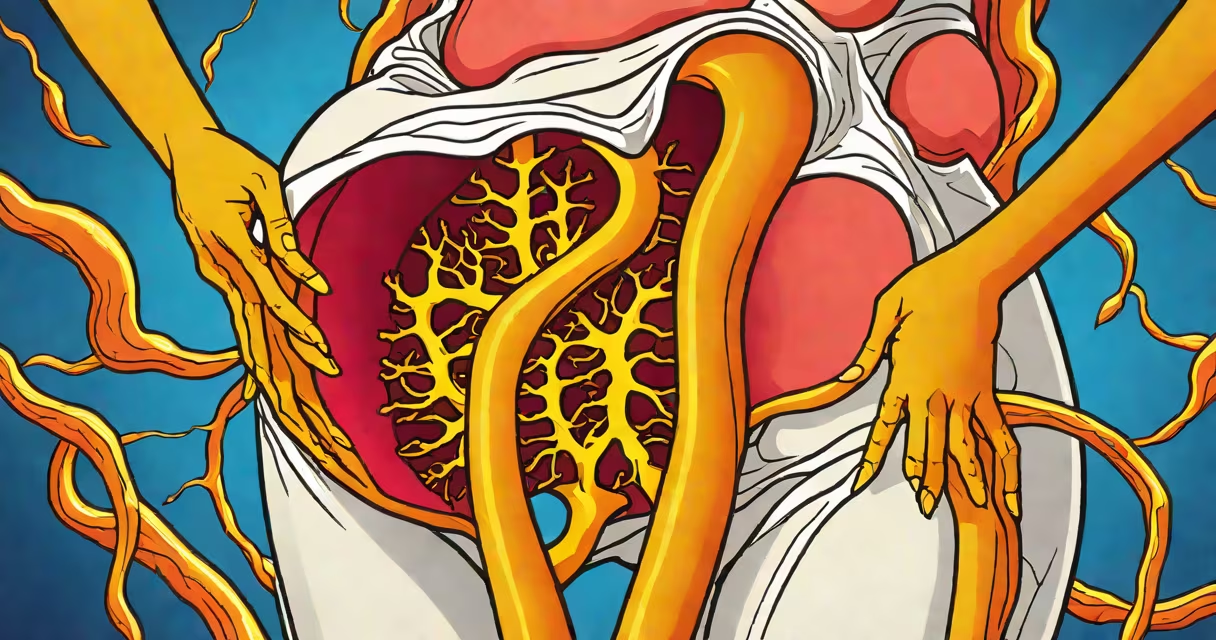
Yes, endometriosis causes cramping through abnormal tissue growth outside the uterus that responds to hormonal changes, leading to inflammation, scar tissue, and nerve irritation during the menstrual cycle.
Endometriosis occurs when tissue similar to the uterine lining grows outside the uterus-on the ovaries, fallopian tubes, pelvic lining, or even bowel and bladder surfaces. This misplaced tissue behaves like normal endometrial tissue: it thickens, breaks down, and bleeds with each menstrual cycle. Because it has no exit route, blood and debris accumulate, causing internal bleeding, swelling, and scarring.
The resulting physical pressure and chemical signals from inflamed tissues activate pain nerves in the pelvis. This leads to deep, persistent cramping that often worsens during periods. Cramps may start days before menstruation and last longer than typical menstrual discomfort. Pain intensity varies widely-some women report mild twinges, while others describe debilitating spasms requiring medical intervention.
Cramping in endometriosis stems from multiple overlapping mechanisms. First, prostaglandins-hormone-like substances released during menstruation-increase in concentration around endometrial implants. These chemicals cause uterine contractions that can become excessive and painful. High levels of prostaglandins correlate with severe menstrual cramps, particularly in stage III and IV endometriosis.
Second, adhesions form when inflamed tissue sticks to nearby organs. These bands of scar tissue pull on pelvic structures, creating constant tension and sharp, shooting pains. A 2021 study published in Human Reproduction found that women with stage III or IV endometriosis had higher rates of chronic pelvic pain compared to those without the condition (odds ratio 3.6, 95% CI 2.4-5.4).
Third, nerve infiltration occurs when endometriotic lesions grow near or embed into pelvic nerves. This alters nerve signaling, making normal stimuli feel painful-a condition called central sensitization. Once established, this can maintain pain even between cycles.
Not all cramping feels the same. Endometriosis-related pain falls into distinct patterns based on location and timing:
| Type | Description | Common Triggers |
|---|---|---|
| Menstrual cramps | Deep, throbbing pain in lower abdomen and back, often radiating to hips or thighs. | Menstrual onset, high prostaglandin levels. |
| Chronic pelvic pain | Constant dull ache or sharp stabbing sensations, lasting beyond period days. | Nerve entrapment, adhesions, organ involvement. |
| Coital pain | Pain during or after sex, especially deep penetration. | Lesions on uterosacral ligaments or rectovaginal septum. |
| Pre-menstrual cramping | Cramping beginning 3-5 days before flow starts. | Early inflammatory response from tissue breakdown. |
These patterns are not exclusive to endometriosis but occur more frequently and severely in affected individuals. For example, a woman with stage II endometriosis may experience cramping that begins five days before her period and lasts ten days-far longer than typical menstrual pain.
Many assume cramping is normal or simply a sign of "heavy periods." But persistent, worsening, or non-cyclic cramping should raise concern. The American Society for Reproductive Medicine notes that endometriosis affects approximately 10% of reproductive-age women, yet diagnosis often takes 7-10 years due to symptom dismissal.
A frequent error is equating endometriosis with infertility. While it increases risk, many women with endometriosis conceive naturally. Conversely, some women have severe cramping without fertility issues. Pain severity does not predict fertility outcomes.
Another misconception: endometriosis only causes pain during menstruation. In reality, pain can occur anytime-during bowel movements, urination, or sexual activity. A 2020 review in Frontiers in Immunology highlighted that immune cell infiltration around endometriotic lesions contributes to ongoing inflammation, even between cycles.
Sarah, a 29-year-old teacher, began experiencing cramping at age 18. Her symptoms included sharp lower abdominal pain starting three days before her period, lasting up to eight days. She also reported pain during intercourse and bloating. Over time, the pain intensified, disrupting work and social life.
She tried over-the-counter NSAIDs, heat therapy, and lifestyle changes with minimal relief. After consulting a gynecologist, she underwent laparoscopy. Biopsy confirmed stage III endometriosis with implants on the left ovary and bowel surface. Post-surgery, she was prescribed hormonal suppression therapy and reported a 70% reduction in cramping within six months.
This case illustrates how cramping from endometriosis progresses beyond typical menstrual discomfort and requires medical evaluation. Early diagnosis prevents long-term complications such as adhesions and reduced quality of life.
Consult a healthcare provider if cramping interferes with daily activities, persists beyond seven days per cycle, or includes additional symptoms like fatigue, nausea, or irregular bleeding. Diagnosis typically involves imaging (transvaginal ultrasound), blood tests (CA-125, though not diagnostic), and surgical confirmation via laparoscopy.
Treatment options include hormonal therapies (birth control pills, progestins), NSAIDs, and surgery. A 2022 Cochrane review found that combined oral contraceptives reduced menstrual pain by 50% in 70% of participants with endometriosis.
If you're managing endometriosis-related cramping, consider tracking symptoms using a pain diary. Record onset, duration, intensity (1-10 scale), and triggers. This data helps clinicians assess treatment effectiveness and adjust plans.
Endometriosis can cause cramping through biological processes involving inflammation, nerve activation, and tissue damage. Recognizing this pain as pathological-not normal-leads to earlier diagnosis and better outcomes.