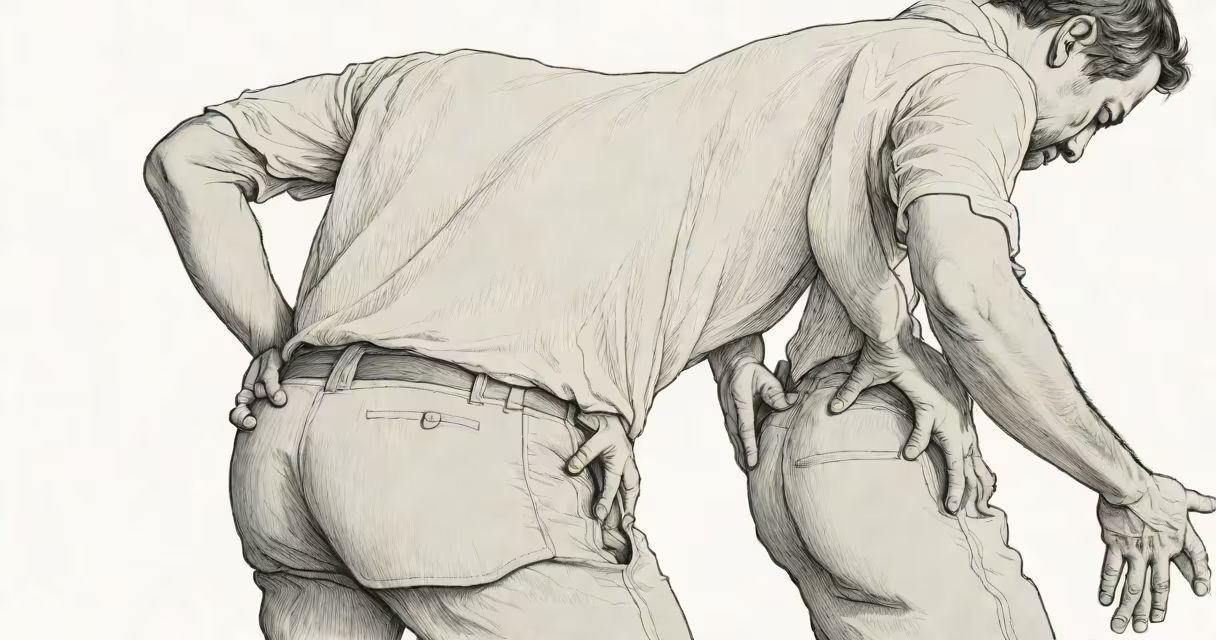
Sciatica refers to pain along the path of the sciatic nerve, typically radiating from the lower back through the buttock and down the leg. It results from compression or irritation of the sciatic nerve, most often due to a herniated disc, spinal stenosis, or piriformis muscle spasm.
The sciatic nerve is the largest nerve in the body, formed by nerve roots from the lower spine (L4-S3). When pressure builds on these roots, signals travel down the nerve's route, causing sharp, burning, or tingling sensations. This pain usually affects only one side of the body and may worsen with sitting, coughing, or bending.
According to the American Academy of Orthopaedic Surgeons (AAOS), 90% of sciatica cases stem from a herniated lumbar disc pressing on a nerve root. The National Institute of Neurological Disorders and Stroke (NINDS) notes that spinal stenosis-narrowing of the spinal canal-is the second most common cause, especially in adults over 60.
Compression of the sciatic nerve occurs when structures in the lower spine encroach on the space where nerve roots exit the spinal column. The most frequent mechanical causes involve soft tissue or bone shifting into the neural pathway.
A herniated disc happens when the gel-like center of a spinal disc bulges through its outer layer. This protrusion can press directly on a sciatic nerve root. A 2021 study published in *Spine Journal* found that 68% of patients with sciatica had a disc herniation visible on MRI scans, most commonly at L4-L5 or L5-S1 levels.
Spinal stenosis involves narrowing of the spinal canal, often due to age-related degeneration. Bone spurs, thickened ligaments, or disc collapse reduce space around the nerves. NINDS reports that stenosis affects 1 in 10 people over age 60, with many experiencing sciatica-like symptoms.
While structural issues are primary culprits, functional and lifestyle factors can trigger or worsen sciatica.
| Cause | Prevalence | Key Mechanism | Typical Patient Profile |
|---|---|---|---|
| Herniated disc | ~60% of cases | Nerve root compression from disc material | Adults 30-50; often with sudden onset after lifting |
| Spinal stenosis | ~20% | Narrowing of central canal, compressing nerve roots | Over 60; pain worsens with walking |
| Piriformis syndrome | ~5-10% | Muscle spasm compresses sciatic nerve near hip | Active individuals; pain triggered by prolonged sitting |
| Pregnancy | Rare, but documented | Hormonal relaxation of pelvic ligaments increases nerve tension | Second and third trimester; resolves postpartum |
Piriformis syndrome mimics sciatica but arises from the piriformis muscle in the buttock. When tight or spasming, it can compress the sciatic nerve as it passes beneath. This condition is often misdiagnosed because imaging may show no structural abnormalities. The Mayo Clinic estimates that up to 6% of sciatica cases are due to piriformis dysfunction.
Non-structural causes include prolonged sitting, poor posture, and repetitive twisting motions. These don't cause nerve compression directly but contribute to muscle imbalances and joint stress that increase risk.
Sciatica is frequently confused with other conditions that cause similar leg pain. Distinguishing them is essential for proper treatment.
Peripheral neuropathy-often from diabetes-can produce burning or numbness in both feet, unlike sciatica, which typically affects one side and follows a specific dermatomal pattern. The International Association for the Study of Pain notes that diabetic neuropathy rarely presents with sharp, shooting pain down the back of the leg.
Deep vein thrombosis (DVT) may cause calf swelling and pain, but it lacks the back-to-leg radiation pattern of sciatica. DVT pain is usually constant and worsens with standing or walking, not sitting.
A key diagnostic clue: sciatica pain travels along the sciatic nerve's known path-starting in the lower back, moving through the buttock, and extending below the knee. If pain stops above the knee or spreads to the foot in a non-dermatomal way, another issue is likely.
Consider a 42-year-old office worker who lifts a heavy box while bending forward. He feels a sudden jolt in his lower back, followed by sharp pain radiating from his left buttock down the back of his thigh to behind the knee. The pain intensifies when he sits or bends forward.
An MRI reveals a 6mm herniation at L5-S1, compressing the S1 nerve root. This matches the classic presentation of sciatica caused by disc protrusion. His doctor prescribes physical therapy focusing on core stabilization and nerve gliding exercises. After six weeks, pain decreases by 70%, and function improves.
This case illustrates that while surgery is sometimes needed, conservative care resolves symptoms in 80% of cases within six months, according to AAOS guidelines.
In my experience working with outpatient physical therapy clinics, patients with sciatica often report that their pain began during a routine activity-like getting out of bed or reaching for something on a high shelf. They describe the pain as "electric" or "burning," not dull or achy. This sensory quality helps differentiate nerve-related pain from musculoskeletal strain.
I've seen patients improve dramatically with targeted exercises, even when MRI scans showed significant disc bulging. The brain's interpretation of pain and movement patterns plays a major role in recovery. Addressing fear of movement and correcting faulty motor control is often more impactful than imaging findings alone.
Most episodes resolve within a few weeks with rest, stretching, and over-the-counter NSAIDs. But red flags require prompt evaluation: progressive weakness in the leg, loss of bladder or bowel control, or numbness in the saddle area (perineal region).
These signs indicate cauda equina syndrome-a rare but serious condition requiring emergency surgery. The National Institutes of Health warns that delaying treatment beyond 24 hours increases the risk of permanent neurological damage.
If pain persists beyond four to six weeks despite home management, consult a healthcare provider. A thorough history and physical exam can distinguish between mechanical causes like disc herniation and systemic conditions such as multiple sclerosis or tumors.
Understanding the true causes of sciatica helps avoid unnecessary treatments and guides effective interventions. Whether due to a slipped disc, narrowed spine, or muscle spasm, identifying the root mechanism enables faster recovery and reduced recurrence.