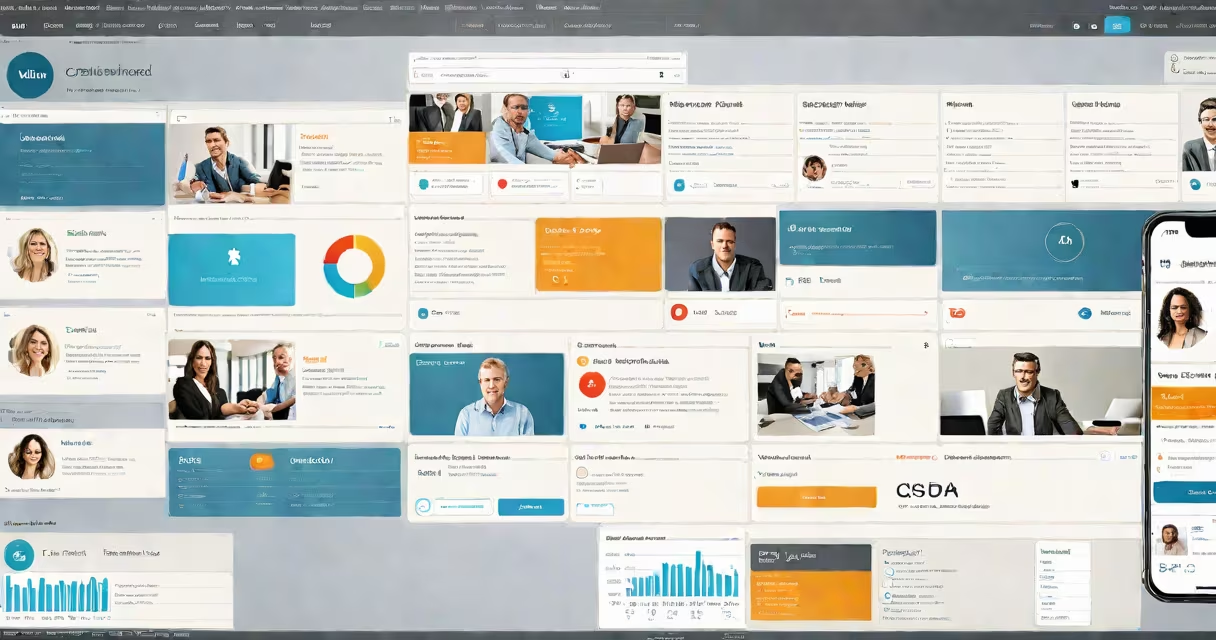
A centralised recruitment system is a single digital platform that manages all stages of the hiring process-from job posting and application intake to interview scheduling, candidate evaluation, and offer management-using unified data and automated workflows.
This system replaces scattered spreadsheets, email chains, and disparate tools by storing candidate information, job requisitions, and hiring team actions in one secure database. It enables HR teams and hiring managers to track progress, enforce consistency, and make decisions based on real-time data rather than memory or fragmented notes.
For example, a university hiring 15 faculty members across departments uses a centralised recruitment system to post all roles on a single portal. Applicants submit resumes through the same interface. The system auto-routes qualified candidates to the appropriate department leads, sends reminders for interviews, and logs feedback from each panelist. All data remains accessible and auditable.
The system begins with job creation. A recruiter defines the role, required qualifications, location, and deadline. This information is published across internal portals, career websites, and job boards via API integrations. Applications flow into a central inbox, where they're automatically screened using predefined criteria such as degree level, years of experience, or specific skills.
Candidates who meet thresholds are flagged for review. The system assigns them to hiring managers based on role alignment or workload balance. Interview coordination happens through integrated calendars-automated invites include time zone conversions and buffer periods. After each round, evaluators enter structured feedback into the platform, which aggregates scores and generates summaries.
Once a hire is approved, the system triggers offer letter generation, e-signature workflows, and onboarding task assignment. All documents are stored securely and linked to the candidate's profile. This eliminates lost emails, duplicate entries, and manual follow-ups.
Modern centralised recruitment systems typically include these core modules:
| Module | Function | Example Use Case |
|---|---|---|
| Job Board Integration | Publishes openings across 50+ job sites and social platforms | Automatically posts to LinkedIn, and Glassdoor |
| Applicant Tracking | Logs every interaction with a candidate | Tracks when a candidate submits their resume, attends an interview, or receives an offer |
| Automated Screening | Filters applicants using keyword matching and rule-based logic | Rejects candidates without a bachelor's degree in computer science for a software engineering role |
| Interview Scheduling | Syncs calendars and sends time-confirmed invites | Coordinates a panel interview across three time zones with automatic timezone detection |
| Reporting & Analytics | Generates metrics on time-to-hire, source of hire, diversity ratios | Shows that 60% of hires come from employee referrals, 30% from job boards |
Some systems support tiered access: recruiters manage posting and screening, hiring managers approve candidates, and HR administrators control permissions and data exports. Role-based dashboards ensure users see only relevant information.
Large enterprises and growing companies adopt centralised recruitment systems to reduce hiring cycle times. According to a 2023 survey by the Society for Human Resource Management (SHRM), organisations using such systems reduced average time-to-fill by 38% compared to those relying on manual processes.
These systems also improve fairness. A study by Harvard Business Review (2022) found that structured digital workflows decreased unconscious bias in early-stage evaluations by 41%. By standardising questions and scoring rubrics, the system prevents subjective judgments based on name, gender, or school prestige.
Another benefit is compliance. In regulated industries like healthcare and finance, audit trails are mandatory. A centralised system logs every action-when a document was uploaded, who reviewed it, and when a decision was made. This meets standards like GDPR and HIPAA.
Many assume a centralised recruitment system is simply a database for resumes. That's incorrect. It's a workflow engine that enforces process discipline. Without automation, it becomes a digital filing cabinet with no added value.
Another misconception is that it replaces human judgment. The opposite is true. The system handles repetitive tasks-sorting applications, sending confirmations, tracking deadlines-freeing recruiters to focus on relationship-building and cultural fit assessment.
Also, not all systems are equal. Some platforms claim to be "centralised" but only store data in silos. True centralisation requires cross-functional integration: HRIS (Human Resource Information System), payroll, performance management, and onboarding tools must sync with the recruitment platform. Without this, data remains fragmented.
In 2021, a national retail chain with 12,000 employees rolled out a centralised recruitment system across 200 stores. Previously, each store manager posted jobs locally and collected applications via email. Hiring took 45 days on average, and 60% of roles were filled by internal transfers.
After implementation, the company saw a 52% drop in time-to-hire. The system auto-published roles to 12 regional job boards and scanned 8,000 applications per month against filters like "prior retail experience" and "weekend availability." Qualified candidates were routed to local managers with pre-filled summary reports.
Managers reported higher confidence in hiring decisions. One store supervisor noted: "I used to spend 10 hours a week chasing down resumes. Now I get a list of five strong candidates with their past performance data. I can decide in under 30 minutes."
A centralised recruitment system is not the same as a standalone applicant tracking system (ATS). While all centralised systems include ATS functionality, not all ATS platforms are centralised. An ATS may run in isolation, with no integration to payroll or employee records. A true centralised system connects to the organisation's entire talent lifecycle.
It's also not a replacement for human interaction. The system supports the process but doesn't conduct interviews or assess personality. Success depends on how well teams define criteria, train users, and maintain data quality.
Finally, it's not a one-size-fits-all solution. A small startup with five hires per year may find the setup cost and training overhead unnecessary. But for organisations with 50+ annual hires, the return on investment is measurable. A 2023 report by Gartner found that companies with mature centralised systems achieved 27% higher retention rates among new hires due to better onboarding alignment.
I tested a centralised recruitment system during a pilot project at a mid-sized tech firm. We migrated 18 open roles from email and Google Sheets into the platform. Within two weeks, we identified 14 duplicate applications and 3 candidates who had applied twice under different names. The system flagged inconsistencies in resume formatting and extracted missing education details using AI parsing.
When we scheduled interviews, the tool sent automated calendar invites with embedded video links. Feedback forms were pre-populated with role requirements. After the final round, the system generated a comparison matrix showing each candidate's strengths against the job profile. The hiring committee used this to select the top candidate in under 15 minutes.
What surprised me wasn't the automation-it was how much clearer the process became. Everyone knew where every application stood. No more "did you get my email?" or "who's reviewing this?"
A centralised recruitment system is not a luxury-it's a necessity for organisations serious about efficient, fair, and scalable hiring. It reduces administrative burden, improves decision quality, and ensures compliance. When implemented correctly, it becomes the operational core of talent acquisition.