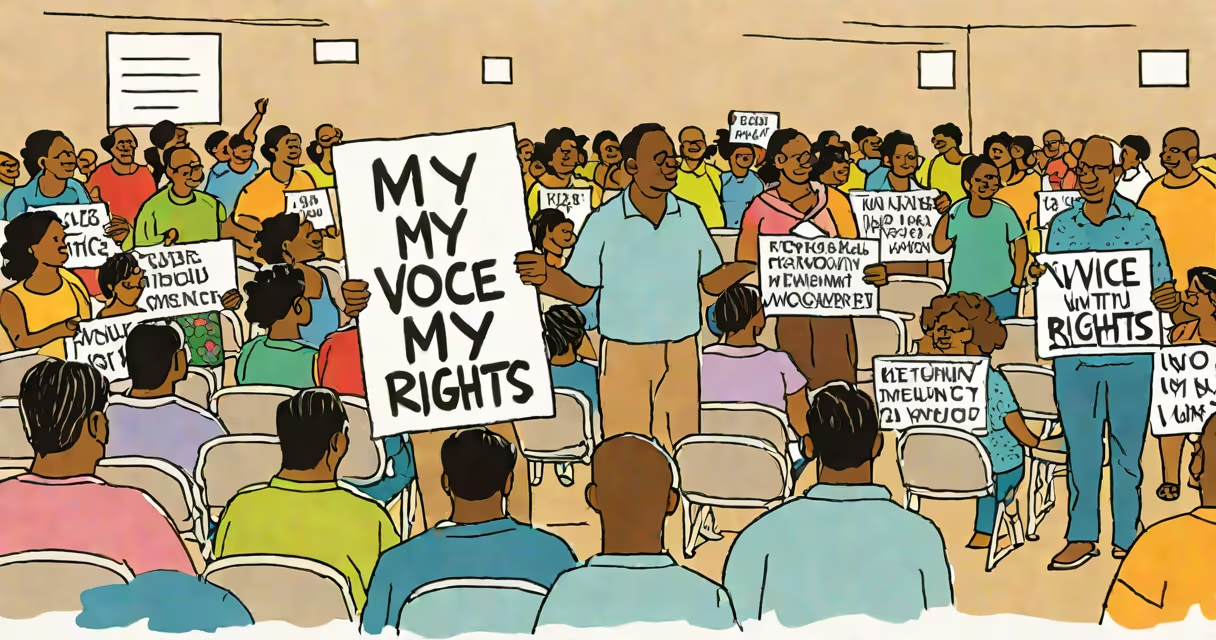
Self advocacy is the ability to speak up for your own needs, rights, and goals in a clear, respectful, and confident way. It means making informed choices about your life and expressing your perspective when decisions affect you. This skill is essential for people with disabilities, but it applies to anyone going through systems like school, work, or healthcare.
At its core, self advocacy is not about demanding special treatment. It's about ensuring your voice is heard in settings where decisions are made-whether that's requesting accommodations in a classroom, negotiating a job role, or discussing medical care options. The goal is equality: access to the same opportunities and respect as others.
According to the National Disability Rights Network, self advocacy empowers individuals to participate fully in society. It reduces dependency on others to represent their interests and strengthens autonomy. When people advocate for themselves, they build confidence and improve outcomes in education, employment, and community integration.
Self advocacy begins with awareness. You must understand your strengths, challenges, rights, and available supports. For example, a student with ADHD may recognize that they need extended time on tests. Knowing this, they can request that accommodation through proper channels.
The process involves four steps: identifying the issue, gathering relevant facts, communicating, and following up. A person applying for a job with a physical disability might research workplace accessibility standards, collect documentation of their abilities, and rehearse talking points before an interview. They then state their needs directly, such as "I require a wheelchair-accessible workspace," and provide evidence.
Effective self advocacy uses specific language. Instead of saying "This is unfair," a clearer statement is "I've been denied access to the training room because the door is too narrow. I'm requesting a temporary alternative location." This approach focuses on solutions, not blame.
Self advocacy appears in many forms depending on context. Here are common scenarios:
| Setting | Common Needs | Example Action |
|---|---|---|
| Education | Individualized Education Plans (IEPs), classroom modifications | Student requests a scribe during exams due to dysgraphia. |
| Healthcare | Understanding diagnoses, consent, treatment options | Patient asks provider to explain medication side effects in plain language. |
| Employment | Reasonable accommodations, fair pay, promotion eligibility | Employee submits a formal request for remote work due to chronic illness. |
| Independent Living | Access to housing, transportation, social services | Person with vision loss contacts a local agency to secure a guide dog. |
These actions reflect a shift from passive acceptance to active participation. In each case, the individual identifies a barrier and takes deliberate steps to address it using available resources.
Many assume self advocacy is aggressive or confrontational. That's incorrect. It's not about shouting or winning arguments-it's about clarity and mutual respect. A person who says, "I'd like to discuss my schedule changes," is being assertive, not hostile.
Another myth is that self advocacy only applies to people with disabilities. In reality, everyone uses it daily. A teenager asking a teacher for extra credit, a parent negotiating school hours, or an employee requesting a flexible start time-all are acts of self advocacy. The difference lies in the level of support needed and the complexity of the system involved.
A lesser-known fact: self advocacy is not a one-time skill. It develops over time and requires practice. Research from the University of Kansas Center for Self-Advocacy shows that students who receive structured self advocacy training show higher academic engagement and better long-term employment rates. The skills are teachable, not innate.
Consider Maya, a high school junior with autism spectrum disorder. She struggles with group discussions and feels misunderstood during class debates. Her teachers have noticed her quietness but haven't asked what she needs.
Maya attends a school program focused on self advocacy. She learns to identify her needs: she wants to contribute but feels overwhelmed by rapid exchanges. She prepares a plan: she'll write her thoughts in advance and ask to share them aloud during a designated time.
She meets with her teacher after class. "I want to participate," she says. "But I need time to think. Can I submit a written response before we discuss?" The teacher agrees. Over the next month, Maya contributes consistently. Her grades improve, and her confidence grows.
This example shows that self advocacy isn't about changing who you are-it's about adapting environments to fit your strengths. Maya didn't ask to be excused from discussion. She asked for a different way to engage. That small adjustment led to meaningful change.
Without self advocacy, people are vulnerable to misrepresentation. A study published in *Disability & Society* found that individuals with intellectual and developmental disabilities were less likely to have their preferences honored in care planning when they did not advocate for themselves. When they did, outcomes improved across health, education, and social inclusion.
Systems often assume someone else knows what's best. But only you know your values, limits, and aspirations. Self advocacy ensures your lived experience shapes decisions that affect you. It's a form of dignity and justice.
I once observed a young adult with cerebral palsy present at a city council meeting to request accessible sidewalks. He brought photos of uneven pavement, cited local ordinances, and spoke calmly about how it affected his mobility. His voice was steady. The council approved funding for repairs within six weeks. That moment wasn't just about infrastructure-it was about recognition.
Self advocacy is not a luxury. It's a necessity for inclusion and equity. family member, knowing how to speak up for your needs builds stronger relationships and better outcomes. It's not about being loud-it's about being seen.
Mastering self advocacy doesn't happen overnight. Start small: ask one question in a meeting, write down a concern, practice saying "I need help" out loud. Over time, these actions build resilience and agency. The world doesn't change because you're perfect-it changes because you're persistent.