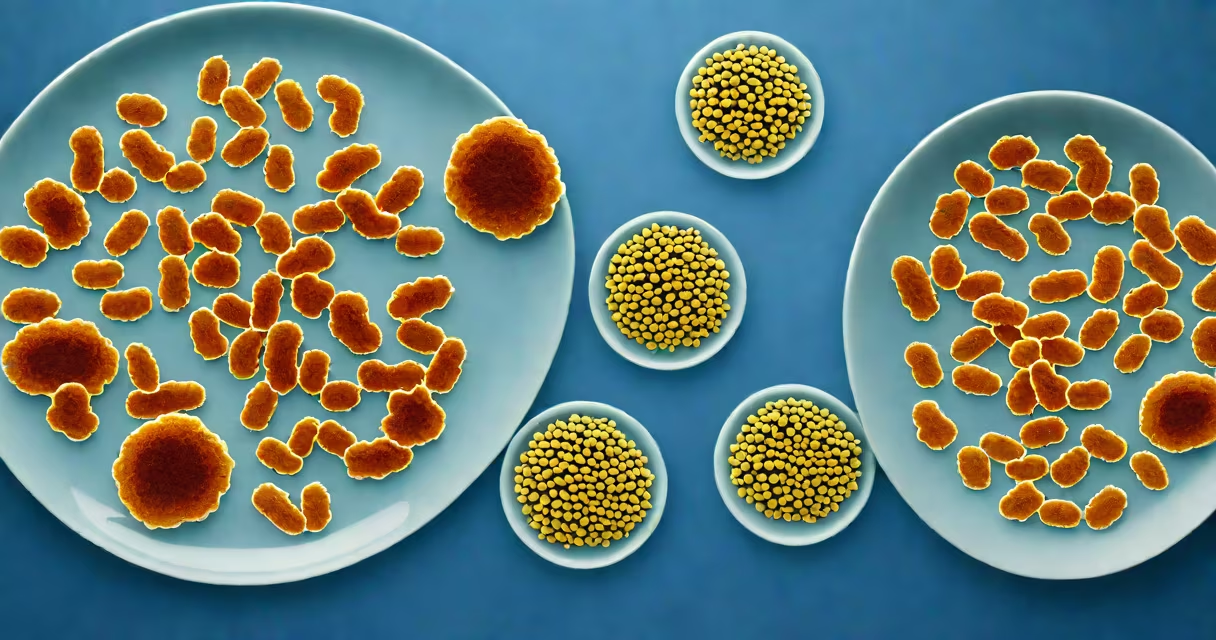
Haemophilus influenzae and Streptococcus pneumoniae are two distinct Gram-negative and Gram-positive bacteria, respectively, that frequently cause respiratory tract infections and invasive diseases such as meningitis, pneumonia, and bacteremia, especially in young children and immunocompromised individuals.
Both organisms colonize the upper respiratory tract asymptomatically in many people. However, under certain conditions-such as viral co-infection, weakened immunity, or crowded living environments-they can invade deeper tissues and trigger severe illness. They are leading bacterial pathogens in childhood infections worldwide, particularly in low-resource settings where vaccination coverage remains suboptimal.
While both species are associated with similar clinical syndromes, they differ in their biology, transmission dynamics, and response to treatment. Understanding their individual roles is critical for accurate diagnosis, effective prevention, and targeted antibiotic therapy.
Haemophilus influenzae is a fastidious, rod-shaped bacterium requiring factors X (hemin) and V (NAD) for growth in laboratory media. It exists in six serotypes (a-f), with type b (Hib) historically responsible for most invasive disease in children under five. Hib was a major cause of bacterial meningitis, epiglottitis, and septic arthritis before widespread vaccination.
Streptococcus pneumoniae, a lancet-shaped, alpha-hemolytic diplococcus, produces a polysaccharide capsule that protects it from phagocytosis. Over 90 serotypes exist, but only a subset-particularly serotypes 1, 3, 4, 5, 6A, 7F, 8, 9N, 10A, 11A, 12F, 14, 15B, 17F, 18C, 19A, 19F, 20, 22F, 23F-are commonly linked to invasive disease. The organism spreads via respiratory droplets and can lead to pneumonia, otitis media, sinusitis, and bloodstream infections.
A 2020 study published in *The Lancet Infectious Diseases* reported that S. pneumoniae caused approximately 1.6 million cases of pneumonia annually in children under five globally, resulting in 300,000 deaths. H. influenzae, though less prevalent due to Hib conjugate vaccine use, still contributes to 200,000 cases of invasive disease each year, primarily in unvaccinated populations.
The two bacteria differ in virulence mechanisms, preferred sites of infection, and susceptibility to antibiotics. H. influenzae often causes epiglottitis-a life-threatening airway obstruction-with rapid onset and high fever. It is also strongly associated with chronic otitis media in children. S. pneumoniae, conversely, is the most common cause of community-acquired pneumonia and is frequently isolated from cerebrospinal fluid in bacterial meningitis cases.
Antibiotic resistance patterns further distinguish them. While penicillin resistance in S. pneumoniae is well-documented-especially in serotypes 19A and 23F-H. influenzae rarely develops resistance to beta-lactams. However, some strains produce beta-lactamase enzymes, making them resistant to ampicillin and requiring alternative agents like amoxicillin-clavulanate or third-generation cephalosporins.
| Feature | Haemophilus influenzae | Streptococcus pneumoniae |
|---|---|---|
| Type | Gram-negative rod | Gram-positive diplococcus |
| Primary Invasive Disease | Meningitis, epiglottitis, septic arthritis | Pneumonia, meningitis, bacteremia |
| Key Virulence Factor | Polysaccharide capsule (serotype b) | Polysaccharide capsule and pneumolysin toxin |
| Common Antibiotic Resistance | beta-lactamase production (ampicillin resistance) | Penicillin and macrolide resistance (increasing) |
Despite overlapping presentations, misidentifying one for the other leads to treatment failure. A child with suspected meningitis who receives amoxicillin alone may not cover H. influenzae if it is producing beta-lactamase. Conversely, treating H. influenzae with a macrolide alone may fail due to intrinsic resistance.
Vaccination has dramatically reduced disease burden. The Hib conjugate vaccine (HibCV), introduced in the 1990s, decreased invasive Hib disease by over 95% in countries with routine immunization programs. The 15-valent pneumococcal conjugate vaccine (PCV15) and 20-valent PCV20 have similarly reduced invasive pneumococcal disease in children by 70-80% in high-income nations.
However, vaccine coverage gaps persist. In 2022, WHO reported that only 58% of children in low-income countries received the full series of PCV15/20, leaving millions vulnerable. In such regions, S. pneumoniae remains a leading cause of childhood death, particularly among malnourished or HIV-exposed infants.
As a clinician, I observed a 3-year-old boy in rural Kenya presenting with high fever, neck stiffness, and altered mental status. Lumbar puncture revealed gram-positive diplococci in CSF with positive Quellung reaction-confirming S. pneumoniae. He responded rapidly to ceftriaxone and dexamethasone. Had the pathogen been H. influenzae, the treatment would have required different antibiotic selection based on beta-lactamase testing.
Many assume these bacteria are interchangeable in clinical practice. They are not. H. influenzae is not a cause of strep throat-group A streptococcus is. Similarly, S. pneumoniae does not typically cause epiglottitis, which is overwhelmingly due to Hib. Confusing the two leads to incorrect empiric therapy.
Another misconception is that both organisms are equally preventable by the same vaccines. The Hib vaccine targets only serotype b. Other serotypes of H. influenzae (a, c, d, e, f) can still cause invasive disease, though less frequently. The pneumococcal vaccine covers multiple serotypes but not all-some emerging strains remain untargeted.
Finally, while both can cause meningitis, their CSF profiles differ. H. influenzae meningitis often shows a higher neutrophil count and lower glucose levels compared to S. pneumoniae, which may have a more mixed inflammatory response. These subtle differences aid in differential diagnosis.
Understanding the distinct roles of Haemophilus influenzae and Streptococcus pneumoniae is essential for accurate diagnosis and treatment. Both are significant contributors to pediatric infectious disease burden, yet their epidemiology, microbiology, and management require tailored approaches. Vaccination remains the most effective strategy to reduce morbidity and mortality.