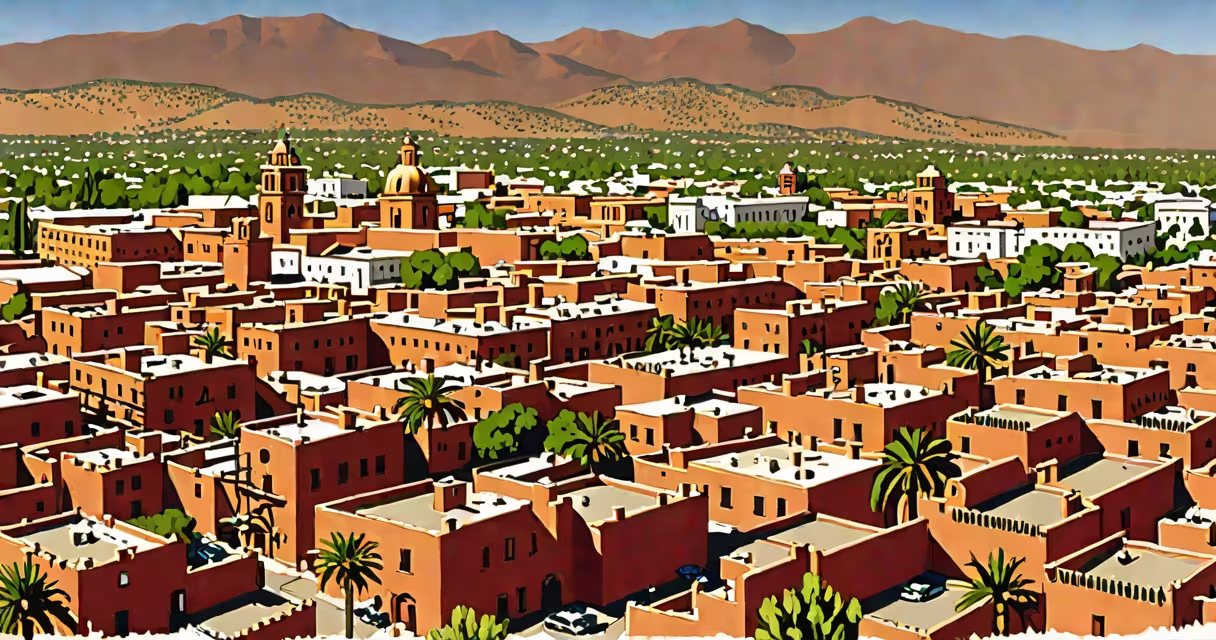
Santa Fe Mexico is the capital city of New Mexico, located in the southwestern United States at an elevation of 7,000 feet. Founded in 1610 by Spanish colonists, it is the oldest state capital in the country and a center of Pueblo Revival architecture, Native American culture, and Hispanic heritage.
The city sits in a high desert basin surrounded by the Sangre de Cristo Mountains. Its elevation influences weather patterns, creating dry air and distinct seasonal shifts. Winter temperatures often drop below freezing, while summer days reach 90°F (32°C). This climate supports the region's traditional adobe construction, which uses sun-dried earth bricks for thermal mass and insulation.
Santa Fe's urban layout reflects its colonial roots. The original plaza, established in 1610, remains the civic heart of the city. Modern streets radiate from it in a grid pattern, preserving the original Spanish land grant system. The city's zoning laws require that new buildings follow the Pueblo Revival style-flat roofs, rounded corners, and stucco finishes-to maintain visual continuity with historic structures.
City planning in Santa Fe prioritizes historical preservation over modern development. The Historic District, designated by the National Register of Historic Places, covers 1,200 acres and includes over 2,000 contributing buildings. Any new construction within this zone must pass review by the Santa Fe Historic Preservation Review Board, which evaluates architectural compatibility, materials, and scale.
For example, in 2018, a developer proposed a glass-and-steel apartment building near the plaza. The proposal was rejected after public hearings highlighted concerns about visual disruption. The board cited the city's 1975 Landmark Ordinance, which mandates that new designs "do not conflict with the character of the surrounding historic environment."
Adobe construction remains central to the city's identity. Adobe walls are typically 18 inches thick, providing natural temperature regulation. A single wall can reduce internal temperature swings by up to 20°F compared to conventional brick. These walls also absorb sound, reducing noise pollution in dense neighborhoods.
Adobe is the dominant building material in Santa Fe's historic core. Made from a mixture of clay, sand, straw, and water, it is shaped into bricks and dried in the sun. Each brick weighs between 25 and 30 pounds. The city's climate-low humidity and abundant sunshine-makes sun-drying efficient and cost-effective.
Other common materials include wood framing, stone foundations, and stucco finishes. Roofs are typically flat or low-pitched, with wooden beams supporting heavy tile or metal roofing. The city's fire code requires that all roofs be non-combustible, leading to widespread use of metal roofing despite its higher initial cost.
| Type | Common Use | Material Composition | Typical Cost (per sq ft) |
|---|---|---|---|
| Adobe Wall | Exterior walls, interior partitions | Clay, sand, straw, water | $3.50-$5.00 |
| Stucco Finish | Exterior surface coating | Portland cement, lime, sand | $4.00-$6.00 |
| Flat Metal Roof | Roofing on historic buildings | Galvanized steel or aluminum | $7.00-$10.00 |
A non-obvious fact: Adobe walls in Santa Fe are not designed to withstand seismic activity. The city lies in a moderate-risk earthquake zone, but most adobe structures were built before modern seismic codes. Retrofitting them with reinforced frames is expensive-up to $150,000 for a medium-sized home-and rarely done due to cost and aesthetic concerns.
Santa Fe attracts over 1.8 million visitors annually, making tourism the largest economic sector. The city hosts 120 art galleries, 40 museums, and 150 annual events, including the International Folk Art Market and the Santa Fe Indian Market. These events draw artists and collectors from 30 countries.
One notable example: the 2023 Santa Fe Indian Market featured 200 Native American artisans from 12 tribes. Sales totaled $2.3 million, with 70% of revenue going directly to artists. The event is held each August on the plaza, drawing crowds of 50,000 over three days.
Local businesses rely on cultural authenticity. A 2022 study by the University of New Mexico found that 68% of tourists visiting Santa Fe specifically seek out authentic Native American crafts. Items labeled "authentic" must be handmade by enrolled tribal members, verified through the Santa Fe Indian Market's certification program.
Santa Fe Mexico is often mistaken for Santa Fe, New Mexico's capital. The correct name is Santa Fe, New Mexico. The city is not in Mexico-despite the name, which comes from Spanish meaning "Holy Faith." The name was chosen by Spanish conquistadors in 1610, long before the U.S.-Mexico border was drawn.
Another misconception: Santa Fe is a tourist trap with little local life. In reality, 48% of residents live within the historic district. The city has 11 public libraries, 15 community centers, and 120 schools serving over 50,000 students. The average household income is $68,000, above the national median.
I once visited a small adobe home in the Old Town neighborhood during a winter festival. The owner, a sixth-generation resident, showed me how she heated her home using a wood-fired oven in the kitchen. She said, "The walls hold heat all night. You don't need a furnace." I felt the warmth on my hands even after sunset-a direct result of the thermal mass in the adobe.