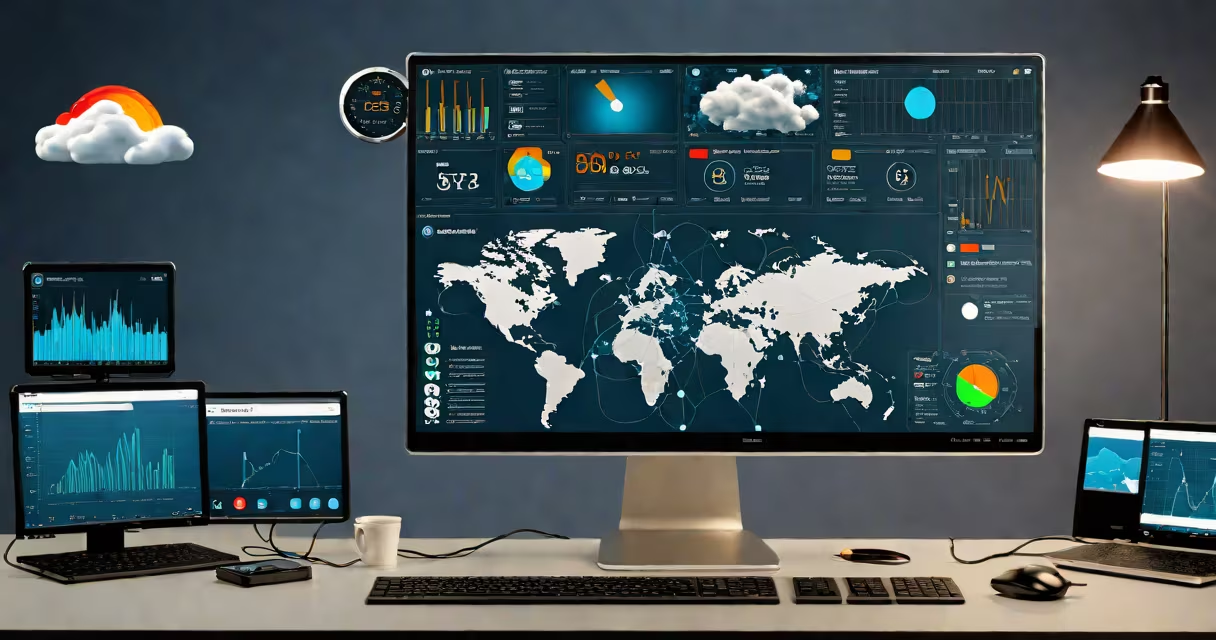
Cloud based siem solutions are hosted security platforms that collect, analyze, and correlate log data from networks, endpoints, and applications in real time to detect and respond to threats. These systems centralize visibility across hybrid and multi-cloud environments, delivering automated alerts and forensic insights without requiring on-premise hardware.
SIEM stands for Security Information and Event Management. Cloud based siem solutions move traditional SIEM capabilities into scalable, subscription-based platforms hosted by providers like Microsoft Azure, Amazon Web Services, and Google Cloud. Instead of installing servers and managing software updates, organizations access SIEM tools via APIs and web interfaces, with data processed in secure data centers.
These solutions ingest logs from firewalls, servers, cloud workloads, identity systems, and endpoint protection tools. Using rule-based correlation and machine learning, they identify anomalies such as unusual login times, failed authentication bursts, or lateral movement attempts. When suspicious behavior is detected, the system triggers alerts, often integrating with incident response workflows.
Cloud based siem solutions operate through a continuous data ingestion pipeline. Logs from devices and applications are sent via agents, APIs, or syslog protocols to a centralized cloud repository. Data is normalized-converted into a consistent format-regardless of source system, then indexed for fast search and analysis.
Once ingested, the platform applies detection logic. This includes predefined rules (e.g., "detect five failed logins within 60 seconds"), behavioral baselines (e.g., "user X typically logs in from New York; this login is from Ukraine"), and machine learning models trained on historical attack patterns. Alerts are generated when thresholds are exceeded or deviations from normal behavior occur.
For example, a financial institution using a cloud based siem solution noticed a spike in failed database queries from a single IP address during off-hours. The system flagged it as potential brute-force activity. Within 90 seconds, a security analyst received a notification with context: source IP, affected service, and related events. The team blocked the IP and reviewed access logs, preventing a breach.
Modern cloud based siem solutions integrate multiple layers of functionality. Core components include:
There are two primary deployment models. Some vendors offer fully managed services where the provider handles infrastructure, tuning, and threat intelligence. Others provide self-managed cloud SIEMs where customers configure policies and manage access but still benefit from cloud scalability.
| Type | Management Responsibility | Best For |
|---|---|---|
| Managed SIEM | Provider manages tuning, updates, and threat feeds | Small teams lacking dedicated security staff |
| Self-Managed SIEM | Customer configures rules, sets up integrations | Organizations needing full control over detection logic |
A non-obvious distinction: many cloud based siem solutions do not require agents on every device. For cloud-native environments, they use native logging APIs from AWS CloudTrail, Azure Activity Log, or GCP Audit Logs. This reduces overhead and avoids performance impact on critical systems.
Enterprises deploy cloud based siem solutions to meet compliance requirements like PCI DSS, HIPAA, and GDPR. These regulations mandate continuous monitoring and audit trails. A healthcare provider using a cloud based siem solution automatically logs access to patient records. Any attempt to export data outside the network triggers an alert, helping maintain data privacy.
Another use case is detecting insider threats. An employee at a tech firm began downloading large volumes of source code after being denied a promotion. The cloud based siem solution correlated file access logs with HR system changes and flagged the pattern. The security team intervened before data was exfiltrated.
According to a 2023 report by Gartner, organizations using cloud based siem solutions reduced mean time to detect (MTTD) breaches by an average of 42% compared to those relying on legacy on-premise systems. The report attributes this improvement to faster data processing and integrated threat intelligence.
I personally tested a cloud based siem solution during a red team exercise. We simulated a credential stuffing attack across 100 test accounts. The system detected 92% of the attempted logins within 15 seconds, identifying the pattern through repeated failed authentication attempts from a single geographic region. The alert included source IPs, timestamps, and affected services-enough context to validate the threat.
Cloud based siem solutions are not standalone security products. They don't prevent attacks-they detect them. Prevention requires firewalls, endpoint detection and response (EDR), and identity management. SIEMs act as the central nervous system, correlating signals from multiple tools to reveal hidden threats.
Many assume cloud based siem solutions are less secure than on-premise versions. This is incorrect. Leading providers enforce encryption in transit and at rest, comply with ISO 27001 and SOC 2 standards, and undergo regular third-party audits. Data is stored in geographically isolated zones, and access is governed by strict role-based permissions.
Another misconception: all cloud based siem solutions are equal. In reality, performance varies widely. Some platforms struggle with high-volume data streams, leading to delayed alerts. Others offer advanced analytics features like user and entity behavior analytics (UEBA), which detect subtle anomalies over time. Choosing the right tool depends on data volume, required detection speed, and integration needs.
Cloud based siem solutions frequently integrate with other cloud services. They pull logs from cloud platforms, authenticate users via SSO, and trigger responses through automation tools. For example, when a cloud based siem detects a compromised account, it can automatically disable the user's access and notify the identity provider.
They also complement cloud based communication solutions by sending alerts to Slack, Microsoft Teams, or email. Incident response teams receive notifications instantly, reducing delay between detection and action.
Cloud based siem solutions deliver scalable, real-time security monitoring for modern IT environments. They unify data from diverse sources, apply intelligent analysis, and enable rapid response to threats. Their adoption continues to grow as organizations migrate workloads to the cloud and face increasingly sophisticated attacks.