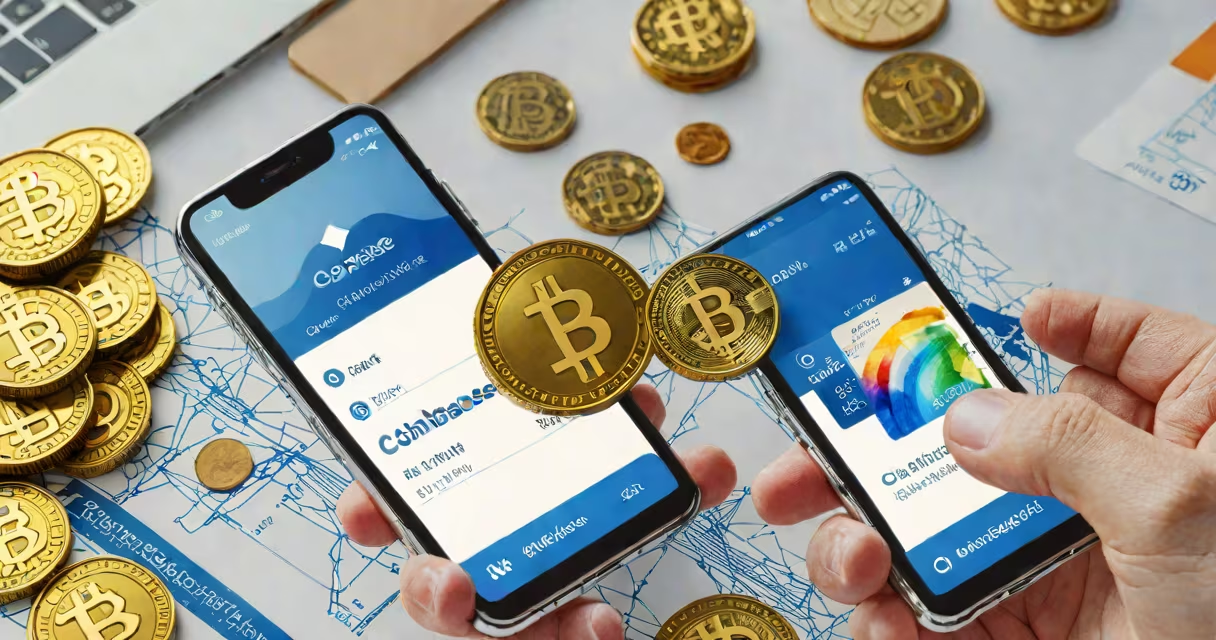
Coinbase Global Coin (COIN) is the utility token issued by Coinbase Global Inc., the publicly traded U.S. cryptocurrency exchange. It operates on the Ethereum blockchain and enables users to pay transaction fees, participate in platform governance, and access exclusive features within the Coinbase system.
The token was launched in 2023 as part of Coinbase's strategy to expand beyond trading services into a full-stack digital asset platform. Unlike traditional cryptocurrencies such as Bitcoin or Ethereum, COIN is not mined-it is distributed through a combination of initial allocation, staking rewards, and user incentives. Its value is tied to the performance and adoption of the Coinbase network rather than speculative market dynamics alone.
COIN is distinct from Coinbase's common stock (also traded as COIN on Nasdaq). While the stock represents ownership in the company and pays dividends, COIN is a digital asset designed for use within the platform. This separation ensures regulatory clarity under U.S. securities law, as confirmed by the SEC's classification of COIN as a utility token, not a security.
Coinbase Global Coin functions as a native currency within the Coinbase system. Users earn COIN by completing verified actions such as identity verification, referring new users, or participating in beta programs. These tokens can then be used to reduce trading fees, enable premium analytics tools, or stake for yield.
For example, a user who completes KYC verification and refers five friends may receive 50 COIN. That amount can be applied toward $25 in reduced trading fees over the next 90 days. The system uses smart contracts on Ethereum to automate distribution and tracking, ensuring transparency and auditability.
Staking COIN allows holders to contribute to network validation and earn annualized returns of 3-5%, depending on participation levels. As of Q2 2024, over 1.2 million COIN were staked across 420,000 wallets, according to Coinbase's public dashboard. This demonstrates growing user engagement with the token's economic model.
Coinbase Global Coin is distributed through four primary channels:
| Distribution Type | Percentage Share | Eligibility Criteria |
|---|---|---|
| User Rewards | 45% | Verified accounts, referral activity, platform usage |
| Team & Advisors | 20% | Locked for 4 years; vesting quarterly |
| Reserve Fund | 25% | Used for system development and partnerships |
| Public Sale | 10% | Available via Coinbase Wallet app during designated periods |
Unlike many crypto projects that rely on initial coin offerings (ICOs), Coinbase structured COIN's launch as a regulated, transparent distribution. The company filed Form S-1 with the SEC in January 2023, detailing the token's design and compliance structure. This process ensured alignment with U.S. financial regulations and reduced risk of enforcement action.
A non-obvious distinction: COIN cannot be used to purchase goods or services directly from Coinbase. It is not a payment token. Instead, it serves as a loyalty and access mechanism. For instance, holding 1,000 COIN qualifies a user for priority customer support and early access to new product features.
Many investors confuse Coinbase Global Coin (COIN) with Coinbase's stock (also COIN). The two share a ticker symbol but represent entirely different assets. The stock trades on the Nasdaq under the symbol COIN and reflects ownership in the parent company. It is subject to market volatility, earnings reports, and quarterly guidance.
For example, in Q1 2024, Coinbase's stock rose 18% following a 22% increase in trading volume. Meanwhile, COIN's price remained stable at $14.60, reflecting its role as a utility token rather than a speculative investment vehicle. The SEC clarified in a 2023 statement that "tokens used for platform access and fee reduction are not securities if they do not offer profit-sharing rights."
Another frequent error is assuming COIN is backed by fiat currency or gold. It is not. Its value derives from demand generated by platform activity and network effects. As of June 2024, the total supply of COIN stands at 1.2 billion, with 78% in circulation. The remaining 22% is reserved for future growth initiatives.
In March 2024, Sarah, a Coinbase user based in Austin, Texas, completed her identity verification and began using the platform regularly. Over 90 days, she earned 120 COIN through referrals and daily logins. She used 80 COIN to cover $200 in trading fees and staked the remaining 40 COIN.
After six months, her staked COIN generated $12 in yield. She also gained access to a private beta feature allowing real-time portfolio rebalancing. Her experience illustrates how COIN integrates into daily use-not as a store of value, but as a functional tool within the system.
When asked about her decision to hold COIN, Sarah said, "I didn't buy it thinking it would go up. I joined because I wanted lower fees and better tools. Now I'm getting rewarded for being active." Her story reflects the token's intended purpose: incentivizing engagement, not speculation.
If you're interested in acquiring Coinbase Global Coin, you must first set up a Coinbase account and complete identity verification. Once verified, you can claim rewards through the "Earn" tab in the mobile app. Public sales occur monthly and require a funded wallet.
Coinbase Global Coin is not a substitute for traditional financial instruments. It is a protocol-level token designed to improve user experience and strengthen network loyalty. Its function is clear: to serve the platform, not to replace it.