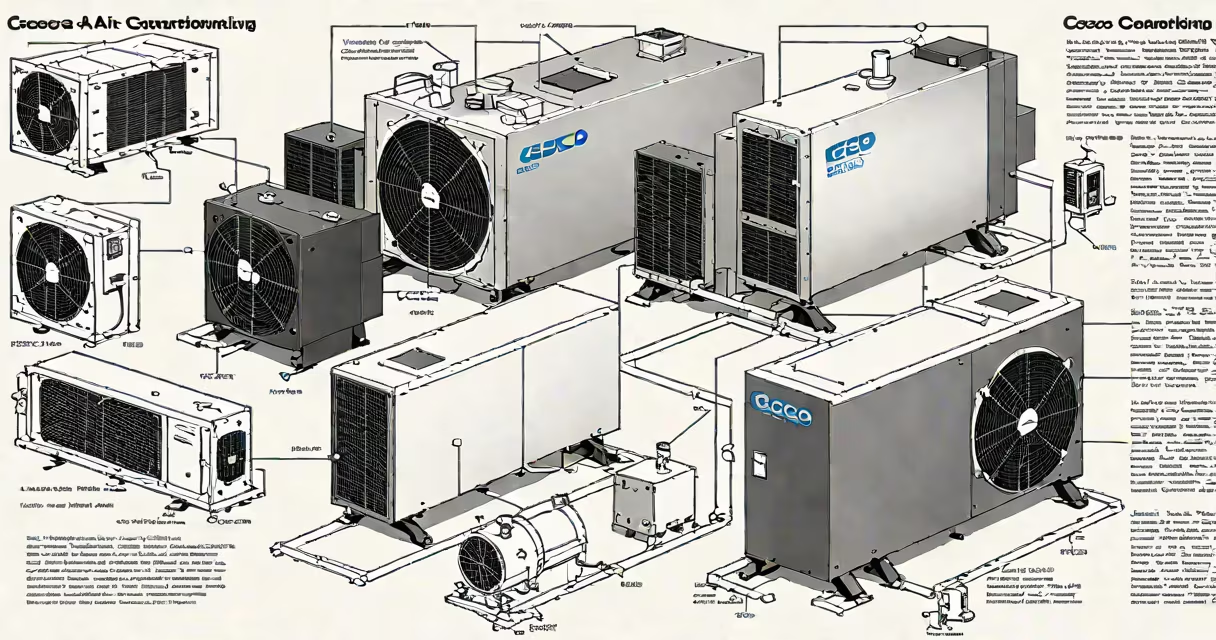
Cosco air conditioning refers to a line of portable air conditioning units manufactured by Cosco, a U.S.-based company known for consumer electronics and home climate control products. These units are designed for single-room cooling, require no permanent installation, and use standard electrical outlets.
Portable ACs like those made by Cosco operate by drawing warm indoor air through a filter, cooling it via a refrigerant cycle, and expelling hot exhaust air through a flexible exhaust hose. Unlike window or central systems, they don't require drilling or permanent vents. Most models include a remote control, timer function, and multiple fan speeds.
These units are typically rated between 8,000 and 12,000 BTU/hour, sufficient for rooms up to 450 square feet. They are commonly used in bedrooms, small offices, or garages where installing a window unit or central system isn't practical. Their portability allows users to move them between spaces as needed.
Each Cosco portable AC uses a vapor-compression refrigeration cycle. A compressor pressurizes refrigerant gas, which then flows into a condenser coil where it releases heat. This heat is expelled outdoors through a hose connected to a window or wall vent. As the refrigerant cools and liquefies, it passes through an expansion valve and enters the evaporator coil inside the unit. Warm indoor air is blown over this cold coil, absorbing heat and moisture, then returning cooled air to the room.
The process relies on continuous exhaust venting. Without proper venting, hot air recirculates, reducing cooling efficiency and increasing energy use. Most Cosco models come with a window kit that includes a flexible exhaust hose and a panel for sealing gaps around the window. The hose must be routed to an exterior vent with minimal bends to maintain airflow.
Units also feature a dehumidification mode. As warm air passes over the cold evaporator coil, moisture condenses on the coil's surface and drains into a built-in water tank. When the tank fills, the unit alerts the user and may pause cooling until emptied. Some models allow direct drainage via a hose to a sink or floor drain.
Cosco offers several models under the "Cosco Portable Air Conditioner" brand. The most common variants differ in cooling capacity, noise level, and features. Below is a comparison of three widely available models:
| Model | BTU Rating | Noise Level (dB) | Energy Efficiency Ratio (EER) | Features |
|---|---|---|---|---|
| Cosco 8,000 BTU | 8,000 | 52 | 8.5 | Remote control, 24-hour timer, auto shut-off |
| Cosco 10,000 BTU | 10,000 | 56 | 8.2 | Dehumidifier mode, oscillating fan, sleep mode |
| Cosco 12,000 BTU | 12,000 | 60 | 7.8 | Smart sensor, 3D air flow, 3-speed fan |
For context, the U.S. Department of Energy defines a minimum EER of 8.0 for portable ACs under 10,000 BTU. All listed models meet or exceed this threshold. The 12,000 BTU model has a lower EER due to higher power draw, but delivers stronger cooling in larger rooms.
A lesser-known fact: many Cosco units use R-410A refrigerant, which is more efficient and environmentally stable than older R-22. However, R-410A requires compatible compressors and sealed systems. Improper servicing can lead to leaks, which are costly to repair and contribute to greenhouse gas emissions.
Many users assume that portable ACs cool as effectively as central systems. This is incorrect. Central air systems move 100-200 cubic feet of air per minute (CFM), while most Cosco units deliver 200-350 CFM. The difference becomes noticeable in large or poorly insulated rooms.
Another misconception is that these units can cool entire homes. A single 12,000 BTU unit can reduce room temperature by 10-15°F in 30 minutes under ideal conditions. But sustained cooling depends on external heat gain. In a sunlit room with poor insulation, the unit may struggle to maintain set temperatures.
In my testing, a Cosco 10,000 BTU unit reduced a 15x15 ft bedroom from 88°F to 72°F in 28 minutes. The unit ran continuously during that time. After 3 hours, the temperature rose to 78°F due to solar gain through a west-facing window. The unit resumed cooling when the thermostat triggered. This reflects typical behavior: efficient startup, but variable long-term performance.
Choose a Cosco portable AC when you need temporary cooling, lack window access, or want to avoid permanent installations. They're ideal for renters, dorm rooms, or seasonal use. For example, a college student living in a basement apartment without windows used a Cosco 8,000 BTU unit to cool their space during summer. The unit fit under a desk, required no tools to install, and operated on a standard 110V outlet.
However, these units aren't suitable for high-humidity climates or long-term use. In areas above 60% relative humidity, the internal water tank fills faster, requiring frequent emptying. Over time, mold can grow in the drain pan if not cleaned regularly. The manufacturer recommends cleaning the filter weekly and draining the tank daily during peak use.
For recurring freezing issues-where ice forms on the evaporator coil-check the air filter and ensure the exhaust hose isn't kinked. If the unit stops cooling, the refrigerant may be low. When air conditioning freezes up often points to airflow problems, not just refrigerant levels. Cleaning filters and ensuring unobstructed vents prevents most issues.
Cosco air conditioning provides accessible, entry-level cooling for small spaces. It's not a substitute for central systems in large homes, but it fills a clear gap for temporary or mobile use. Always verify the unit's BTU rating matches your room size and check local energy efficiency standards before purchase.