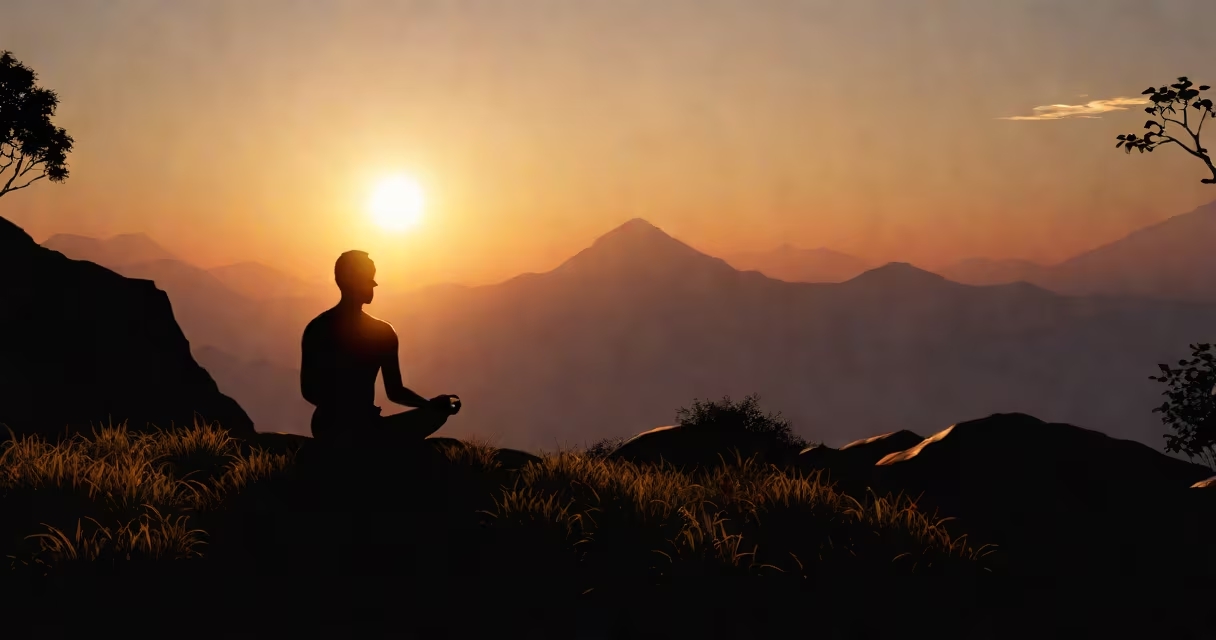
The definition of spirituality describes a personal search for meaning, connection, and inner peace beyond material or religious structures. It involves awareness of deeper values, purpose, or transcendence through reflection, emotion, or experience.
Spirituality is not defined by doctrine or ritual. It is shaped by individual perception, emotional insight, and moments of clarity or awe. A person may feel spiritually awakened while hiking a mountain trail, listening to music, or caring for a loved one during illness-experiences that evoke a sense of unity or significance.
Unlike organized religion, which provides shared rituals and texts, the definition of spirituality focuses on internal states. It includes practices like journaling, breathwork, nature immersion, or mindful presence. These are tools for accessing inner awareness, not requirements for belief.
At its core, the definition of spirituality operates through introspection and emotional resonance. It's not about proving a metaphysical claim-it's about experiencing a shift in perspective. This shift often comes when someone pauses, reflects, and feels connected to something larger than their immediate concerns.
Neuroscience research shows that meditation and contemplative practices activate brain regions linked to self-awareness and empathy. A 2016 study published in *Frontiers in Human Neuroscience* found that long-term meditators show increased gray matter density in areas associated with attention and emotional regulation. This supports the idea that spiritual practices have measurable effects on mental state.
For example, a nurse working night shifts reported feeling emotionally drained until she began spending five minutes each morning in silence, focusing only on her breath. Over time, she noticed reduced anxiety and greater patience with patients. She didn't adopt a belief system-she simply cultivated stillness. That stillness became part of her spiritual practice, even if she didn't label it as such.
The definition of spirituality varies widely based on culture, life stage, and personal history. Some people find it in art, others in service, and many in relationships. There is no single template.
| Type | Key Features | Example |
|---|---|---|
| Nature-based | Connection to ecosystems, seasonal cycles, animal life | A farmer who plants seeds with ritual care, honoring soil health and weather patterns |
| Mindfulness-focused | Present-moment awareness, non-judgmental observation | An office worker using breathing techniques between meetings to reduce stress |
| Service-oriented | Meaning derived from helping others, altruism | A volunteer who spends weekends feeding homeless individuals, describing the act as "sacred" |
| Artistic expression | Emotional truth conveyed through music, dance, writing | A poet whose work explores grief and rebirth, read aloud at community gatherings |
These forms aren't ranked. A person can move between them. One individual may begin with artistic expression, then develop a mindfulness routine, and later join a community garden project-all rooted in the same desire for connection and meaning.
People turn to the definition of spirituality during times of change: loss, career shifts, aging, or major life decisions. It offers a structure for processing uncertainty without relying on external authority.
Clinical psychology recognizes the role of spirituality in healing. According to the American Psychological Association, spiritual beliefs can improve coping strategies in chronic illness and trauma recovery. For example, a 2018 study in *Journal of Clinical Psychology* found that patients with cancer who engaged in reflective practices reported lower levels of depression and higher quality of life.
Workplaces increasingly acknowledge spiritual well-being. Companies like Google and Salesforce offer mindfulness training and quiet rooms. These aren't religious programs-they're structured environments designed to support mental clarity and emotional resilience. They reflect a growing understanding that employee focus and morale depend on inner stability, not just productivity metrics.
Many assume the definition of spirituality requires belief in God, angels, or an afterlife. This is incorrect. Spirituality can exist without supernatural elements. A person may feel deeply connected to the universe through science, art, or human relationships-without invoking divine beings.
Another error is equating spirituality with New Age culture. While some New Age practices overlap with spiritual ones, the definition of spirituality is broader and older. Ancient Greek philosophers like Epictetus wrote about living in alignment with nature and reason-a form of spiritual discipline that predates modern movements.
Even more subtle: people often confuse spirituality with religion. The two are related but distinct. Religion typically involves communal rituals, institutional leadership, and codified teachings. Spirituality is personal, fluid, and centered on internal experience. You can be religious and spiritual. You can be spiritual without being religious. But you cannot be spiritual if you reject all inner exploration.
Consider Maya, a graphic designer in Portland. She doesn't attend church. She doesn't chant or wear a symbol. Yet her daily routine reflects the definition of spirituality:
Each action is intentional. None is performative. She doesn't seek approval. She doesn't expect results. Her day is guided by presence, care, and small acts of attention. This is spirituality-not as a label, but as lived experience.
When asked if she considers herself spiritual, she says, "I don't know. I just try to be awake." That's the essence of the definition of spirituality: awareness, choice, and connection.
Understanding the definition of spirituality helps clarify what it is not. It is not a replacement for therapy. It does not guarantee happiness. It does not require belief in miracles. It is a way of being-open, reflective, and grounded in the present moment.
The definition of spirituality remains personal. But its principles-presence, meaning, connection-are universal. They appear in quiet moments, bold choices, and everyday decisions. They are not hidden. They are simply waiting to be noticed.