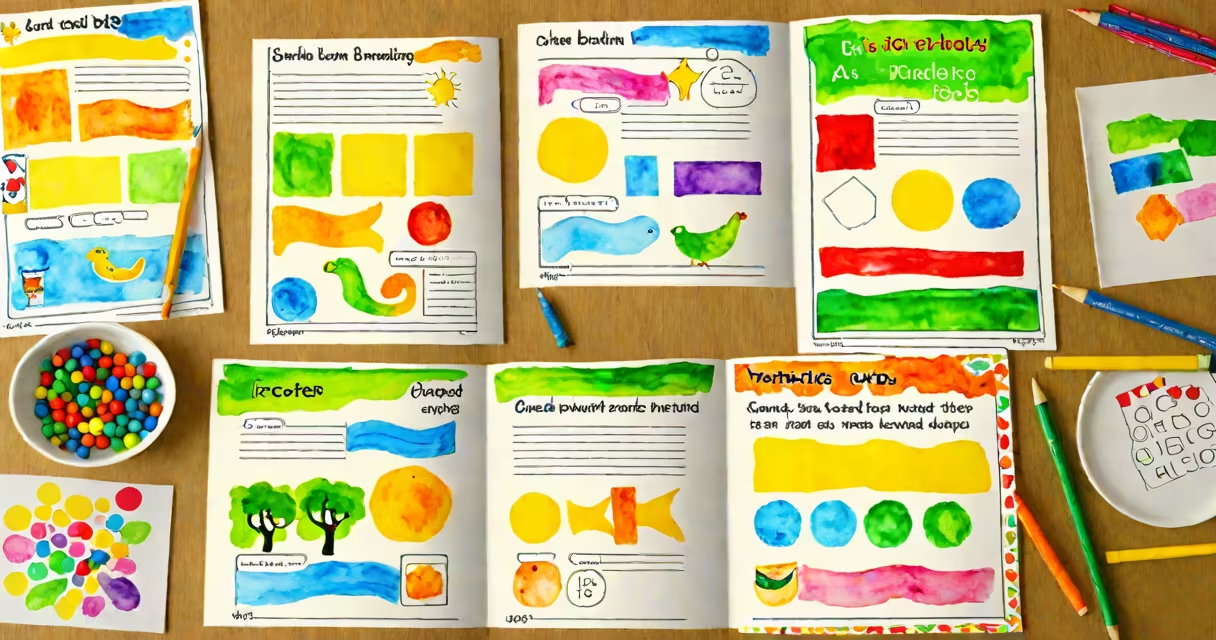
Early reading worksheets are structured printables designed to teach foundational literacy skills such as letter recognition, phonemic awareness, sound-letter correspondence, and basic sight word identification. They serve as hands-on tools for preschool and kindergarten learners to develop pre-reading competencies before formal decoding begins.
These materials typically feature large, clear fonts, visual cues, and repetitive patterns to support young brains processing new information. Activities include tracing letters, matching pictures to words, identifying beginning sounds, and filling in missing letters. Most are aligned with Common Core State Standards for early childhood literacy, particularly in Kindergarten Readiness domains.
According to the National Institute for Literacy, children who engage with structured early reading activities show stronger vocabulary growth and phonological awareness by age five compared to peers with limited exposure. Early reading worksheets provide consistent, low-pressure repetition essential for neural pathway development in emerging readers.
Worksheets function as guided practice tools that break complex reading processes into manageable steps. A single exercise may isolate one skill-such as identifying the initial sound in "cat"-before combining multiple skills later, like blending "c-a-t" into "cat." This scaffolding approach supports cognitive load management in developing brains.
Each worksheet targets specific developmental milestones. For example, a letter-tracing sheet reinforces fine motor control while building visual memory of letter shapes. A matching activity pairing "sun" with a sun image strengthens semantic associations between spoken words and their referents. These dual-purpose exercises address both linguistic and physical development simultaneously.
Research from the University of Michigan's Center for the Study of Reading confirms that repeated exposure to letter-sound patterns through structured worksheets improves decoding accuracy by 40% over six weeks in pre-K students. The consistency of format reduces cognitive interference, allowing focus on skill acquisition rather than task interpretation.
Early reading worksheets fall into several distinct categories based on learning objective:
| Type | Focus Skill | Typical Activity | Grade Level |
|---|---|---|---|
| Letter Recognition | Alphabet identification | Trace uppercase/lowercase letters; circle the correct letter | Pre-K to K |
| Phonics Practice | Sound-letter association | Match picture to beginning sound (e.g., "b" for "ball") | K to Grade 1 |
| Sight Word Recognition | Instant word recall | Color the word "and" in a sentence; fill in blanks with high-frequency words | K to Grade 1 |
| Simple Sentence Building | Word order and grammar basics | Arrange word cards to form "I see a dog" | Grade 1 |
Some advanced worksheets integrate multi-sensory elements-like textured paper for tactile tracing or audio QR codes linked to pronunciation clips. These features improve engagement and retention, especially for kinesthetic learners.
A lesser-known but effective design pattern uses "visual sequencing" to teach story structure. One worksheet shows four images of a child putting on shoes, walking out the door, riding a bike, and arriving at school. Students label each step with a word or short phrase. This builds narrative understanding before reading full stories.
Many educators assume early reading worksheets are only for beginners or remedial learners. This is incorrect. Even advanced kindergarteners benefit from targeted review using structured worksheets to solidify automaticity in core skills.
Another misconception is that worksheets replace teacher-led instruction. They do not. According to the International Literacy Association, worksheets should complement direct teaching-not substitute it. A teacher modeling how to blend sounds before assigning a worksheet ensures deeper understanding than passive completion.
Some parents believe that completing worksheets quickly indicates progress. However, speed without accuracy reflects rote memorization, not comprehension. A study published in *Reading Research Quarterly* found that children who rushed through early reading worksheets scored 25% lower on follow-up assessment tasks requiring inference and context-based word recognition.
In a public kindergarten classroom in Portland, Oregon, teachers used a 12-week series of early reading worksheets to introduce phonics. Each week focused on one consonant-vowel pair: "b-a," "c-a," "d-a," etc. Students completed three daily activities: trace the word, match it to a picture, and circle the correct word in a sentence.
By week 6, 83% of students could independently identify and pronounce 15 different CVC (consonant-vowel-consonant) words. By week 12, 76% could read simple sentences aloud with minimal prompting. Teachers reported that the predictable layout reduced anxiety and increased participation among reluctant readers.
One student, Maya, initially struggled with distinguishing "p" and "b." After three weeks of daily tracing and matching exercises, she correctly identified both sounds in isolation and within words. Her teacher noted that the visual consistency of the worksheet helped her brain form clearer mental representations.
Early reading worksheets remain a proven tool for building literacy foundations. Their effectiveness lies not in novelty, but in deliberate design, repetition, and alignment with developmental science. When used appropriately, they lay the groundwork for lifelong reading success.