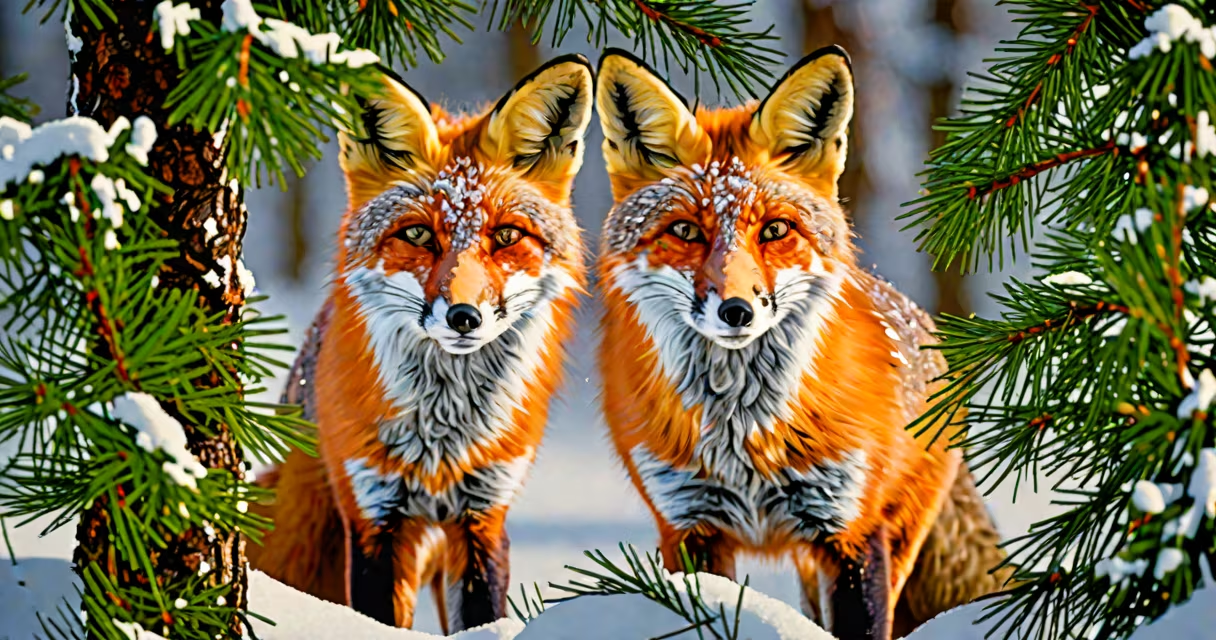
Red foxes are intelligent, adaptable mammals known for their bushy tails, sharp hearing, and clever problem-solving skills. They live in forests, grasslands, and even cities across North America, Europe, and Asia.
These animals have excellent night vision and can hear a mouse squeak from 100 feet away. Their thick fur keeps them warm in cold climates, and they often dig dens called earths to raise their young. Foxes are omnivores-they eat small animals, fruits, insects, and even human food scraps.
Despite their reputation in stories, foxes are shy and avoid people. They communicate using different sounds, including barks, screams, and yips. A group of foxes is called a skulk.
Red foxes thrive in diverse habitats because they adapt quickly. In winter, their fur grows thicker and changes color to blend into snow-covered landscapes. In summer, their coats lighten to match dry grass and dirt.
They build complex burrows with multiple entrances and exits. These earths can be used for years and may include separate chambers for sleeping, eating, and raising pups. Some foxes even reuse old badger or rabbit holes.
When food is scarce, foxes travel long distances-up to 10 miles in a single night-to find meals. They rely on memory and scent trails to go through unfamiliar areas.
Foxes have large ears that rotate independently to pinpoint sounds. Their inner ear structure allows them to detect frequencies beyond human hearing, including ultrasonic calls from rodents.
They also have strong night vision. Their eyes contain a reflective layer called the tapetum lucidum, which amplifies low light. This gives them a 30% better ability to see in darkness than humans.
One study published in *Animal Behaviour* found that foxes use a magnetic compass during hunting. Researchers observed that they jump toward prey at a precise angle-northwest-regardless of wind or terrain. This suggests they align with Earth's magnetic field to improve accuracy.
Many people think foxes are dangerous or aggressive. In reality, they avoid humans and rarely attack. Most encounters happen when a fox is sick or injured, not because it's hostile.
Another myth is that foxes bark like dogs. While both animals make barking noises, fox vocalizations are higher-pitched and more varied. A fox's "bark" sounds like a rapid series of yelps, often used to warn others of danger.
Some believe foxes are always red. But fox species differ widely. Arctic foxes have white fur in winter and gray-blue in summer. Fennec foxes, native to deserts, have oversized ears to dissipate heat and hear underground prey.
| Type | Color | Habitat | Unique Fact |
|---|---|---|---|
| Red fox | Red-orange coat, white-tipped tail | Forests, farmland, urban parks | Found on every continent except Antarctica |
| Arctic fox | White in winter, brown-gray in summer | Arctic tundra, northern Canada and Siberia | Can survive temperatures below -50°C |
| Fennec fox | Light tan with big ears | Sahara Desert, North Africa | Ears are 6 inches long-larger than its head |
| Gray fox | Grayish-brown with black-tipped tail | Wooded areas, southern U.S., Mexico | Only fox that can climb trees |
I once watched a gray fox scale a tree in a suburban backyard to escape a dog. It didn't just run up-it used its claws and balance to move sideways along branches, like a cat. That moment showed me how much we still learn about these creatures.
As opportunistic feeders, foxes help control rodent populations. By eating mice, voles, and rabbits, they prevent overgrazing and crop damage. They also disperse seeds through their droppings, aiding plant growth.
Scientists estimate that one fox can reduce a local rodent population by up to 30% each year. This makes them valuable in agricultural areas and natural ecosystems alike.
When you see a fox in the wild, remember: it's not a threat. It's a survivor, using intelligence and instinct to live in changing worlds.