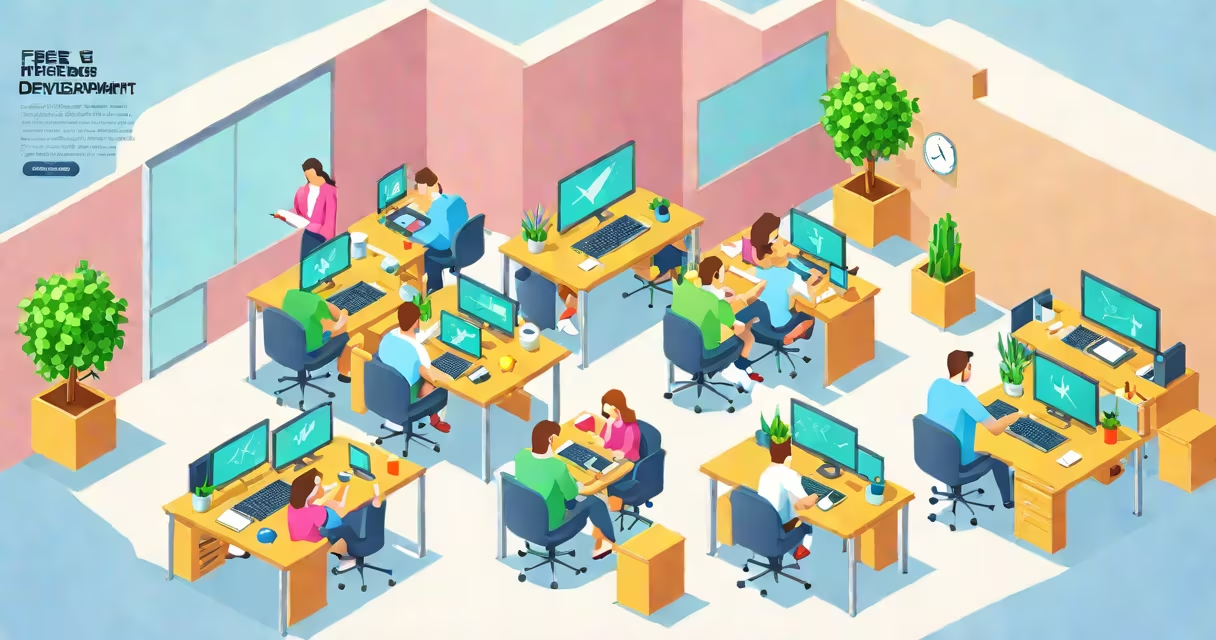
Free software development classes are structured educational programs that teach programming fundamentals, software design, and development tools at no cost. They cover topics like coding languages, debugging, version control, and building applications using real-world projects.
These classes are hosted on platforms such as freeCodeCamp, The Odin Project, and Codecademy's free tier. They provide step-by-step lessons, hands-on coding challenges, and project-based assessments. Participants learn by writing code, testing solutions, and submitting work for peer or automated review.
Unlike informal YouTube tutorials or scattered blog posts, free software development classes follow a curriculum designed by experienced developers. They often include quizzes, project milestones, and community forums. Completion certificates are issued upon finishing modules, which can be added to resumes or portfolios.
Each class begins with a learning objective, such as "build a responsive website using HTML, CSS, and JavaScript." Lessons progress from basic syntax to complex problem solving. For example, a lesson on loops might start with a simple for loop in Python, then move to nested loops in a game logic context.
Interactive coding environments allow learners to write and run code without installing software. A typical exercise asks users to create a function that calculates the factorial of a number. After typing the solution, the system runs test cases to verify correctness. Feedback appears instantly, showing which inputs failed and why.
Classes often integrate version control early. Students learn to use Git commands like git commit and git push to track changes. This mirrors how professional teams manage code. One class requires students to fork a GitHub repository, make edits, and submit a pull request-a real workflow used in open-source projects.
Most free software development classes are modular. Each module covers a specific skill set. The following table outlines typical structures:
| Type | Duration | Focus Areas | Example Platform |
|---|---|---|---|
| Full-stack bootcamp | 6-12 weeks | Frontend, backend, databases, APIs | The Odin Project |
| Language-specific | 4-8 weeks | Python, JavaScript, Go | freeCodeCamp |
| Tool-focused | 1-3 weeks | Git, Docker, CLI tools | GitHub Learning Lab |
Some classes emphasize project-based learning. Students build a complete application-like a task manager or weather dashboard-over several weeks. These projects simulate real job tasks. One student built a personal finance tracker using React and Firebase, later adding authentication via OAuth.
Another format uses live coding sessions. Platforms like freeCodeCamp host weekly streams where instructors walk through problems in real time. Viewers type along and ask questions in chat. These sessions often focus on debugging techniques, such as tracing errors in a recursive function.
Individuals use free software development classes to enter tech careers, switch jobs, or improve existing skills. A former graphic designer completed a freeCodeCamp course and landed a junior developer role at a startup within four months. She credits the portfolio projects for demonstrating her ability to deliver working code.
Organizations adopt these classes for employee upskilling. A small nonprofit trained its staff in basic web development to maintain their site without hiring external help. They used The Odin Project's free curriculum and held weekly group study sessions.
Nonprofits and governments also distribute access. The U.S. Department of Labor's Apprenticeship.gov partners with freeCodeCamp to offer free software development tracks to unemployed workers. The program includes mentorship and job placement support.
Many assume free classes lack rigor. This is false. freeCodeCamp's curriculum spans over 300 hours and includes 100+ coding challenges. It aligns with industry standards taught in paid bootcamps. According to Mozilla's 2023 Open Source Education Report, 68% of developers who completed freeCodeCamp reported being hired within six months.
Another myth is that free classes don't prepare learners for technical interviews. In reality, many include interview prep modules. The Odin Project features mock coding interviews with timed problems, such as reversing a linked list in under 15 minutes. Students practice explaining their logic aloud, a key skill in live coding rounds.
A lesser-known fact: some free classes are developed by companies to build talent pipelines. Google's CS First program teaches Python to middle schoolers and feeds into its developer internship program. Similarly, Microsoft sponsors free courses on Azure cloud services through edX, targeting career changers.
Consider a learner using The Odin Project's Full Stack JavaScript path. The final project requires building a habit tracker with a React frontend, Node.js backend, and MongoDB database.
Step 1: Set up the project using npm init and install dependencies like express and mongoose. Step 2: Create a schema for habits with fields like name, frequency, and completion dates. Step 3: Build API endpoints for creating, reading, updating, and deleting habits. Step 4: Connect the React frontend to the backend using Axios. Step 5: Deploy the app to a platform like Render or Vercel.
This project demonstrates full-stack integration. It's not just theory-it's a deployable application. The learner can share the live URL in a job application, proving they can ship code.
After completing the project, the learner earned a certificate and joined a Discord community for feedback. They later contributed bug fixes to the open-source version of the app, gaining real collaboration experience.
Don't confuse free software development classes with free coding videos or social media tips. A video titled "5 Python Tricks" may offer quick insights but lacks structure. Free classes require consistent effort over time and include accountability mechanisms like deadlines and peer reviews.
Also, avoid assuming all free classes are equal. Some platforms offer only introductory content. Others, like freeCodeCamp, have advanced tracks in machine learning and DevOps. Always check the syllabus and estimated time commitment before enrolling.
One key difference: free classes often include community support. Instructors and peers respond to questions in forums. A student struggling with asynchronous JavaScript received five detailed replies in 24 hours. The solution involved understanding event loops and callback queues-concepts that are hard to grasp from static documentation.
I built a personal finance app during a free software development class. I used React for the UI, Express for the API, and PostgreSQL for storage. The class required me to write unit tests with Jest. I initially failed 12 out of 15 test cases. After reviewing error logs and reading the Jest docs, I fixed the issues. The final version passed all tests and deployed successfully.
Free software development classes are accessible, structured, and career-relevant. They deliver practical skills through real projects, peer interaction, and measurable outcomes. With consistent effort, learners gain the confidence and competence needed to contribute to software projects in professional settings.