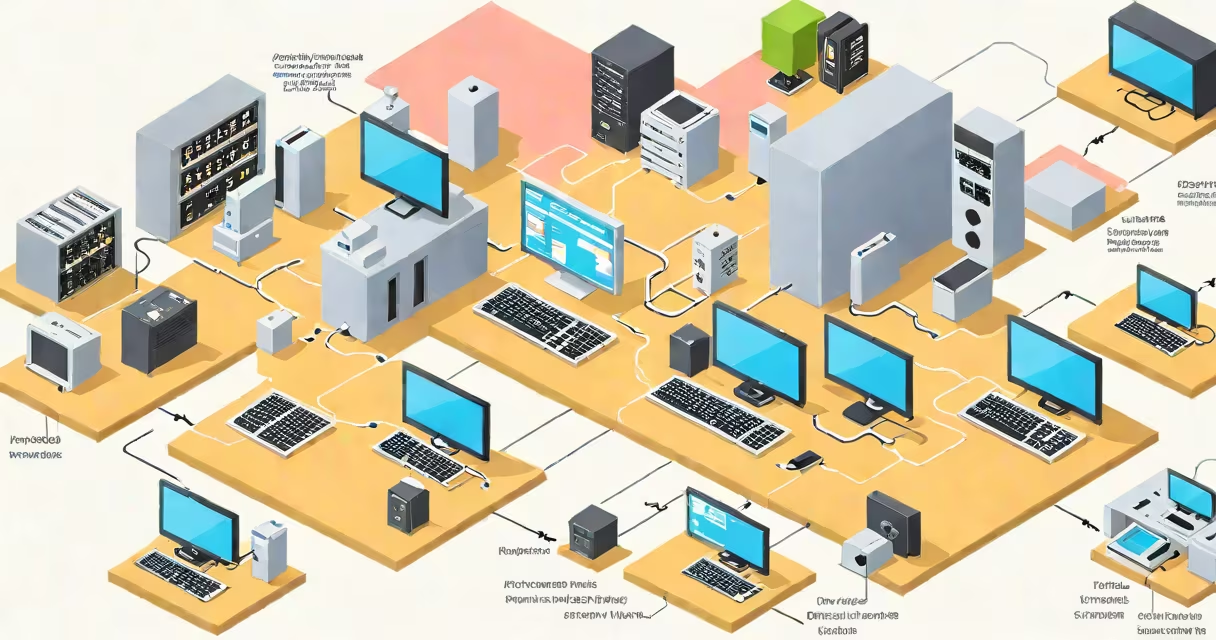
Functionality definition in computer science specifies the behaviors a system must perform to meet user or operational requirements, focusing on what the system does rather than its internal structure or implementation details.
Functionality defines the set of actions a program or system can execute. It answers the question: "What does this software do?" For example, a banking app's functionality includes checking balances, transferring funds, and viewing transaction history. These capabilities are distinct from how they're coded or which programming language was used.
Unlike performance, reliability, or security-qualities that describe how well a system works-functionality describes what it is meant to achieve. A calculator app's functionality is to compute arithmetic operations. Its correctness depends on producing accurate results, not on speed or memory usage.
Functionality is established through formal requirements, often documented in user stories, use cases, or specification sheets. These define expected inputs, outputs, and system responses under various conditions.
For instance, a login system's functionality includes validating credentials, rejecting invalid passwords, and displaying error messages. If a user enters "admin" and "password123", the system should deny access. This behavior is part of the defined functionality, regardless of whether the validation happens via a database query or a hardcoded list.
Developers use functionality definitions to build, test, and verify software. Each feature must be traceable to a requirement. If a feature doesn't match its stated purpose, it fails the functionality test-even if it runs without crashes.
Functionality varies based on system type and user role. Here are common categories:
| Type | Description | Example |
|---|---|---|
| Input/Output | Handles data entry and display | A form that collects user email and displays a confirmation message |
| Processing | Performs calculations or transformations | An image editor applying a blur filter to a photo |
| Control | Manages system flow or state changes | A thermostat turning the heater on when temperature drops below 68°F |
| Integration | Connects with external systems | A shopping cart syncing inventory levels with a warehouse API |
Each type serves a different purpose. Input/output functionality ensures users can interact with the system. Processing functionality delivers value through computation. Control functionality maintains correct state. Integration functionality enables interoperability across platforms.
Clear functionality definition prevents misaligned expectations between developers, testers, and stakeholders. Without it, teams may build features that don't solve the actual problem.
Consider a fitness tracker app. If the functionality is defined as "record daily steps," the team knows to focus on sensor integration, step counting logic, and data persistence. If the definition were vague-"track activity"-the team might waste time adding heart rate monitoring or sleep tracking, features not originally requested.
According to the IEEE Standard 830-1998 on software requirements specifications, functionality must be "unambiguous, complete, consistent, and verifiable." This standard guides how engineers document what a system must do, ensuring that testing can confirm whether the system meets its intended purpose.
Functionality is often mistaken for usability or performance. A system can have correct functionality but poor usability. For example, a file-sharing tool that correctly uploads files but requires six clicks to access a single file still functions properly-but frustrates users.
Performance metrics like response time or throughput measure efficiency, not functionality. A web server that returns a 404 error in 50 milliseconds still fails to serve the requested page, so its functionality is incorrect despite fast execution.
A lesser-known distinction: functionality is not the same as features. A feature is a visible component, such as a "dark mode" toggle. Functionality is the underlying behavior-e.g., changing the color scheme to reduce eye strain in low light. Dark mode is a feature; the ability to adjust visual contrast for accessibility is functionality.
Suppose a hotel reservation system must allow guests to book rooms. The core functionality includes:
If the system shows a room as available but allows double-booking due to a race condition, the functionality is broken-even if the interface works perfectly. The system failed to enforce a critical rule: one booking per room per date.
This failure occurred in a 2016 incident involving a major travel website. An outdated synchronization mechanism caused overlapping reservations. The site's functionality did not match its stated purpose, leading to customer complaints and financial losses. The fix required revisiting the functionality definition and implementing atomic operations.
I once developed a task management app for a local nonprofit. The client wanted to track volunteer hours. The initial functionality included logging start/end times and calculating totals. After deployment, users reported missing data during weekend shifts.
Upon review, we discovered the system didn't account for daylight saving time changes. When clocks shifted forward, the app subtracted the wrong end time from the start time. The functionality was mathematically correct but contextually flawed.
We added a timezone-aware time parser and updated the validation logic. The fix wasn't in the UI-it was in the functionality definition. We had assumed time zones wouldn't matter, but they did. This taught me that functionality must consider real-world constraints, not just theoretical models.
Functionality definition is not about design elegance or technical complexity. It's about observable, measurable behavior. A system either performs the required action or it doesn't. There's no gray area.
When defining functionality, ask: Can this be tested? Does it produce a predictable result? Is it independent of implementation? If yes, then the definition is sound.
Understanding functionality definition in computer science enables clearer communication, better software, and fewer surprises in deployment. It's not just a design phase step-it's the foundation of reliable computing.