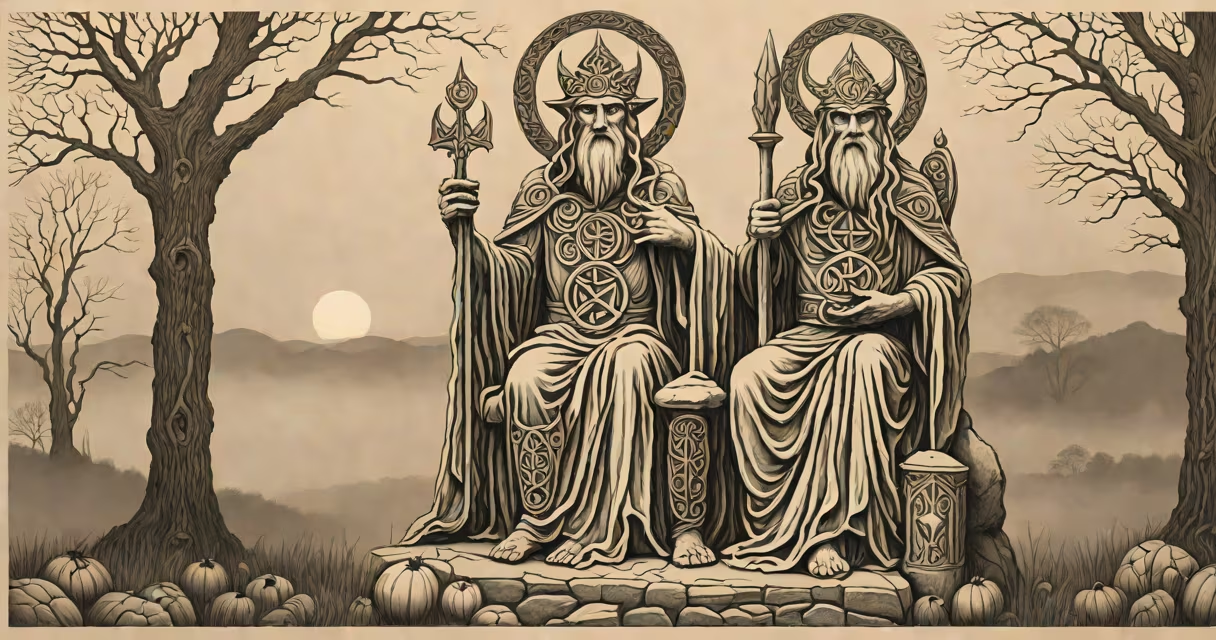
Halloween originates from the ancient Celtic festival of Samhain, marking the end of summer and the beginning of winter. It was believed that on October 31, the boundary between the living and the dead blurred, allowing spirits to cross over. Over time, Christian missionaries adapted this tradition into All Saints' Day, which solidified October 31 as a sacred date. The modern holiday combines these roots with later European customs and American cultural developments.
Samhain was celebrated by the Celts in what is now Ireland, the UK, and parts of France. The festival began at sunset on October 31 and lasted until November 1. Communities lit bonfires, wore costumes made from animal skins, and offered food to honor ancestors. Archaeological evidence from sites like Newgrange in Ireland shows that Neolithic people aligned burial chambers with the winter solstice, suggesting early spiritual connections to seasonal change.
The Roman Empire later influenced the region, blending Samhain with festivals like Feralia (Roman mourning for the dead) and Pomona (dedicated to the goddess of fruit and trees). When Christianity spread through Celtic lands, the Church designated November 1 as All Saints' Day, a day to honor saints and martyrs. The night before became All Hallows' Eve-later shortened to Halloween. This fusion of pagan and Christian traditions laid the foundation for the holiday's dual identity.
By the 9th century, the Catholic Church had formalized All Saints' Day, and the celebration of All Hallows' Eve gained regional popularity. In medieval England, people began going door-to-door asking for food or money in exchange for prayers-a practice known as souling. These early forms of trick-or-treating were rooted in religious obligation rather than entertainment.
Ireland and Scotland preserved many Samhain customs through oral tradition. When Irish immigrants arrived in the United States during the 1840s potato famine, they brought their beliefs and rituals with them. In rural America, communities adopted and modified these practices, merging them with local harvest festivals and American folklore.
By the late 19th century, Halloween had transformed into a secular, community-centered event. The introduction of mass-produced paper lanterns, carved pumpkins, and themed costumes helped standardize the visual culture of Halloween. By the 1920s, schools and towns began hosting organized events, and by the 1950s, commercial advertising had cemented Halloween as a major consumer holiday.
Many Halloween traditions trace back to specific historical practices:
| Tradition | Origin | Historical Context |
|---|---|---|
| Pumpkin carving | Celtic ritual | Originally used turnips or potatoes; Irish immigrants switched to pumpkins in North America due to availability. |
| Costumes | Samhain spirit disguise | Celts wore animal hides to confuse or mimic spirits; modern versions evolved from theatrical masks and fantasy wear. |
| Trick-or-treating | Souling and guising | Medieval Britain: children sang songs or performed acts for food; Scottish and Irish variants included playful threats. |
| Apples in water | Divination game | Used in Roman and Celtic rites to predict marriage partners; still seen in some school events. |
A lesser-known fact: the term "Halloween" first appeared in print in 1705 in a Scottish poem titled *The Witches' Sabbath*. It was spelled "Hallowe'en," reflecting the contraction of "All Hallows' Even." The apostrophe indicates the missing "e" from "evening." This spelling persisted in British usage until the 20th century, when Americanization dropped the apostrophe.
Many assume Halloween is purely a commercial or American invention. However, the holiday's core elements predate the United States by over a millennium. The idea that it originated solely from American pop culture ignores centuries of religious and seasonal observance in Europe.
Another myth is that Halloween is inherently satanic. Early Christian texts associated Samhain with demonic activity, but modern scholars like Dr. Ronald Hutton, author of *The Stations of the Sun: A History of the Ritual Year in Britain*, argue that Celtic beliefs centered on cyclical renewal, not evil worship. He notes that "the Celts did not see death as a punishment but as a natural phase of existence."
Some believe that Halloween was created by the Romans. While Roman festivals like Feralia influenced the timing and mood of Samhain, they did not originate the holiday. The fusion occurred later, during the Roman occupation of Gaul and Britain, but the foundational belief system was Celtic.
In contemporary society, Halloween is celebrated in over 100 countries. In Mexico, Día de los Muertos (Day of the Dead) shares themes of remembrance and ancestor veneration but occurs on November 1 and 2. Unlike Halloween, it emphasizes joyful remembrance rather than fear-based imagery.
Japan celebrates Halloween in urban centers like Tokyo and Osaka, often with elaborate cosplay and themed parties. However, the holiday lacks deep cultural roots there and is largely a Western import. In contrast, in parts of the UK, Samhain traditions have seen a revival among neo-pagan groups who observe the festival with ritual fires and ancestral offerings.
As someone who attended a Samhain gathering in County Galway in 2019, I witnessed participants lighting candles around a standing stone while reciting Gaelic verses. The atmosphere was solemn, not spooky-focused on honoring the cycle of life and death. This experience confirmed that the original intent behind the festival was not entertainment, but reflection.
Today, Halloween remains a hybrid tradition. Its modern form blends ancient rituals, Christian feasts, immigrant adaptations, and corporate branding. Yet the core idea-that the veil between worlds grows thin at the turn of seasons-endures in both ritual and popular imagination.