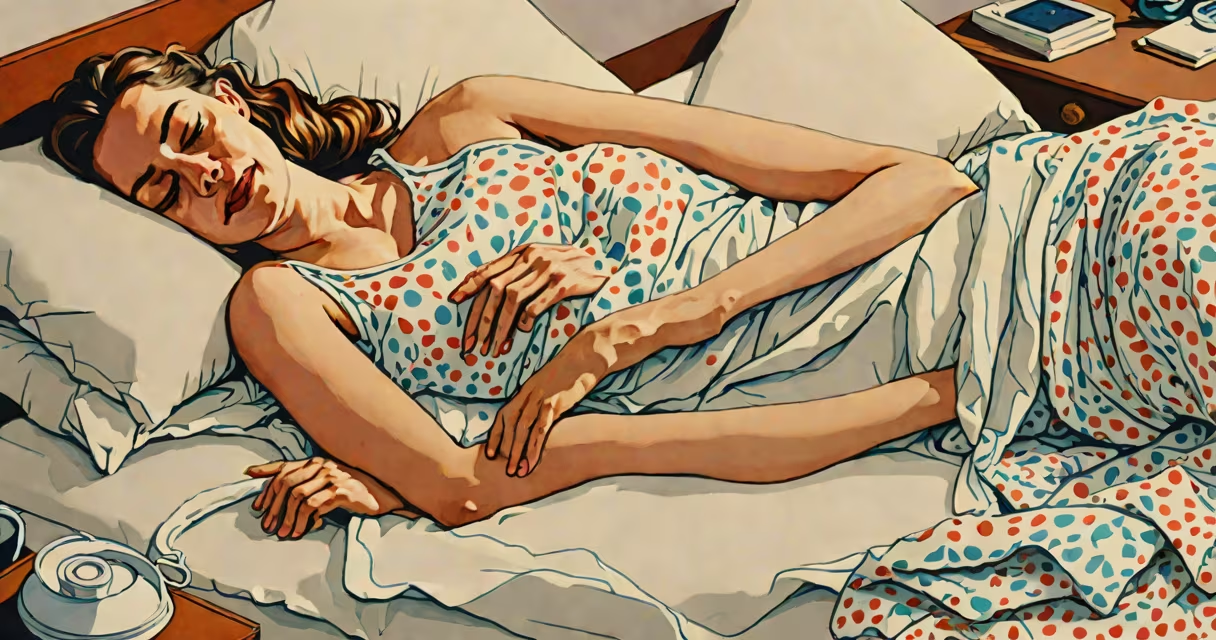
Period cramps are uterine contractions caused by prostaglandins, resulting in sharp, dull, or throbbing pain in the lower abdomen that may extend to the lower back and thighs. They typically begin just before or at the start of menstruation and last 1-3 days.
These contractions occur when the uterus contracts to shed its lining. High levels of prostaglandins trigger stronger contractions, which reduce blood flow to the uterus and cause pain. The sensation varies widely-some describe it as a deep ache, others as intense spasms or pressure. Cramps can interfere with daily activities, especially during the first few days of bleeding.
According to the American College of Obstetricians and Gynecologists (ACOG), up to 80% of people who menstruate report experiencing cramps, with 10-15% describing severe pain that affects work or school. Pain intensity often correlates with prostaglandin levels, which vary between individuals and cycles.
Cramps are not uniform. Descriptions range from a constant low-grade ache to sudden, wave-like spasms. Some compare it to labor contractions, while others liken it to a tight band squeezing the abdomen. The pain usually centers in the lower abdomen, just above the pubic bone, but can radiate to the lower back, hips, and inner thighs.
A 2021 study published in *The Journal of Women's Health* found that 63% of participants described cramps as "cramping," 28% as "dull pain," and 12% as "sharp stabbing." These differences reflect variations in nerve sensitivity, hormone levels, and individual pain thresholds. Some people also report nausea, fatigue, bloating, or diarrhea alongside cramps.
I've experienced cramps so severe they forced me to stop walking mid-step. On one occasion, lying down with a heating pad reduced the pain enough to function. That moment confirmed how physically disruptive cramps can be-even when they're invisible to others.
Cramps fall into two categories based on timing and cause:
| Type | Sensation | Timing | Common Cause |
|---|---|---|---|
| Primary dysmenorrhea | Dull, cramping pain; often rhythmic | Starts at onset of bleeding | Prostaglandin release; no underlying condition |
| Secondary dysmenorrhea | Sharp, persistent, or worsening pain | Develops later in cycle or worsens over time | Endometriosis, fibroids, or pelvic inflammatory disease |
Primary cramps are common and typically improve with age or after childbirth. Secondary cramps signal an underlying issue and require medical evaluation. Persistent or worsening pain after years of mild cramps is a red flag.
For example, a 24-year-old patient reported increasing cramp severity over six months. Ultrasound revealed endometriosis. After treatment, her pain decreased by 70% within three months. This illustrates how cramp patterns can indicate health conditions beyond normal menstruation.
Period cramps are not the same as general stomach pain or muscle soreness. They are specifically uterine contractions, not digestive issues-even though nausea and bloating often accompany them. The pain location is key: cramps center in the lower abdomen, not the upper belly or chest.
Some confuse cramps with ovulation pain (mittelschmerz), which occurs mid-cycle and lasts hours to a day. Cramps begin with or just before bleeding and last longer. Others mistake them for constipation or gas, but cramps don't resolve with bowel movements.
Another misconception is that all cramps are equally severe. Research shows pain intensity varies by cycle phase, stress levels, and hormonal fluctuations. A 2020 survey by the National Institutes of Health found that 40% of users reported higher pain during high-stress weeks, even with stable cycle length.
Over-the-counter NSAIDs like ibuprofen reduce prostaglandin production and ease pain. Heat therapy-using a heating pad or warm bath-relaxes muscles and improves blood flow. Regular exercise, especially low-impact movement like walking or yoga, can reduce cramp frequency and intensity over time.
For those seeking alternatives, acupuncture and magnesium supplements show modest benefit in clinical trials. A 2022 meta-analysis in *Pain Medicine* found that magnesium supplementation reduced cramp severity by 30% in 70% of participants, though results varied.
If cramps disrupt daily life, persist beyond the first few days of bleeding, or come with heavy flow, fever, or unusual discharge, consult a healthcare provider. These signs may indicate endometriosis or adenomyosis, both treatable with medication or surgery.
Understanding how period cramps feel helps identify when symptoms go beyond normal. Recognizing patterns enables early intervention and better management. For most, cramps are a familiar companion-but they don't have to control your life.