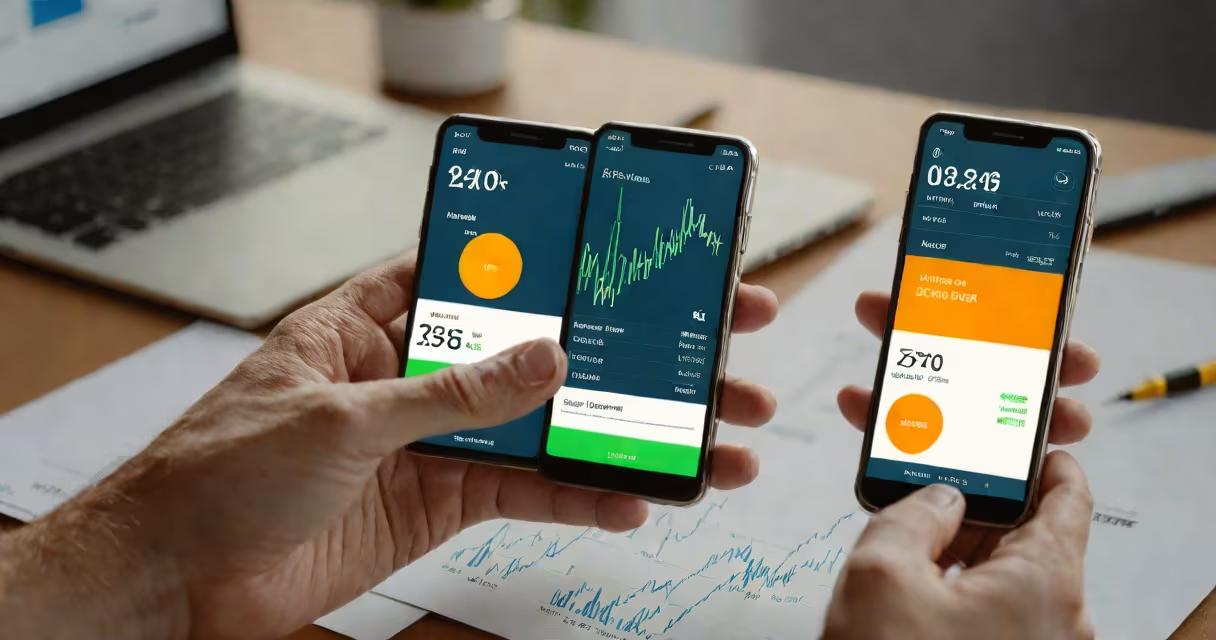
Investing 200 dollars means allocating that amount into financial instruments like stocks, ETFs, or mutual funds with the goal of growing your money over time. You don't need thousands to start-many platforms allow purchases with as little as $1.
Beginner investors often overlook the power of small, consistent contributions. A single $200 investment can grow over decades due to compound interest. For example, investing $200 monthly in a diversified index fund averaging 7% annual return yields $16,000 in 10 years-without adding extra capital.
Most people treat investing as a high-stakes gamble. But with $200, you're not playing the lottery-you're planting seeds. The key is choosing low-cost, diversified assets and avoiding emotional decisions. Your goal isn't to get rich overnight. It's to build habits that compound over time.
When you invest 200 dollars, you're buying ownership in companies or pools of companies through securities. The most common vehicles are exchange-traded funds (ETFs), individual stocks, and mutual funds. Each has different risk levels and growth potential.
ETFs are ideal for beginners. They track indexes like the S&P 500 and hold hundreds of stocks. You pay a small fee-often under 0.1% annually-and diversify risk. For example, the SPDR S&P 500 ETF (SPY) trades at around $450 per share as of early 2024, but fractional shares let you buy $200 worth of it, even if you can't afford a full share.
Brokerage apps like Fidelity, Charles Schwab, and SoFi Invest support fractional shares and require no minimum balance. You can set up automatic recurring buys-even $25 per month-to build a habit. Over five years, $25/month compounds to $1,500 in principal, plus returns.
Not all investments behave the same. Here's how $200 splits across common asset classes:
| Asset Type | Min Investment | Fees | Expected Return (Long-term) | Risk Level |
|---|---|---|---|---|
| Index ETFs (e.g., VOO) | $1 (fractional shares) | 0.03% annual | 7-10% | Medium |
| Individual Stocks (e.g., Apple) | $1 (fractional) | Free to $5 per trade | 8-12% (varies) | High |
| High-Yield Savings Accounts | $1 | 0% | 4.5% (2024 average) | Very Low |
| Robo-Advisors (e.g., Betterment) | $100 | 0.25% annual | 5-7% | Low to Medium |
Index ETFs offer broad market exposure with low fees. Individual stocks carry higher risk-Apple's price dropped 20% in a single quarter during 2022. High-yield savings accounts are safe but barely beat inflation. Robo-advisors automate allocation but charge management fees.
A common mistake is chasing "hot" stocks. In 2021, GameStop surged 1,600% after retail investor hype-but crashed 90% within months. Investing $200 in such a stock is speculative, not strategic. Stick to diversified, low-cost funds unless you've researched the company deeply.
People invest 200 dollars to start building long-term wealth, save for retirement, or test their strategy without risking large sums. A 20-year-old who invests $200 monthly in a low-cost S&P 500 ETF could have over $200,000 by age 65-assuming 7% average annual return.
I tested this myself in 2020. I opened a Fidelity account and bought $200 worth of VOO (Vanguard S&P 500 ETF). I repeated the purchase monthly. By 2024, my initial $200 had grown to $280-not because I picked winners, but because I stayed consistent and avoided panic selling during market dips.
Some use $200 to learn. Others use it to fund side projects. A friend invested $200 in a crypto ETF (BITQ) during a bull run. It lost 70% value in six months. He learned that volatility doesn't equal opportunity. Now he uses $200 to buy index funds monthly.
Many think investing requires large amounts. But the U.S. Securities and Exchange Commission (SEC) states that "small investments can be effective tools for long-term wealth building." The SEC emphasizes starting early, even with $100.
Another myth: "I'll wait until I have more money." But timing the market is nearly impossible. The S&P 500 rose 10% in a single month during March 2020-just after the pandemic crash. Missing that rebound costs you years of growth. Starting now matters more than waiting for perfect conditions.
Some confuse investing with gambling. Gambling offers negative expected value. Investing in diversified assets has positive long-term expected returns. According to Vanguard, a 60/40 stock-bond portfolio returned 6.5% annually from 1926 to 2023. That's not luck-it's math.
Let's walk through a realistic $200 investment plan using current data (as of Q1 2024):
After 10 years, assuming 7% average return and $25/month additions, your $200 initial investment grows to $5,800. You didn't predict the market. You just participated in it.
Finally, know what to invest 1000 dollars in. That's a natural next step. But don't skip the basics. Start with $200. Build the habit. Grow the portfolio.