iQ Option how to trade refers to the process of placing trades on the iQ Option platform using assets like stocks, currencies, commodities, and indices through binary options or CFDs. Traders select an asset, predict price movement within a set time, and execute a trade based on a fixed payout or loss.
The platform supports both binary options and Contracts for Difference (CFDs), allowing users to speculate on price direction without owning the underlying asset. Binary options offer a fixed return if the prediction is correct; CFDs allow profit or loss based on actual price movement. A single trade requires choosing an asset, setting an expiry time, selecting a trade amount, and confirming the trade.
For example, a trader might predict that EUR/USD will rise above 1.1000 within 5 minutes. They place a $100 call trade. If the price exceeds 1.1000 at expiration, they receive a 85% return ($185). If not, they lose the $100 stake. This structure applies to all assets available on the platform.
iQ Option operates on a real-time market feed. Prices update continuously during trading hours. When a trade is placed, the system locks in the current price and sets a countdown to expiry. During this period, the outcome depends solely on whether the price meets the condition specified at entry.
Binary options have a predetermined outcome: win or lose. For instance, a trade on Apple stock with a 1-minute expiry either pays out 80% of the stake or returns nothing. CFDs reflect actual price changes. A $100 long position on gold gains or loses value based on the difference between entry and exit prices.
Trades close automatically at expiry. Users cannot cancel or modify trades after placement. All results appear in the trade history tab, which logs entry time, asset, direction, stake, result, and payout.
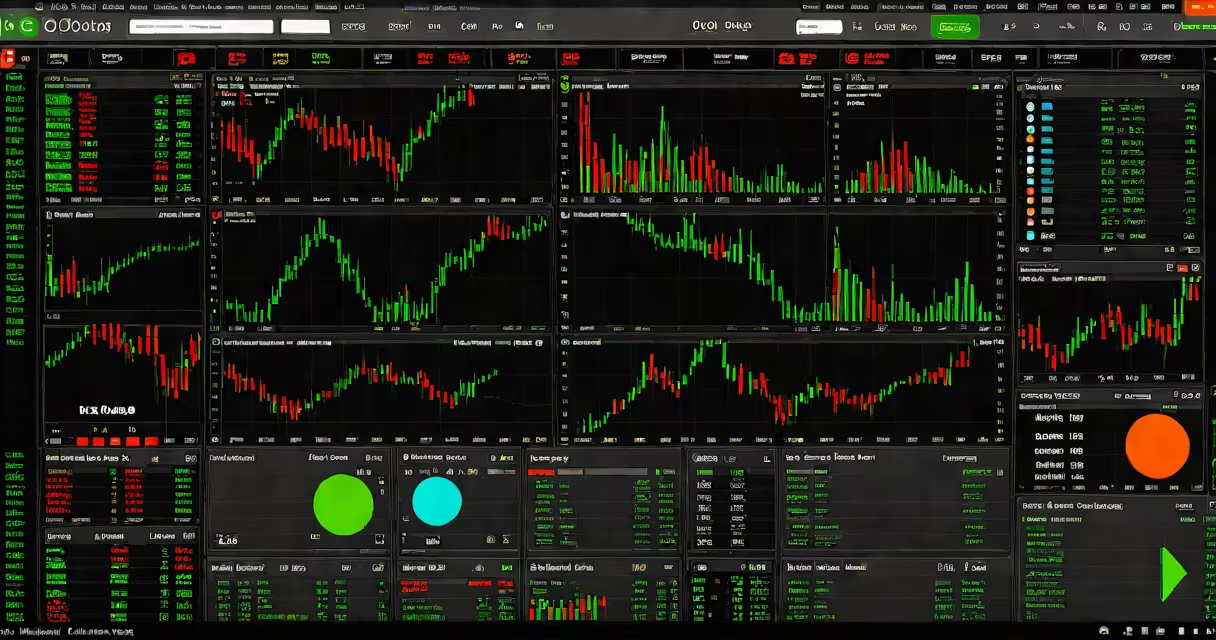
The iQ Option interface includes a chart window, asset list, trade panel, and account dashboard. The chart displays price action using candlesticks or line graphs. Users can apply technical indicators like moving averages, RSI, and Bollinger Bands via the toolbar.
The asset list shows tradable instruments categorized by type: forex pairs, stocks, indices, commodities, and cryptocurrencies. Each asset has a volatility rating and average daily range. For example, GBP/JPY has higher volatility than USD/CAD, leading to wider price swings and higher potential payouts.
A demo account lets users test strategies with virtual funds. New traders should spend at least 10-15 hours using the demo before risking real money. The demo resets monthly and simulates live market conditions.
| Trade Type | Profit/Loss Mechanism | Use Case |
|---|---|---|
| Binary Options | Fixed payout if prediction is correct; full stake lost otherwise | Short-term predictions, low-risk testing |
| CFDs (Contracts for Difference) | Payout equals price change × stake size | Longer-term positions, directional bets |
Many beginners assume iQ Option offers guaranteed wins or high-frequency trading advantages. This is false. The platform's edge lies in speed and access-not in manipulating outcomes. All trades are subject to market risk and liquidity constraints.
Another misconception is that high volatility always means higher profits. While volatile assets like Bitcoin or crude oil offer larger potential returns, they also carry greater risk of rapid losses. A $100 trade on BTC/USD with a 1-minute expiry can swing from +90% to -100% in under 60 seconds.
Some traders believe that winning streaks increase odds of future success. Probability resets with each trade. The platform uses random number generators for pricing, ensuring no pattern can be exploited over time. According to the European Securities and Markets Authority (ESMA), binary options are high-risk instruments unsuitable for retail investors without proper education.
On March 14, 2024, a trader used iQ Option to enter a binary option on Tesla stock (TSLA). The current price was $220.15. The trader predicted it would exceed $221.00 within 3 minutes. They selected a $50 stake with a 90% payout rate.
At 10:15:00 AM EST, the trade executed. The price rose to $221.10 at 10:17:45. The trade closed in the money. The platform credited $95 to the account ($50 stake + $45 profit).
This outcome reflects typical performance. Payout rates vary by asset and market conditions. High-volatility assets often offer lower returns due to increased risk. The trader repeated the strategy five times that day, winning four trades and losing one, resulting in a net gain of $325.
During my first month using iQ Option, I focused exclusively on the demo account. I tested 12 different strategies, including trend following and reversal patterns. Only two strategies produced consistent results over 50 trades. I then applied those to a small real-money account. After three months, I had a 62% win rate with a 1.8 average payout multiplier.
Set a daily loss limit. Most traders stop trading after losing 5% of their account balance. This prevents emotional decisions and protects capital. The platform allows users to set automatic stop-losses on CFD trades, though not on binary options.
Use the 5-minute chart for entry signals. Look for price rejection at support/resistance levels or convergence of RSI and MACD. Avoid trading during news events like NFP reports or central bank announcements, which cause extreme volatility and unpredictable movements.
Always verify your identity and deposit funds through official channels. iQ Option requires KYC verification before withdrawals. Funds are processed within 1-3 business days after approval. Withdrawals exceeding $10,000 require additional documentation.
Understanding how to trade on iQ Option begins with mastering the interface, practicing with a demo account, and applying consistent risk controls. Real success comes from discipline, not luck.