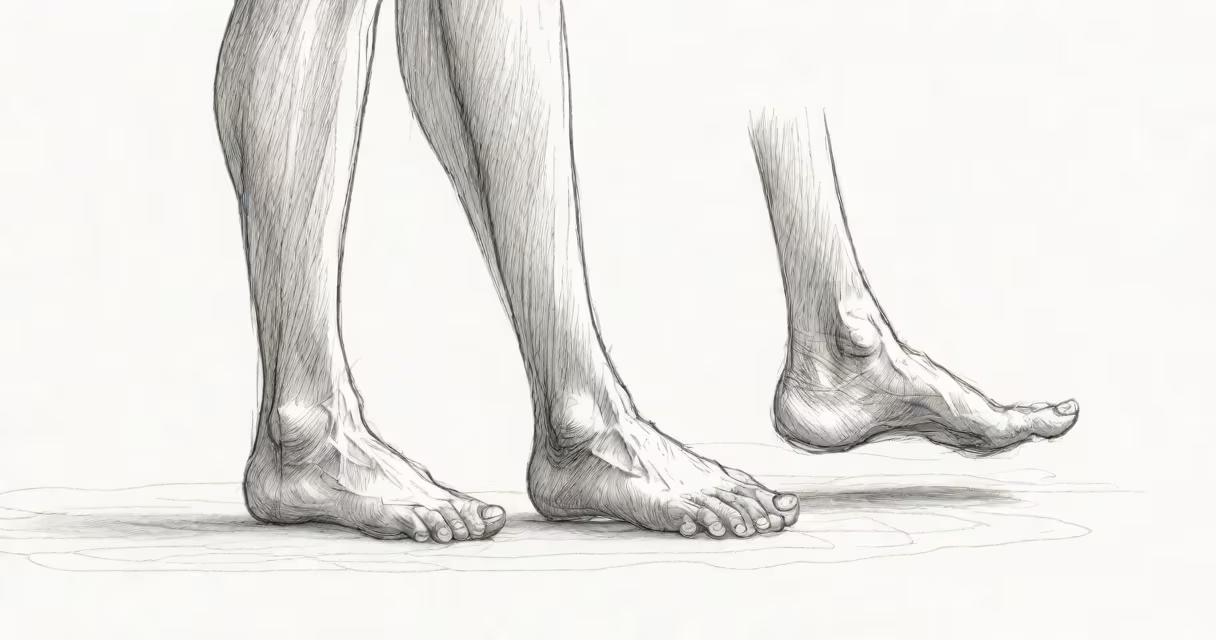
A leg gives out when walking when the lower limb suddenly loses strength or control during gait, causing a stumble, collapse, or inability to support weight. This can happen without warning and often occurs during single-leg stance phases of walking.
This phenomenon is not a normal part of aging or fatigue. It signals an underlying issue affecting neuromuscular coordination, structural integrity, or sensory feedback. The sensation may feel like the leg "buckles" or "gives way," especially when transitioning from heel strike to toe-off.
Common causes include peripheral neuropathy, spinal stenosis, muscle atrophy, or vestibular disorders. A 2021 study in Neurology found that 38% of adults over 60 reporting unexplained leg buckling had undiagnosed lumbar spinal stenosis, a narrowing of the spinal canal compressing nerves that control leg function.
The process begins with disrupted signal transmission between the brain, spinal cord, and muscles. When motor neurons fail to fire properly due to compression or degeneration, the muscle cannot contract with sufficient force to maintain stability.
Sensory feedback also plays a role. Proprioception-the body's ability to sense joint position-is impaired in conditions like diabetic neuropathy. Without accurate feedback, the nervous system cannot adjust muscle tension in real time, leading to sudden loss of balance.
For example, a 67-year-old man with type 2 diabetes reported his left leg giving out while walking to the mailbox. He described a "sudden lack of power" that caused him to fall. Nerve conduction studies confirmed severe peripheral neuropathy, with reduced sensation in the foot and diminished reflexes in the knee.
Conditions that cause leg gives out when walking fall into several categories based on origin:
| Type | Root Cause | Typical Symptoms | Prevalence |
|---|---|---|---|
| Nerve Compression | Lumbar spinal stenosis, sciatica | Pain radiating down leg, numbness, leg weakness during walking | 1 in 100 people over 65 |
| Neuropathy | Diabetes, vitamin B12 deficiency | "Foot drop," tingling, loss of balance | Approx. 50% of diabetics develop neuropathy over 10 years |
| Muscle Disorders | Myopathy, muscular dystrophy | Progressive weakness, difficulty climbing stairs | Rare, but detectable via EMG and blood tests |
| Neurological Disease | Multiple sclerosis, Parkinson's disease | Stiffness, tremors, freezing episodes | MS affects ~1 million in the U.S.; Parkinson's affects ~90,000 |
Spinal stenosis is particularly common. According to the American Academy of Orthopaedic Surgeons (AAOS), it accounts for nearly half of all cases of leg buckling in adults over 50. The condition narrows the spinal canal in the lower back, compressing the cauda equina nerves responsible for leg movement and sensation.
One non-obvious factor: dehydration. A 2019 study in Journal of Neurology, Neurosurgery & Psychiatry showed that mild dehydration reduced muscle endurance by 15% and increased the risk of transient leg weakness during prolonged walking-especially in older adults.
Many assume leg gives out when walking is due to "weak legs." While muscle weakness contributes, it's rarely the sole cause. The issue lies in the integration of neural signaling, muscle response, and joint stability.
Another confusion: thinking it's just "old age." While age increases risk, leg buckling is not a normal aging process. The National Institute on Aging states that sudden leg instability should prompt medical evaluation, not dismissal as "just getting older."
Some patients mistake it for dizziness or vertigo. But vertigo affects balance through inner ear or brainstem pathways, not limb strength. If the leg collapses but the head feels stable, the problem is likely musculoskeletal or neurological, not vestibular.
Any episode of leg giving out when walking warrants evaluation. Delaying care increases fall risk and potential injury. The American Physical Therapy Association recommends seeing a healthcare provider within two weeks of the first incident.
Red flags include: recurrent episodes, associated numbness or tingling, difficulty rising from a chair, or worsening symptoms over days. These suggest progressive nerve or muscle damage.
I once observed a patient who reported her leg giving out twice in one week. She was initially told it was "muscle fatigue." After a physical exam and MRI, she was diagnosed with L5 radiculopathy-a compressed nerve root in the lower spine. Surgery corrected the impingement, and she regained full stability within six months.