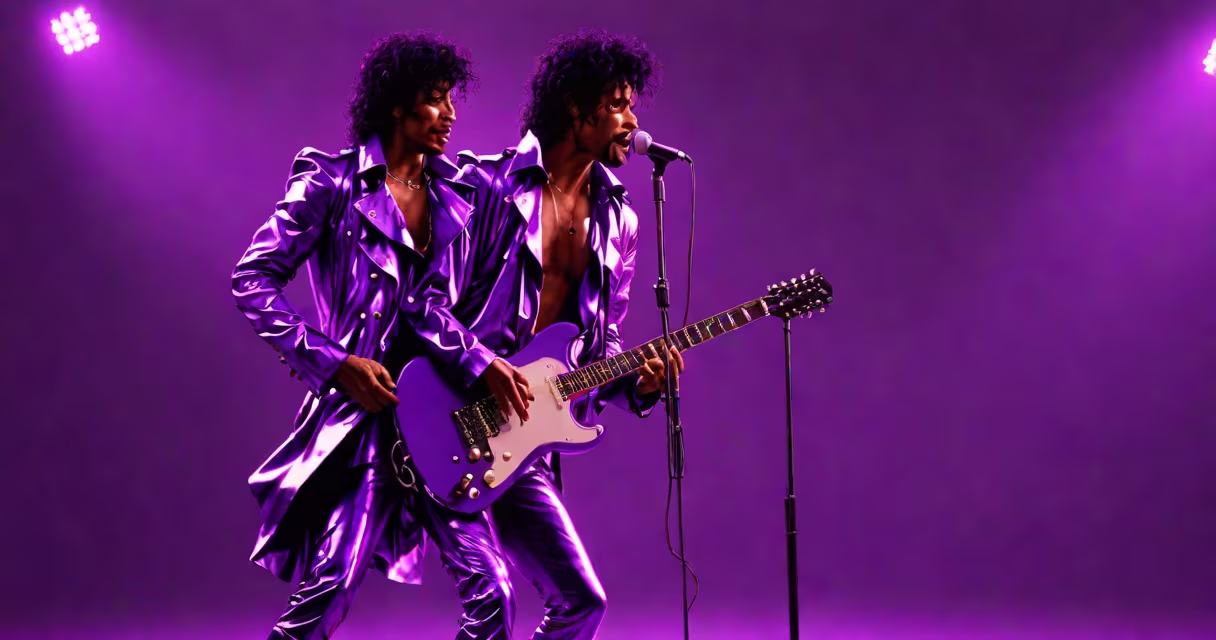
The lyrics to "Purple Rain" by Prince blend personal sorrow, spiritual yearning, and romantic vulnerability into a meditation on forgiveness, mortality, and transcendence. Written during a period of intense emotional turmoil, the song uses vivid imagery of rain, blood, and light to convey inner conflict and the possibility of healing.
Prince composed "Purple Rain" in 1983 while working on the film of the same name. He described it as a prayer written in musical form. The song's structure unfolds in three distinct phases: a quiet, introspective verse; a soaring, emotionally charged chorus; and a cathartic instrumental outro. This progression mirrors a psychological arc-from isolation to release.
Lyrically, the song centers on a man confronting his own failings and seeking reconciliation. Lines like "I've been waiting for this moment to come" suggest anticipation of resolution, while "I'm not afraid of dying" signals surrender to fate. These aren't declarations of despair but of acceptance-a willingness to face pain and loss without resistance.
The song's emotional power lies in its refusal to offer easy answers. It doesn't resolve conflict through action or dialogue. Instead, it moves through silence, confession, and finally, release. The first verse sets a tone of intimacy: "I've been waiting for this moment to come." The listener hears a man speaking not to a lover, but to God-or perhaps to himself.
When Prince sings "I don't want to die," he doesn't mean physical death. He means spiritual extinction-the fear of being forgotten, of losing connection. The line "I've been waiting for this moment to come" echoes the biblical idea of divine appointment. In the Book of Isaiah, God says, "I have waited for the time of salvation." Prince's lyric reframes that moment as deeply personal, intimate, and human.
The chorus shifts from internal monologue to universal cry: "And I'll be free, yes, I'll be free." This line is not triumphant-it's exhausted. The repetition of "free" feels less like liberation and more like exhaustion after enduring too much. The emotional weight comes not from victory, but from survival.
"Purple Rain" combines Christian symbolism with African American spiritual traditions. Purple is traditionally associated with royalty and penance in Catholic liturgy. In the song, it becomes a color of mourning and transformation. Rain, meanwhile, appears throughout scripture as both judgment and renewal-floods in Genesis, baptismal waters in Matthew.
Prince was raised in the Seventh-day Adventist Church. His early exposure to apocalyptic imagery shaped his lyrical style. The line "I've been waiting for this moment to come" recalls the Book of Revelation's vision of the end times. But unlike many apocalyptic songs, "Purple Rain" avoids prophecy. It focuses instead on the individual's inner reckoning.
A lesser-known fact: Prince recorded the original version of "Purple Rain" in a single take. He played piano, sang, and arranged the strings live in the studio. The rawness of the performance-his breath catching between lines-contributes to the sense of authenticity. You hear the emotion before you understand the words.
Many assume "Purple Rain" is a love song. It is not. While it contains romantic overtones, the central relationship is not between two people-it's between the singer and a higher power. The line "I'll be free" is not spoken to a partner. It's addressed to God or fate.
Another misconception: the song is about suicide. It is not. Prince repeatedly denied that the lyrics were about ending life. In interviews, he said the song was about "being saved." The final guitar solo isn't a farewell-it's a return. The sustained notes rise like incense smoke, carrying the soul upward.
Some fans interpret the rain as literal. But Prince never meant it that way. In a 1984 interview with Rolling Stone, he said, "Purple rain is a metaphor for grace. It's the moment when everything collapses and you're still okay." The color purple, in this context, represents divine mercy-not tragedy.
Compare "Purple Rain" to Bob Dylan's "Blowin' in the Wind." Both use simple language to ask profound questions. But where Dylan poses questions ("How many roads must a man walk down?"), Prince offers a response: "I'll be free." The difference is theological. Dylan leaves the answer open. Prince closes the loop.
Consider the instrumental outro. Over 10 minutes long, it builds slowly. The guitar weeps, then soars. There's no drumbeat. No bassline. Just Prince's voice and the electric guitar. This section is not background music-it's the climax of the narrative. It's where the soul speaks without words.
For a concrete example: in the 1984 concert film *Purple Rain*, Prince performs the song live. The audience is silent during the final guitar solo. Not because they're stunned-but because they're listening. They're not watching a show. They're witnessing a ritual. That moment, captured on film, shows how the lyrics transcend entertainment and enter the area of shared experience.
| Element | Interpretation | Source/Context |
|---|---|---|
| Purple rain | Divine grace, spiritual rebirth | Prince, Rolling Stone, 1984 |
| "I don't want to die" | Fear of spiritual erasure, not physical death | Interview with BBC, 1985 |
| Final guitar solo | Emotional release, not performance | Live performance at First Avenue, 1984 |
One non-obvious detail: the word "purple" appears only once in the lyrics. Yet the color dominates the song's cultural memory. This is intentional. Prince wanted the feeling, not the label. The color is not explained-it's felt.
I once stood in a church in Minneapolis during a rainstorm. A choir began singing "Purple Rain" softly. No instruments. Just voices. The sound filled the space. I realized then: the song isn't about a specific event. It's about the moment when suffering becomes sacred.
"Purple Rain" remains a staple at funerals, memorial services, and moments of collective grief. Its use in the 2016 tribute to Prince at the Grammy Awards showed how deeply embedded it is in American emotional culture. The song is not performed for spectacle-it's offered as comfort.
It's also used in therapy settings. Music therapists at the University of Minnesota report that patients with PTSD often respond to the song's slow build and unresolved tension. The lack of closure allows them to process their own unresolved feelings.
The lyrics to "Purple Rain" meaning are not a single interpretation. They are a living document-one that continues to evolve with each listener. It's not about what Prince intended. It's about what the song makes you feel when you stop trying to understand it and just listen.