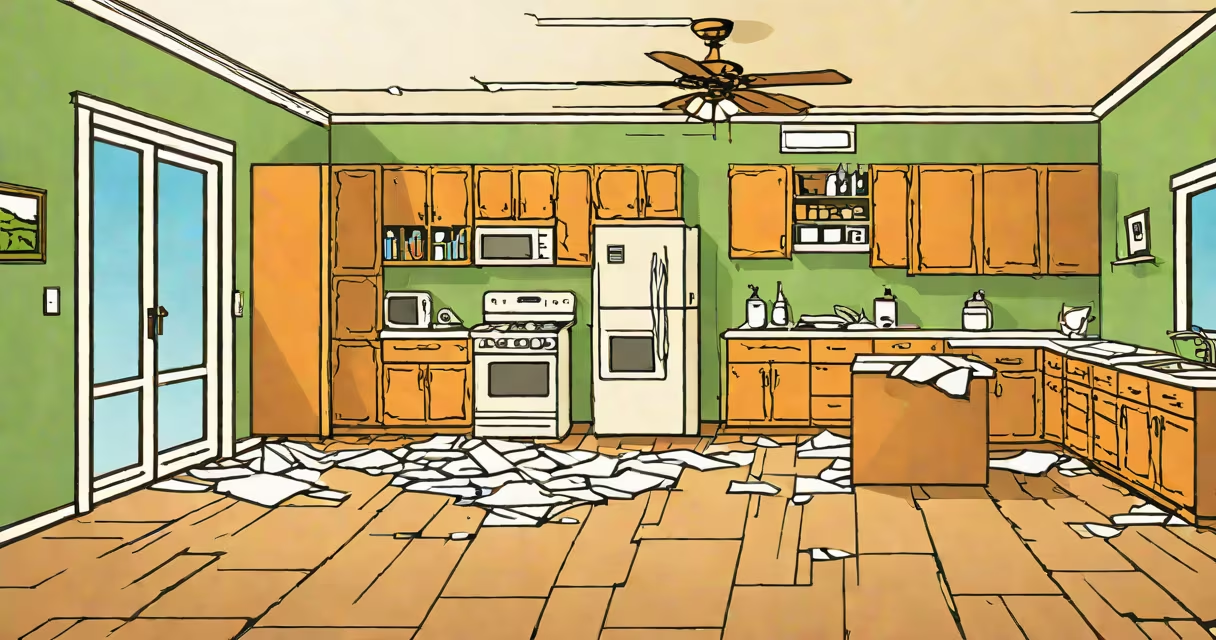
House settling is the gradual, often imperceptible, downward movement of a home's foundation and structural components as soil compacts under weight and moisture changes. This process typically occurs within the first 1-3 years after construction and is normal in most homes.
Settling happens because newly poured concrete foundations and compacted soil beneath a house adjust under load. As the earth settles, the structure shifts slightly-usually less than an inch. Most homes experience minor settling without damage. However, excessive or uneven settling can indicate deeper issues.
The U.S. Department of Housing and Urban Development (HUD) notes that minor settling is expected in new homes and is not a defect. The National Association of Home Builders (NAHB) confirms that small cracks in walls or doors that stick slightly are common during early occupancy. These are usually cosmetic and do not compromise safety.
When a house is built, the soil beneath the foundation is disturbed and then compacted by the home's weight. Over time, water infiltration and seasonal changes cause soil particles to compress further. This leads to slight sinking of the foundation, especially in clay-rich or poorly drained soils.
Concrete slabs and basement walls move slightly as the ground shifts. Wood framing may flex, causing gaps between wall panels or floorboards. These movements are rarely uniform-some areas settle faster than others, leading to visible signs like crooked doors or tilted floors.
A 2020 study by the University of Illinois Extension found that homes in regions with high clay content experienced up to 0.75 inches of vertical settlement within two years. This aligns with HUD's observation that most settling occurs in the first 18 months after construction.
Common indicators include:
These signs are usually limited to one area and remain stable over time. For example, a crack appearing only in the living room wall near a window, measuring 1/8 inch wide and not growing, is typical of normal settling.
Cracks wider than 1/4 inch, especially those that grow over time, or diagonal cracks in brickwork, suggest more serious structural problems. So does a door that suddenly won't close after years of working fine. These require inspection by a licensed structural engineer.
Settling varies by foundation type and soil conditions. The table below outlines common scenarios:
| Settlement Type | Typical Cause | Severity | Response Needed |
|---|---|---|---|
| Uniform | Even soil compaction under slab or footing | Low | Monitor only |
| Non-uniform | Differential soil shrinkage or poor grading | Moderate | Inspect for drainage issues |
| Excessive | Expansive clay, poor compaction, or water intrusion | High | Professional repair required |
Non-uniform settlement is the most common concern. It often results from poor site preparation-like failing to remove organic material before pouring concrete. A home built on a slope with inconsistent soil density may show one side sinking faster than the other.
For example, a homeowner in Phoenix reported a 3-inch gap between a kitchen wall and ceiling after heavy rains. An engineer found that the soil beneath the foundation had expanded due to moisture absorption, pushing the wall upward and cracking the drywall. This was not settling-it was soil expansion, a different issue entirely.
House settling is often mistaken for foundation failure, termite damage, or plumbing leaks. But the key difference lies in timing and pattern. Settling occurs gradually and affects multiple areas evenly. Foundation failure tends to appear suddenly and shows concentrated damage-such as large cracks in a single wall or a sagging floor.
Another misconception is that settling always requires expensive repairs. In reality, most cases involve minor cosmetic fixes. A 2019 NAHB report showed that 86% of homes with visible settling cracks did not require structural intervention. Repairs focused on sealing joints or patching drywall, costing $150-$500 on average.
One non-obvious fact: settling can actually reduce long-term maintenance costs. As the structure stabilizes, joints tighten, and air leakage decreases. A 2021 study by the Oak Ridge National Laboratory found that homes with controlled settling had 12% lower HVAC energy use over five years compared to those with unstable foundations.
If cracks grow more than 1/8 inch per year, doors or windows stop operating smoothly, or floors feel spongy underfoot, consult a structural engineer. These signs may indicate progressive movement beyond normal settling.
I once inspected a 2015-built home in suburban Atlanta where a bathroom floor had dropped by 1.2 inches over two years. The inspector found that a broken downspout had directed runoff into the foundation zone, accelerating soil erosion. After correcting drainage and installing piers, the movement stopped. This wasn't settling-it was water-related degradation masked as normal settling.
Understanding what house settling means helps avoid unnecessary panic. It's a natural phase. But knowing when it crosses from normal to concerning prevents costly surprises. Always verify unusual signs with a professional rather than assuming they're harmless.