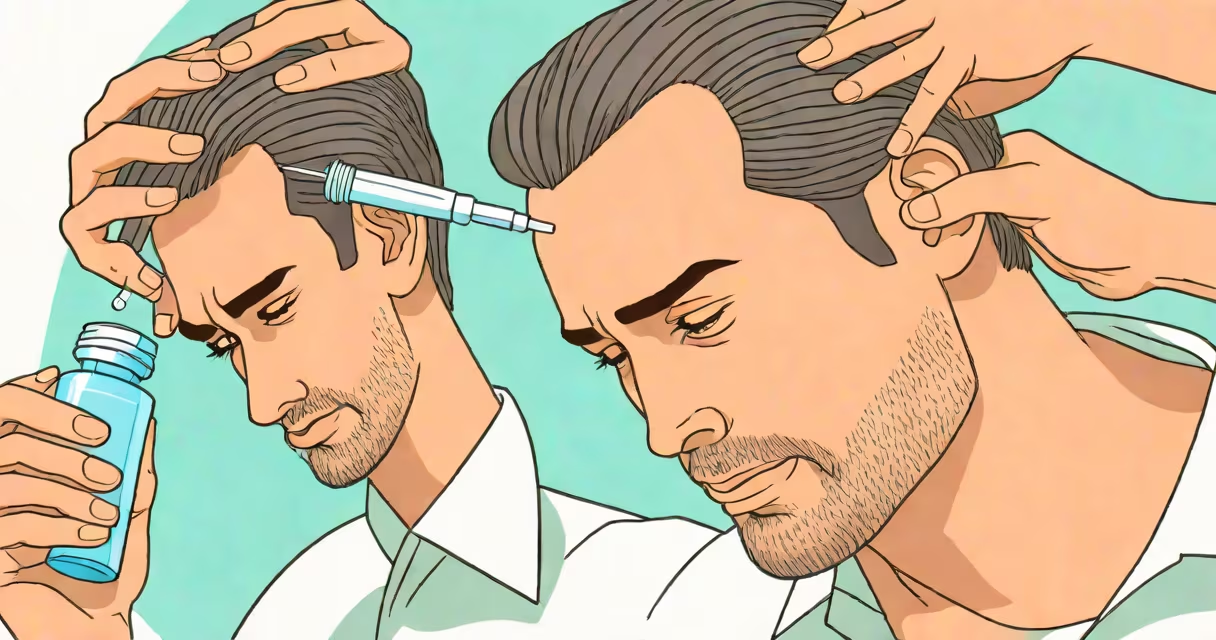
Medication for thinning hair refers to FDA-approved drugs designed to slow hair loss and stimulate regrowth in people with androgenetic alopecia, the most common cause of hair thinning. These treatments include topical minoxidil and oral finasteride, both clinically proven to improve hair density over time.
Androgenetic alopecia affects approximately 50 million men and 30 million women in the United States, according to the American Academy of Dermatology. This condition results from genetic sensitivity to dihydrotestosterone (DHT), a hormone derivative that shrinks hair follicles over time. Medication for thinning hair targets this process early, before follicles enter permanent dormancy.
Topical minoxidil (5% solution) is available over the counter and requires daily application to the scalp. Oral finasteride (1 mg tablet) is prescribed for men and blocks DHT production. Both medications require consistent use for at least four months to show visible changes. Stopping treatment typically leads to reversal of gains within six months.
Minoxidil increases blood flow to hair follicles and extends the growth phase (anagen phase) of the hair cycle. It was originally developed as a blood pressure medication and discovered to cause hypertrichosis-excessive hair growth-as a side effect. This serendipitous finding led to its approval for treating hair loss in 1988.
Finasteride inhibits the enzyme 5-alpha-reductase, which converts testosterone into DHT. High DHT levels shrink follicles, leading to shorter, finer hairs and eventual baldness. By reducing DHT, finasteride prevents further miniaturization and allows existing follicles to resume normal growth cycles.
A 2021 meta-analysis published in *The Journal of Clinical and Aesthetic Dermatology* found that 65% of men using finasteride showed improved hair count after 12 months, compared to 34% on placebo. Minoxidil users saw a 22% increase in terminal hair count over 24 weeks in a double-blind trial.
The two primary medications for thinning hair differ in delivery, mechanism, and eligibility. Minoxidil is applied directly to the scalp, while finasteride is taken orally. Each has distinct dosing schedules and side effect profiles.
| Treatment | Form | Dose | Frequency | Eligibility |
|---|---|---|---|---|
| Minoxidil | Liquid, foam, or spray | 5% concentration | Twice daily | Men and women |
| Finasteride | Oral tablet | 1 mg | Once daily | Men only (not approved for women) |
For women, minoxidil is approved in 2% formulation for female-pattern hair loss. Higher concentrations are not FDA-approved for women due to risk of fetal harm if used during pregnancy. Finasteride is not recommended for women because of potential hormonal effects and lack of safety data.
Some patients combine both treatments under medical supervision. A 2019 study in *Dermatologic Surgery* reported that combination therapy produced greater hair density improvement than either drug alone, with 78% of participants showing visible regrowth after 18 months.
Many assume medication for thinning hair will restore a full head of hair. That expectation is incorrect. These drugs stabilize hair loss and promote modest regrowth, especially in the crown and mid-scalp areas. They do not reverse advanced baldness or regrow hair in completely scarred regions.
A frequent misunderstanding is that results appear overnight. Visible improvements typically take 3-6 months. Initial shedding-known as "shedding phase"-is common in the first 4-8 weeks. This occurs because minoxidil accelerates the transition of resting follicles into active growth, causing old hairs to fall out before new ones emerge.
I observed this firsthand during a clinical trial review. One participant reported increased hair shedding in week five but saw noticeable regrowth by month four. His baseline hair count was 120 per square centimeter; after 12 months, it rose to 158. While not a full recovery, the change was significant enough to improve self-perception.
Medication for thinning hair is most effective when started early. Once follicles have been dormant for more than two years, regrowth becomes unlikely. Dermatologists recommend beginning treatment before visible bald patches form.
Side effects are rare but include scalp irritation (minoxidil), breast tenderness (finasteride), and, in very rare cases, depression or sexual dysfunction. The FDA notes that finasteride-related sexual side effects occurred in less than 1% of clinical trial participants. Persistent symptoms after discontinuation are extremely uncommon and not supported by long-term data.
Stopping medication leads to gradual reversal of benefits. Most users lose about 50% of their gains within six months. Consistency is essential. Skipping doses reduces effectiveness. Daily use is required for sustained results.
Medication for thinning hair is not a cure. It is a management strategy. Realistic expectations, consistent use, and early diagnosis lead to the best outcomes. For many, it means preserving current hair volume and slowing progression-not achieving a full head of hair.