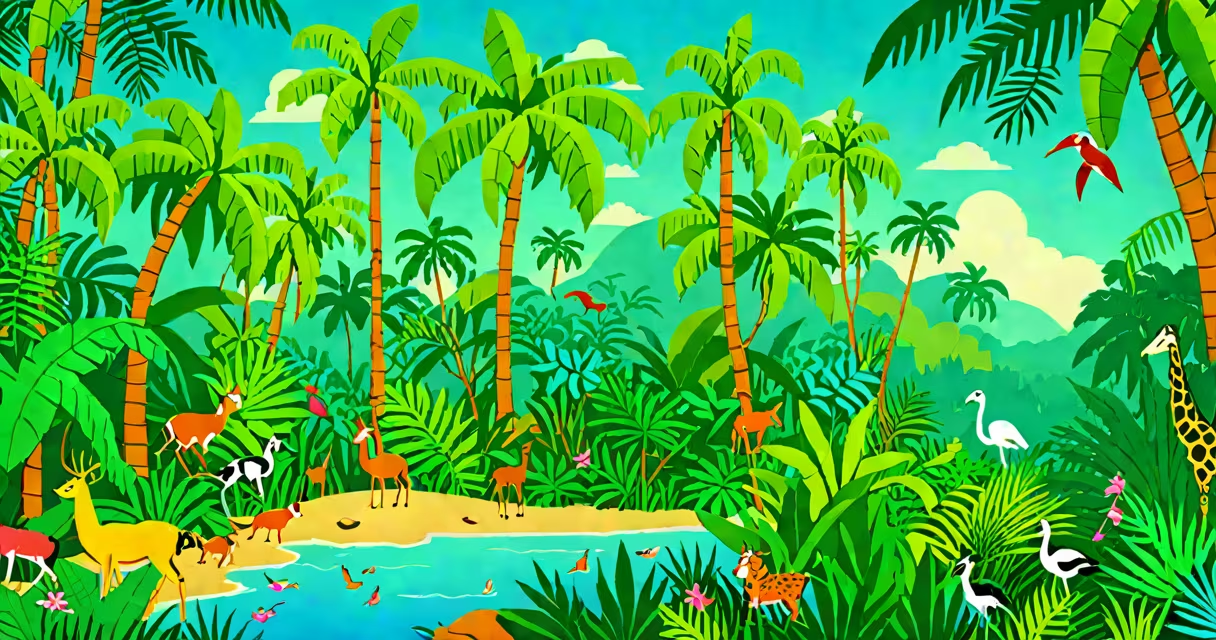
Biodiversity-the variety of life on Earth across species, ecosystems, and genetic variation-is essential for maintaining stable ecosystems, supporting human health, and ensuring long-term environmental resilience. Its loss undermines food security, water quality, disease control, and climate regulation.
At its core, biodiversity enables ecosystems to function. Forests, wetlands, oceans, and grasslands rely on complex interactions among plants, animals, fungi, and microbes. These interactions regulate nutrient cycles, pollinate crops, decompose waste, and buffer against extreme weather. Without this web of life, ecosystems collapse into dysfunction.
The Intergovernmental Science-Policy Platform on Biodiversity and System Services (IPBES) reports that around 1 million species face extinction due to human activity, with extinction rates now 100 to 1,000 times higher than historical averages. This rapid decline isn't just a loss of wildlife-it's a threat to human survival.
Every organism plays a role in ecological networks. Bees pollinate 75% of global food crops and 35% of the world's crop production. Coral reefs, home to 25% of marine species, protect coastlines from storm surges and support fisheries that feed over 3 billion people. Soil microbes break down organic matter and fix nitrogen, enabling agriculture.
When a species disappears, ripple effects follow. Removing wolves from Yellowstone National Park led to overgrazing by elk, which degraded stream banks and reduced fish populations. Reintroducing wolves restored balance-vegetation recovered, birds returned, and rivers stabilized. This demonstrates how keystone species maintain system integrity.
Genetic diversity within species matters too. Crop varieties with resistance to drought or pests are often lost when monocultures dominate farming. The Irish Potato Famine (1845-1852) was worsened by reliance on a single potato strain vulnerable to blight. Modern agriculture still faces risks from low genetic diversity in staple crops.
Biodiversity operates at three levels: genetic, species, and system.
| Level | Definition | Example | Function |
|---|---|---|---|
| Genetic | Variation within a species' gene pool | Different rice strains adapted to flooding or salinity | Enables adaptation to changing climates and diseases |
| Species | Diversity of living organisms | 1.2 million described species; millions more undiscovered | Supports food webs, pollination, decomposition |
| System | Complex communities of interacting species and environment | Tropical rainforests, mangrove forests, alpine meadows | Regulates climate, purifies water, stores carbon |
Each level contributes to resilience. A genetically diverse population can adapt to disease outbreaks. A rich species list ensures functional redundancy-if one pollinator fails, others may take over. System diversity allows regions to withstand disturbances like fires or floods.
Many assume biodiversity is only about rare or charismatic animals like pandas or tigers. But most species are insects, fungi, and microorganisms. Over 80% of Earth's species are arthropods, and soil contains more microbial diversity than all visible life combined.
Another myth is that biodiversity conservation conflicts with economic development. In reality, protecting ecosystems generates more value than exploiting them. The World Bank estimates that nature-based solutions-like restoring mangroves or reforesting degraded land-yield $10 in benefits for every $1 invested. Coastal mangrove restoration in Vietnam reduced flood damage by 50% and increased fish catches by 30%.
A lesser-known fact: biodiversity loss accelerates climate change. Deforestation releases stored carbon. Degrading peatlands emits greenhouse gases equivalent to 5% of global emissions annually. Protecting biodiverse habitats is therefore a direct climate mitigation strategy.
In 2017, a study published in *Nature* tracked changes in bird populations across North America. Between 1970 and 2014, 2.9 billion birds vanished-nearly 30% of the continent's total. Declines were linked to habitat loss, pesticide use, and climate shifts. The study warned that continued losses could disrupt seed dispersal, insect control, and nutrient cycling.
Recovery is possible. In Costa Rica, reforestation efforts since the 1980s have doubled forest cover from 20% to 50%. As forests regrew, jaguar populations rebounded, and migratory birds returned. The country now protects 26% of its land in national parks and reserves, demonstrating that policy-driven conservation works.
On a smaller scale, I observed this firsthand while volunteering with a community-led pollinator garden project in Portland, Oregon. We planted native milkweed, coneflower, and goldenrod. Within one season, bee and butterfly numbers increased by 400%, and nearby vegetable yields rose by 25%. The garden became a refuge for species displaced by urban sprawl.
Protecting biodiversity requires coordinated action. Governments must enforce protected areas, ban destructive practices like illegal logging, and integrate biodiversity into national planning. The Kunming-Montreal Global Biodiversity Structure, adopted in 2022, sets a goal to conserve 30% of Earth's land and oceans by 2030-a target known as "30x30."
Individuals can contribute through sustainable choices: reducing meat consumption, avoiding single-use plastics, planting native species, and supporting eco-certified products. Businesses can adopt circular models, reduce supply chain impacts, and report on biodiversity footprints.
Saving biodiversity isn't about preserving wilderness for its own sake. It's about securing the foundation of life-clean air, stable climate, fertile soil, and nutritious food. The choice isn't between nature and progress. It's between thriving ecosystems and societal collapse.