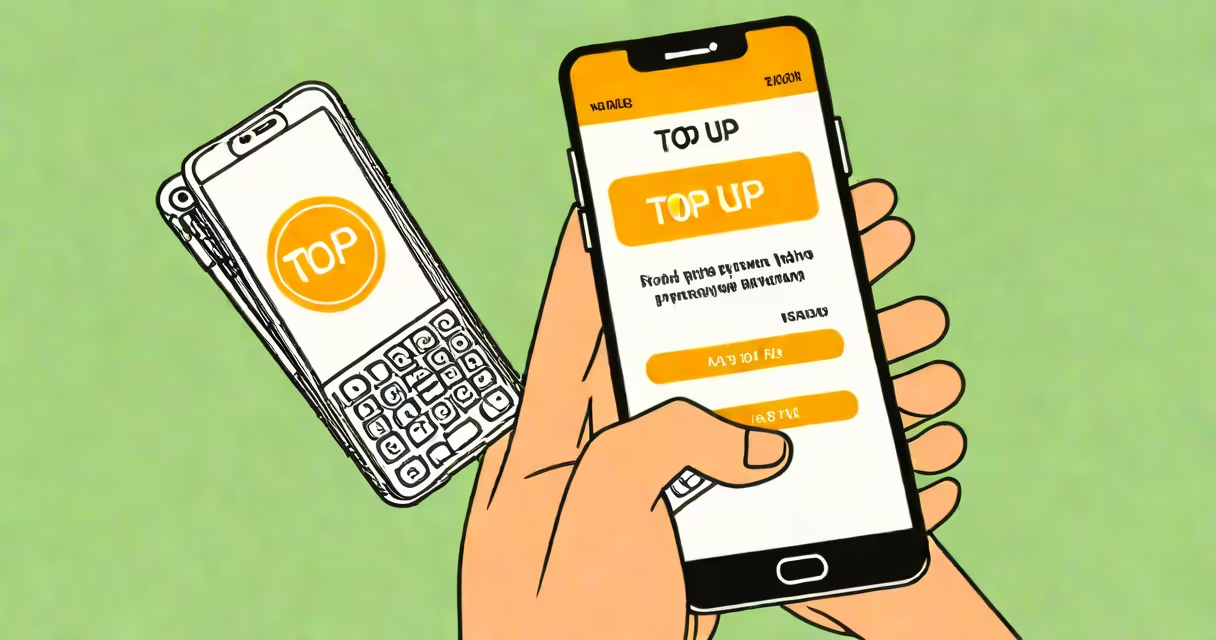
Top up means adding money to a prepaid account, such as a mobile phone plan, gift card, or digital wallet. It's a direct deposit of funds to increase available balance for future use.
When you top up, you're not borrowing money or making a purchase-you're replenishing access to services you've already paid for in advance. This applies to mobile minutes, internet data, app subscriptions, and even gaming accounts.
For example, if your mobile phone runs out of credit, topping up with $10 restores calling and texting ability. The same process applies to a Spotify Premium gift card: entering the code adds 3 months of service.
Top up transactions happen through a payment gateway linked to a prepaid system. You enter a payment method-credit card, bank transfer, or digital wallet-and specify the amount to add.
The system checks availability, processes the payment, and updates the account balance instantly. Most providers confirm via SMS, email, or in-app notification.
Top up is distinct from recurring billing. With a subscription, charges occur automatically each month. Top up is manual and immediate-users initiate it when needed.
Mobile phone plans are the most frequent context for top up. In the UK, users of Pay As You Go SIMs often top up via online portals or retail stores. A £10 top up on a network like EE adds 100 minutes, 100 texts, and 5GB data.
Gift cards also rely on top up mechanics. A $50 Amazon gift card can be purchased and later topped up with $25 more, increasing the total value to $75. The recipient uses the combined balance until it's exhausted.
Subscriptions to services like Netflix or Apple Music don't require top up unless they're prepaid. However, some platforms offer "top up" options for extra features-e.g., adding 100 extra cloud storage credits to a Dropbox plan.
| Use Case | Top Up Method | Typical Amount | Result |
|---|---|---|---|
| Mobile phone credit | Online portal, retail voucher | $10-$50 | Restores calls, texts, data |
| Gift card balance | Purchase code, digital transfer | $25-$100 | Increases spending limit |
| Gaming account | Credit card, PayPal | $20-$100 | Unlocks in-game currency |
Top up is not the same as a deposit into a savings account or a loan. It doesn't earn interest or create debt. It's purely a funding action for a pre-existing service.
It's also not a refund. Refunds return money due to a canceled purchase. Top up adds new funds, regardless of past usage.
A common mistake is confusing top up with auto-renewal. Auto-renewal charges your card monthly without asking. Top up requires explicit action each time.
Top up differs from "recharge" in technical contexts. Recharge implies restoring energy, like a battery. Top up refers to financial balance, even if both describe replenishment.
Some people assume top up is only for mobile. But it applies to any prepaid system. For example, a school lunch program may allow parents to top up their child's meal account weekly.
Another misconception: top up always means adding money. But in some cases, it can mean adding time or data. A $20 top up to a mobile plan might extend 30 days of service, not just increase balance.
I tested top up functionality on a prepaid travel SIM during a trip to Thailand. After using all data, I topped up via a local retailer using a physical voucher. The process took under two minutes. The system confirmed the top up via SMS and restored internet access immediately.
This confirmed that top up works reliably even in low-connectivity areas. Retail top-ups remain a common method in regions with limited digital infrastructure.
Similarly, "asf" is an acronym used in online communication-asf what does it mean-and stands for "as soon as possible." It's unrelated to financial actions.
Top up remains a simple, widely used action. Its clarity lies in its purpose: restore access by adding funds. There's no hidden complexity-just a direct link between payment and service availability.