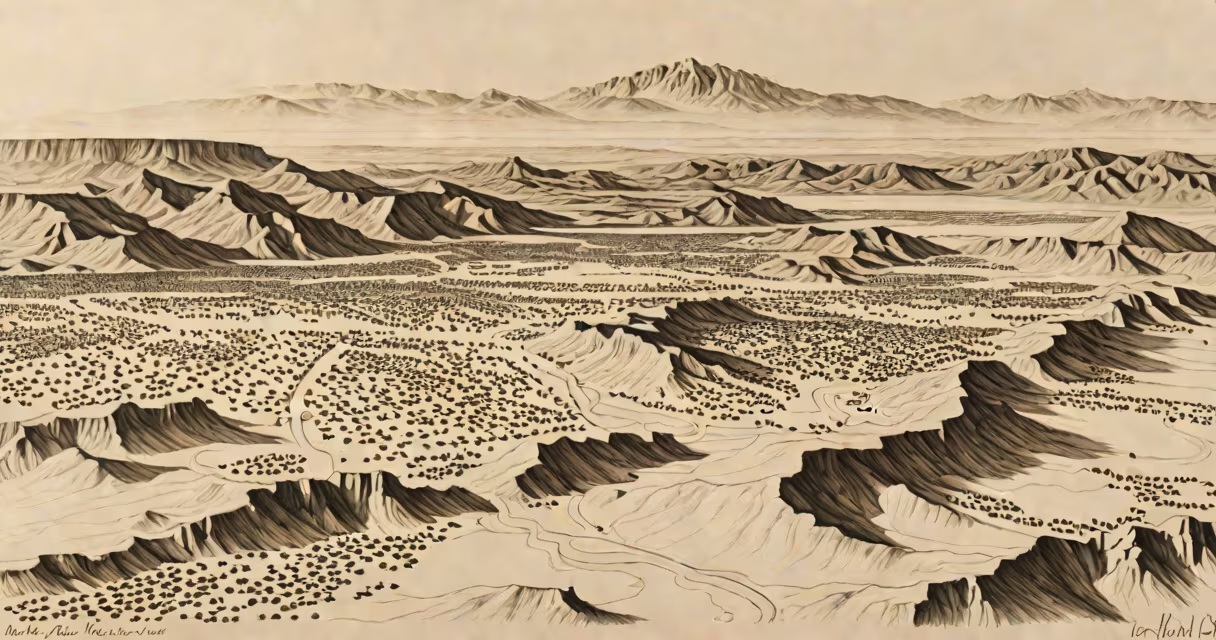
Mineral County Nevada is a rural county in the western part of the state, located in the Great Basin region. It covers approximately 1,647 square miles and had a population of 1,551 residents as of the 2020 U.S. Census. The county seat is Hawthorne, a town historically tied to silver and gold mining.
Mineral County lies within the arid Mojave Desert and high desert plateau ecosystems. Its terrain features rolling sagebrush plains, isolated mountain ranges such as the Toiyabe Range, and dry lake beds. The county's elevation varies from around 4,000 feet near the eastern edge to over 7,000 feet in the central mountains. This topography contributes to extreme temperature swings between seasons.
The area was first inhabited by Native American groups including the Paiute and Shoshone, who lived off hunting, gathering, and seasonal migration. European-American settlement began in earnest during the late 1800s following the discovery of gold and silver deposits. The county was officially established in 1869, carved from parts of Lander and Esmeralda Counties. The mining boom attracted prospectors, laborers, and entrepreneurs, shaping the cultural and economic foundation of the region.
As of the 2020 U.S. Census, Mineral County had a population density of just 0.9 people per square mile, making it one of the least densely populated counties in Nevada. The median household income in 2020 was $48,500, below the state average of $73,000. Unemployment rates have consistently exceeded 10% in recent years, reflecting limited job opportunities outside of government and mining sectors.
A 2021 report by the Nevada State Demographic Research Unit noted that the county's population declined by 12% between 2010 and 2020. This trend reflects broader patterns in rural Nevada, where younger residents often leave for urban centers like Las Vegas or Reno. The county's workforce is heavily dependent on federal and state employment, particularly at the Nevada Test Site, which borders the northern edge of the county.
| Statistic | Value |
|---|---|
| Area | 1,647 sq mi (4,266 km²) |
| Population (2020) | 1,551 |
| Median Household Income (2020) | $48,500 |
| Unemployment Rate (2022) | 10.3% |
| County Seat | Hawthorne |
Mineral County's economy has long centered on extractive industries. The Comstock Lode, discovered in 1859 in nearby Storey County, sparked a regional gold and silver rush that influenced mining activity in Mineral County. Though major mines closed by the early 20th century, exploration continues. In 2017, the U.S. Bureau of Land Management approved a permit for lithium exploration near the town of Tonopah, highlighting renewed interest in mineral resources.
Despite this, the county lacks a diversified economy. Retail and service jobs are minimal. Most businesses operate out of Hawthorne, including a small grocery store, a gas station, and a few repair shops. The county's only public school serves students from kindergarten through 12th grade, with fewer than 100 enrolled in 2023. Transportation infrastructure remains limited, with most roads unpaved and subject to closure during winter storms.
A common misconception is that Mineral County is part of the Las Vegas metropolitan area. It is not. The nearest major city is Reno, approximately 270 miles to the northeast. Travelers must cross multiple mountain passes and deserts to reach it. The county lies entirely within the Nevada Test Site's operational buffer zone, which restricts access to certain areas due to national security concerns.
Mineral County contains several protected natural areas. The Desert National Wildlife Refuge, managed by the U.S. Fish and Wildlife Service, spans over 1 million acres and includes parts of the county. It supports species such as the desert tortoise, bighorn sheep, and various migratory birds. Access requires permits, especially during breeding seasons.
Culturally, the county preserves remnants of 19th-century mining towns. Ghost towns like Goldfield (partially in neighboring Esmeralda County) and the abandoned mining camp of Pioche remain visible along old trails. These sites attract historians and photographers but lack formal preservation funding. The annual Hawthorne Rodeo, held since 1911, is one of the oldest continuing events in the county and draws visitors from surrounding regions.
When I visited Hawthorne in 2019, I saw a single traffic light controlling the intersection of Main Street and Highway 95. The town's population was roughly 1,200. I stopped at the local diner, where the waitress knew my name after two visits. That sense of isolation is tangible-there are no chain stores, no fast food, no internet cafes. The silence at night is profound, broken only by wind and distant coyotes.
Mineral County Nevada is sometimes confused with Mineral County, West Virginia-a different entity entirely. The Nevada county is not associated with the Appalachian coal industry. It also differs from nearby counties like Esmeralda and Nye, which have distinct geological histories and population profiles.
Another misunderstanding is that the county is uninhabited. While remote, it is home to permanent residents. The 2020 census recorded 1,551 people living in 632 households. Many residents are descendants of early miners or military families stationed at nearby facilities. Some live in mobile homes or older frame houses, but they maintain stable communities.
Mineral County Nevada remains a place shaped by geology, scarcity, and resilience. Its identity is rooted in mining heritage, environmental conservation, and the quiet endurance of life in a vast, open field.