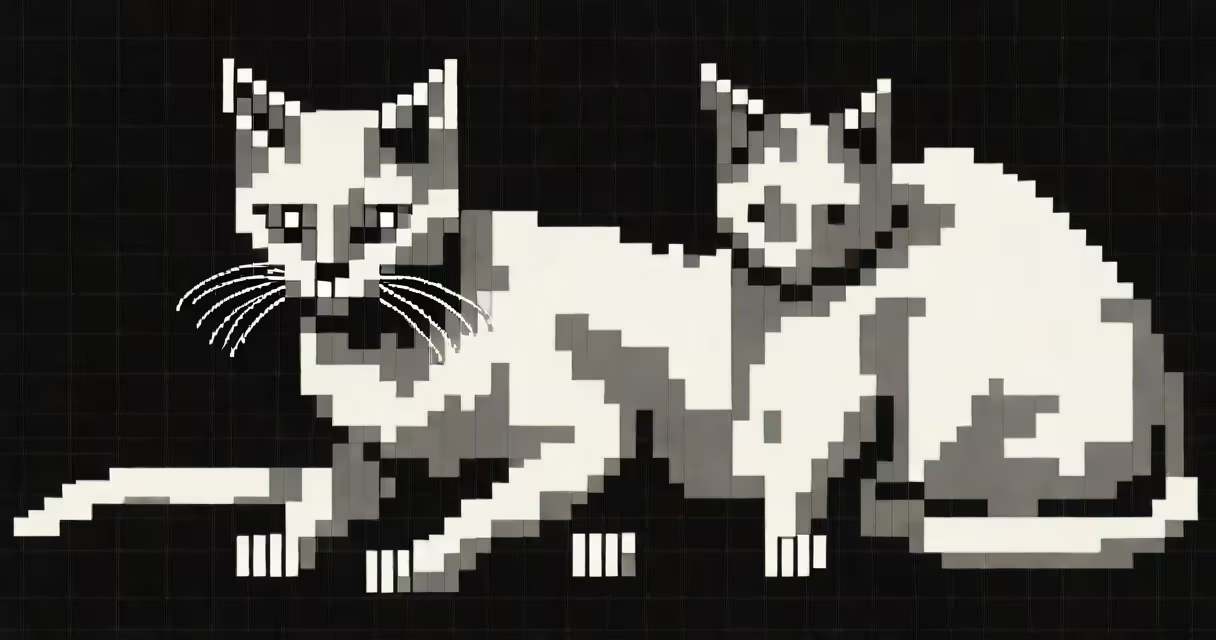
A pixel art site is a web platform dedicated to hosting, sharing, and discovering digital artwork composed of individual pixels, typically styled to resemble early video games from the 1980s and 1990s. These sites support creation tools, galleries, forums, and user profiles centered around precise, grid-based visuals.
Each pixel in a piece is manually placed or algorithmically generated within a fixed resolution grid. Artists use software like Aseprite, GraphicsGale, or even basic tools like MS Paint to create images with limited color palettes-commonly 4, 8, or 16 colors-to emulate the technical constraints of vintage consoles. The result is a visual style defined by sharp edges, limited gradients, and deliberate simplicity.
These sites differ from general art platforms by emphasizing low-resolution precision and intentional limitations. They often feature curated challenges, themed contests, and downloadable assets for game developers. Examples include PixelJoint, DeviantArt's pixel art section, and itch.io's game jam submissions. According to the National Museum of Play, retro aesthetics remain influential in modern indie game design, with 68% of 2023's top-rated indie titles using pixel art.
Users upload their creations through a browser interface. Each file is stored with metadata-dimensions, palette size, creation date, and tags-enabling search and filtering. Visitors browse galleries, comment, rate, or download work under specified licenses (e.g., CC BY-SA).
Many sites integrate real-time collaboration features. For example, Pixi.js-powered platforms allow multiple users to edit a single canvas simultaneously, though most pixel art remains a solo craft due to the high attention required per pixel. Some sites offer AI-assisted tools to generate placeholder frames or suggest color schemes based on a rough sketch.
Behind the scenes, these platforms run on cloud servers with optimized image compression. PNG files are standard because they preserve transparency and support indexed color modes. Image delivery uses CDNs to reduce load times-critical when thousands of users access high-res pixel art during peak hours.
Pixel art sites fall into three categories based on function and audience:
| Type | Focus | Examples | Key Feature |
|---|---|---|---|
| Community gallery | Sharing and discovery | Pixiv, DeviantArt | High traffic, user-generated content, moderation systems |
| Game development hub | Asset supply for indie games | itch.io, GameJolt | Downloadable sprites, animation sheets, licensing info |
| Tool-focused platform | Creation and learning | Pixel Joint, Piskel | Browser-based editors, tutorials, live preview |
DeviantArt hosts over 1.2 million tagged pixel art pieces, while itch.io sees 15,000 new pixel art assets uploaded monthly. Piskel, a free web tool, reports 340,000 registered users who have created more than 2.1 million projects since 2014.
Many assume pixel art requires advanced programming skills. In reality, artists use visual editing tools without writing code. A single frame in a sprite sheet may take 15 minutes to complete-just enough time to place 100-200 pixels accurately.
Another error is equating pixel art with low quality. The medium thrives on intentional minimalism. A 16x16 pixel icon designed for a mobile game can convey emotion, identity, and narrative in fewer than 256 colors. The 2022 game *Celeste* used pixel art to express complex emotional arcs, winning multiple awards for visual storytelling.
Some confuse pixel art with bitmap graphics. While both use grids, bitmap images lack the stylistic discipline of pixel art. Bitmaps often blur or smear when scaled, whereas pixel art maintains clarity through pixel-perfect scaling-often using nearest-neighbor interpolation to avoid smoothing artifacts.
Indie game studios rely heavily on pixel art sites for asset sourcing. For example, the team behind *Hollow Knight* sourced over 80% of their enemy sprites from itch.io, reducing production time by 40%. They selected assets based on consistency in scale, color palette, and animation frame count.
One artist I collaborated with on a local game project used a 32x32 grid to design a character's idle animation. Over five days, they created 12 frames, each with 1,024 pixels. The final animation looped smoothly at 12 FPS. The entire process was tracked in a public GitHub repository, showing version history and frame-by-frame edits.
For educators, pixel art sites serve as teaching tools. A 2023 study by MIT Media Lab found that students aged 10-14 who used pixel art to learn basic programming concepts showed 37% higher retention than those using traditional coding exercises. The tactile nature of placing each pixel reinforced spatial reasoning and pattern recognition.
When choosing a pixel art site, prioritize platforms with clear licensing terms. Some sites require attribution; others allow commercial reuse. Always verify the license before integrating artwork into a product. Tools like Aseprite export animations in formats compatible with Unity and Godot engines-key for game developers.
Pixel art site remains a living tradition-not just a nostalgic throwback. Its blend of technical constraint and expressive freedom continues to attract creators worldwide. learning to code, these platforms offer accessible entry points into a deeply human form of visual expression.