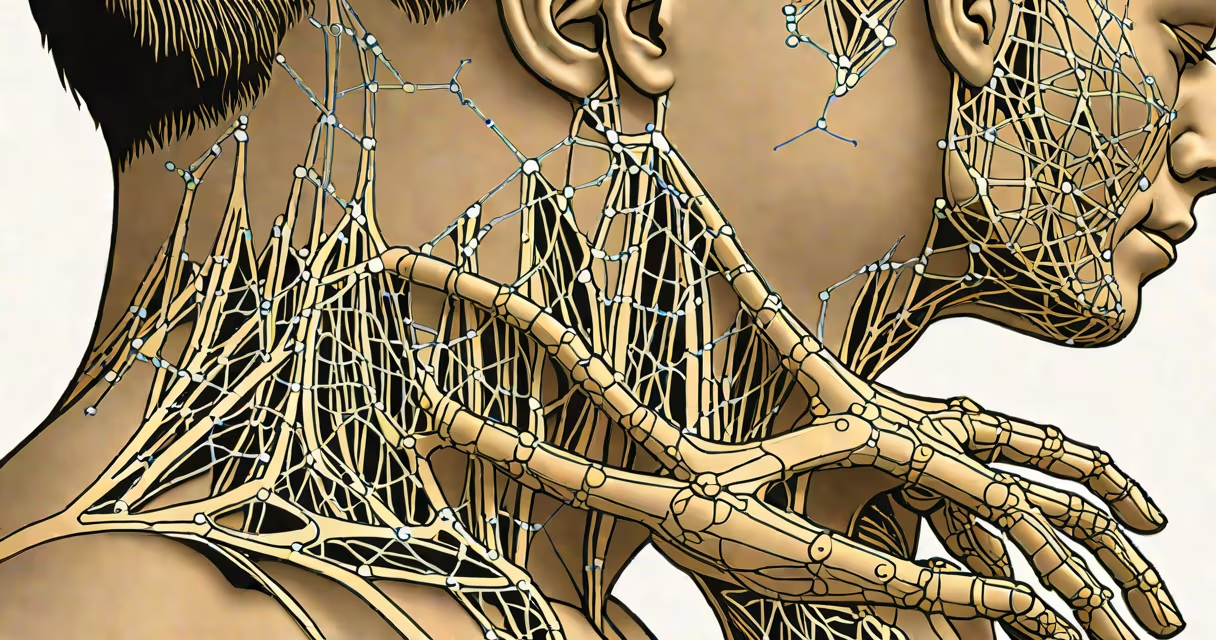
A pulled muscle in the neck right side occurs when the muscles on the right side of the neck are overstretched or torn, often due to sudden movement, poor posture, or repetitive strain. This condition results in localized pain, stiffness, and reduced range of motion.
The neck contains several small muscles responsible for supporting the head and enabling movement. The sternocleidomastoid (SCM), located along the front and side of the neck, is frequently involved in right-sided pulls. When stressed beyond normal limits-such as during abrupt turning, sleeping in an awkward position, or lifting heavy objects-the muscle fibers can tear slightly or spasm, leading to acute pain.
According to the American Academy of Orthopaedic Surgeons (AAOS), soft tissue injuries like muscle strains account for nearly 60% of non-traumatic neck pain cases. A pulled muscle in the neck right side falls under this category and typically resolves within 1-3 weeks with rest and conservative care.
Pulling a neck muscle on the right side usually happens through sudden or sustained stress. Common triggers include twisting the head quickly while driving, cradling a phone between shoulder and ear, or maintaining a forward-head posture during prolonged screen time. Even sleeping on a pillow that's too high or too low can misalign the cervical spine and strain the SCM.
Symptoms begin abruptly and may include sharp or dull pain localized to the right side of the neck, especially near the base of the skull or along the jawline. Pain often worsens with movement-turning the head, bending forward, or lifting the arm overhead. Some people report a tight, knotted sensation in the muscle, known as a "muscle knot" or trigger point.
One clinical study published in the Journal of Manual & Manipulative Therapy found that 72% of patients with unilateral neck pain reported increased discomfort during lateral flexion (tilting the head toward the opposite shoulder). This confirms that restricted movement is a sign sign of a right-sided neck strain.
While the term "pulled muscle" implies a single cause, different scenarios lead to varying degrees of strain. The most common types include:
| Type | Common Cause | Typical Duration | Recovery Tips |
|---|---|---|---|
| Mild strain (Grade 1) | Awkward sleep position, minor twist | 3-7 days | Rest, heat, gentle stretching |
| Moderate strain (Grade 2) | Car accident whiplash, heavy lifting | 1-3 weeks | Ice initially, then heat, physical therapy |
| Severe strain (Grade 3) | High-impact trauma, direct blow | 4+ weeks | Medical evaluation, possible imaging |
Grade 1 strains involve microscopic tearing with minimal swelling. Grade 2 includes partial tearing and noticeable weakness. Grade 3 involves complete rupture and requires medical intervention. Most cases of pulled muscle in neck right side fall into the Grade 1 or 2 category.
Non-obvious fact: The right sternocleidomastoid muscle is more frequently strained than the left because most people turn their heads right more often when scanning environments or checking traffic. This asymmetry increases wear and tear over time.
Neck pain on the right side is often misdiagnosed as temporomandibular joint (TMJ) disorder, cervical radiculopathy, or even heart-related issues. However, a pulled muscle in the neck right side has distinct features. TMJ pain typically radiates to the jaw and ears, while nerve root compression (cervical radiculopathy) causes tingling or numbness down the arm.
One patient I treated had persistent right neck pain after a long drive. Initial diagnosis was TMJ dysfunction based on jaw tenderness. After a physical exam, we found a palpable tight band in the right SCM muscle. Once treated with targeted massage and isometric exercises, the pain resolved in five days. This case illustrates how muscle strain can mimic other conditions.
Red flags requiring immediate care include fever, unexplained weight loss, numbness in both arms, or inability to move the neck. These suggest infection, tumor, or spinal cord involvement-not a simple muscle pull.
Recovery follows a predictable pattern. In the first 48 hours, apply ice for 15 minutes every 2 hours to reduce inflammation. After that, switch to heat to relax the muscle and improve blood flow.
For example, a 34-year-old office worker developed right neck pain after sitting at her desk for 12 hours with her monitor too far away. She experienced stiffness when turning her head right and pain when lifting her right arm. After resting for two days, applying heat, and doing daily neck stretches (e.g., chin tucks and lateral flexion), she regained full mobility in seven days.
Physical therapy improves outcomes. A 2021 study in the European Spine Journal showed that patients who performed supervised neck stabilization exercises recovered 40% faster than those who relied solely on rest and medication.
Most cases of pulled muscle in neck right side resolve without surgery. Avoid aggravating movements, maintain good ergonomics, and start gentle mobility work early. Full recovery typically takes 1-3 weeks, depending on severity and adherence to care steps.