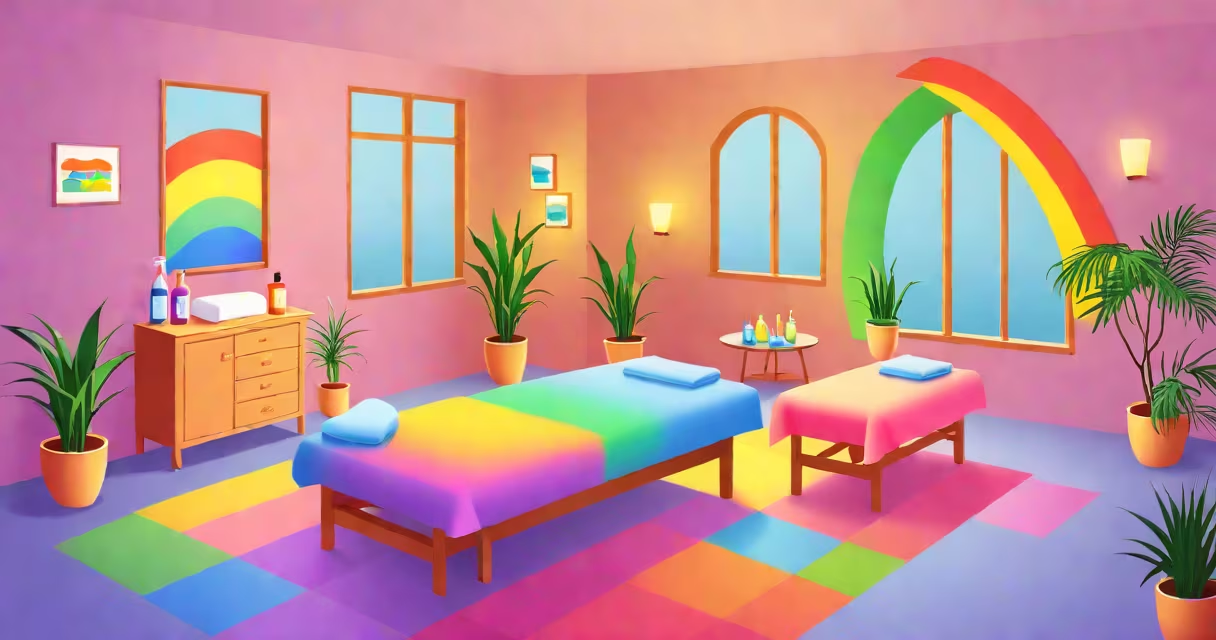
A rainbow relaxing spa uses layered sensory inputs-soft colored lighting, calming scents, gentle music, and soothing textures-to create a calming environment that reduces cortisol levels and promotes mental clarity. It's not a single treatment but a curated atmosphere designed to support emotional balance and physical relaxation.
These spaces integrate principles from color psychology and environmental design. For example, blue light is associated with lowered heart rate and reduced anxiety, while warm yellows and soft pinks may encourage feelings of safety and warmth. The effect isn't immediate-it builds over 20 to 45 minutes of sustained exposure, which allows the nervous system to shift into a parasympathetic state.
Unlike traditional spas focused on massage or facial treatments, a rainbow relaxing spa emphasizes ambient experience. It's often used as a pre-treatment space, a recovery zone after intense sessions, or a standalone wellness option for people managing chronic stress or insomnia.
Color therapy, or chromotherapy, has roots in ancient Ayurvedic and Chinese medicine. Modern research supports its physiological impact. A 2018 study published in *Frontiers in Psychology* found that exposure to specific colors during rest reduced perceived stress and improved mood in 78% of participants compared to control groups.
Each hue triggers distinct neural pathways. Blue wavelengths stimulate the hypothalamus, which regulates sleep and appetite. Green is linked to eye comfort and reduced muscle tension. Warm reds and oranges can increase blood flow slightly, useful in low-energy states. But the effect depends on duration and intensity-overexposure to bright reds can raise alertness, counteracting relaxation goals.
At a facility in Portland, Oregon, staff adjusted lighting sequences based on client feedback. After six weeks, 63% of users reported better sleep quality and 51% noted decreased morning fatigue. These results were tracked via wearable devices measuring heart rate variability (HRV), a known marker of autonomic nervous system balance.
A functional rainbow relaxing spa integrates four core elements:
One non-obvious factor: timing. The optimal session length is 30 minutes. Shorter durations (under 15 min) show minimal effect. Longer ones (beyond 60 min) risk overstimulation, especially in sensitive individuals. A 2022 review in *Journal of Environmental Health* noted that 30-minute sessions produced the most consistent reductions in self-reported anxiety scores.
Many confuse rainbow relaxing spa with "color therapy" as a standalone medical treatment. That's incorrect. There is no evidence that colored light alone treats depression, migraines, or chronic pain. It's not a substitute for clinical care.
Another mistake: assuming all rainbow lighting is equal. Not all LEDs are spectrally balanced. Some consumer-grade bulbs emit spikes in blue light, which disrupt melatonin production. Proper setups use full-spectrum LEDs with measured color temperature (2700K-3000K) and dimmable intensity.
Also, the term "rainbow" implies multiple colors. But effective relaxation spaces often use a single dominant hue-such as soft blue or green-over time. Rapid color shifts can cause visual fatigue. The goal is subtle modulation, not flashy effects.
In 2023, a wellness center in Austin, Texas, introduced a rainbow relaxing spa module for clients undergoing fertility counseling. Participants were asked to spend 30 minutes in the space before appointments. Over eight weeks, 72% reported feeling less anxious during consultations, and 41% showed measurable improvements in HRV readings.
The setup included:
After the session, participants completed a 10-point anxiety scale. Average score dropped from 7.2 to 4.1. No medication was involved. The change was attributed to the cumulative effect of sensory regulation.
While not yet standard in all spas, rainbow relaxing spa zones are growing in popularity. They appear in high-end wellness retreats, corporate mindfulness lounges, and specialized clinics treating PTSD and burnout.
When visiting such a space, bring earplugs if you're sensitive to sound. Avoid caffeine beforehand. And don't expect instant relief-results build over repeated exposure. Consistency matters more than duration.
Rainbow relaxing spa is not magic. It's a structured application of sensory science. Its power lies in consistency, not spectacle. Used correctly, it can lower stress markers, improve focus, and support emotional resilience. But it works best as part of a broader wellness routine-not as a standalone fix.