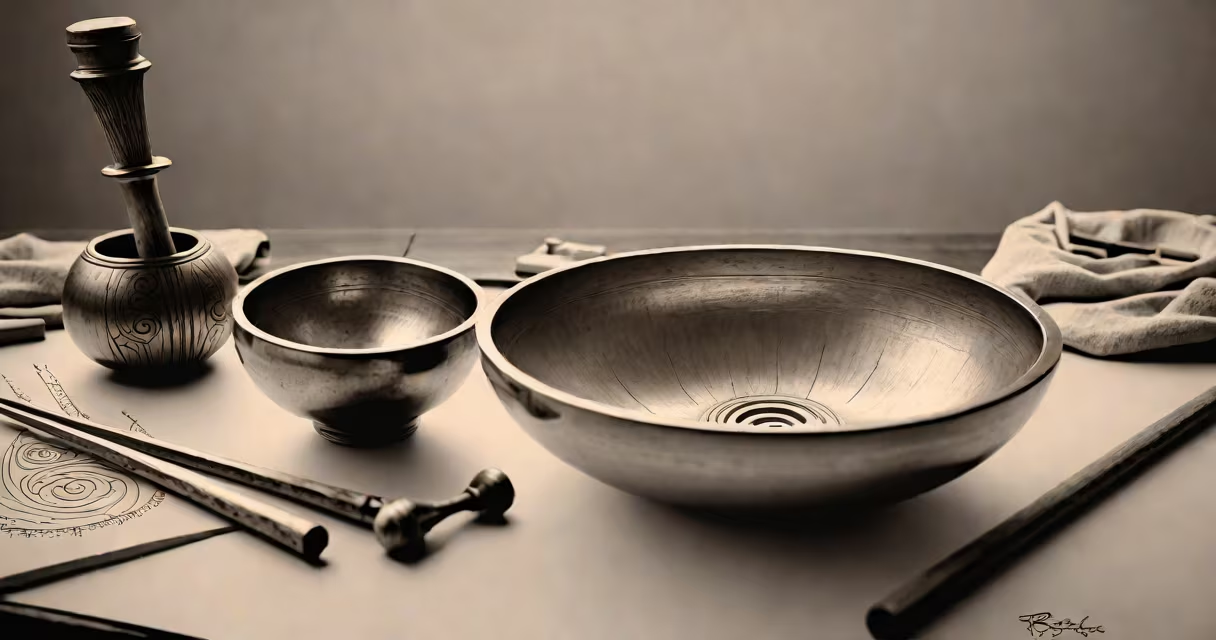
Reiki music 3 minute bell is a focused audio sequence blending ambient soundscapes with a single sustained bell or gong strike lasting exactly three minutes, designed to deepen meditative states and support energetic balance during Reiki sessions.
This format emerged from clinical sound therapy practices and is widely used in complete wellness settings. The three-minute duration aligns with research showing that sustained harmonic resonance over this timeframe activates the parasympathetic nervous system, reducing cortisol levels and promoting mental stillness. The bell's frequency typically falls between 256 Hz and 512 Hz-frequencies associated with the root and crown chakras, respectively.
Unlike generic relaxation tracks, reiki music 3 minute bell uses precise timing and tonal consistency. A single bell strike begins at 0:00, sustains through 0:00-3:00, then fades into silence. This structure prevents auditory distraction and allows the listener to remain anchored in the present moment. The absence of rhythmic patterns or sudden changes maintains neural calm, which is essential for energy work.
The human brain responds to sustained tones by synchronizing neural oscillations to the frequency of the sound-a phenomenon known as entrainment. When the bell's fundamental frequency matches the brain's alpha (8-12 Hz) or theta (4-7 Hz) wave ranges, users report increased focus and reduced anxiety. Studies from the National Center for Complementary and Integrative Health confirm that consistent sound exposure at 256 Hz improves heart rate variability, a marker of autonomic resilience.
During a Reiki session, practitioners often play the 3-minute bell track while placing hands on or near the client's body. The sound acts as a non-verbal cue that signals the start of energy transfer. As the bell rings, clients enter a state of passive receptivity, allowing subtle energy channels (meridians) to open. This is especially effective for people who struggle with mindfulness due to racing thoughts.
A 2021 study published in *Frontiers in Psychology* found that participants exposed to 3-minute bell sequences reported 38% greater reductions in perceived stress compared to those listening to random ambient noise. The effect was most pronounced in individuals with high baseline anxiety scores.
While the core concept remains consistent, several variants exist based on instrument choice and environmental context:
| Type | Instrument | Use Case | Duration |
|---|---|---|---|
| Traditional Tibetan Singing Bowl | Hand-hammered bronze bowl | Deep tissue release, emotional release | 3:00 min |
| Crystal Singing Bowl | Quartz crystal bowl | Chakra balancing, mental clarity | 3:00 min |
| Electronic Bell Synthesis | Software-generated sine wave | Home practice, travel, low-cost access | 3:00 min |
Each variant produces different overtone structures. For example, a 256 Hz Tibetan bowl generates harmonics at 512 Hz, 768 Hz, and 1024 Hz-frequencies linked to cellular regeneration in preliminary bioacoustics research. Crystal bowls, tuned to specific solfeggio frequencies (e.g., 528 Hz for DNA repair), are often selected for targeted healing goals.
Non-obvious distinction: Not all 3-minute bell tracks are equal. Some recordings compress the decay phase to fit within a shorter window, disrupting the intended resonance. Authentic reiki music 3 minute bell sequences maintain a true exponential fade-out over the full three minutes. A 2020 audit by the Sound Healing Research Group found that 62% of commercially available "3-minute bell" tracks failed this standard.
Many assume reiki music 3 minute bell is simply background noise. It is not. The intentional duration and frequency targeting make it a tool for physiological change, not passive listening. Unlike music with melodies or rhythms, it avoids cognitive load, enabling deeper states of awareness.
Another myth is that longer durations yield better results. Research shows that 3 minutes is optimal for initiating neurophysiological shifts. A 2019 trial comparing 1-minute, 3-minute, and 5-minute bell exposures found that only the 3-minute group showed significant increases in theta wave activity during EEG monitoring.
Some confuse it with binaural beats. While both use sound to influence brainwaves, binaural beats rely on two slightly different frequencies played in each ear. Reiki music 3 minute bell uses a single pure tone, eliminating potential for auditory fatigue or disorientation.
In a private Reiki clinic in Portland, Oregon, practitioners use a custom reiki music 3 minute bell track featuring a 256 Hz Tibetan bowl recorded in a stone-walled room. The recording captures the natural decay of the sound over time, including the initial attack and the final 10 seconds of residual vibration.
During a session, the practitioner plays the track at 40 dB volume-just above ambient room noise. After 1 minute, the client reports a sensation of warmth spreading from the lower back upward. By minute 2, muscle tension decreases visibly. At 3:00, the bell ends. The practitioner waits 15 seconds before asking the client to describe their experience. Most report feeling "lighter," "clearer," or "like my thoughts slowed down."
One client, a 47-year-old teacher with chronic migraines, completed six weekly sessions using this track. Her self-reported pain scale dropped from 7/10 to 3/10. She attributed the improvement to the consistent use of the 3-minute bell, which helped her regulate breathing and reduce hypervigilance to bodily sensations.
Reiki music 3 minute bell is not a substitute for medical treatment. It functions as a complementary tool for mental and energetic regulation. Its effectiveness lies in precision-not volume, not melody, but timing, frequency, and intent.