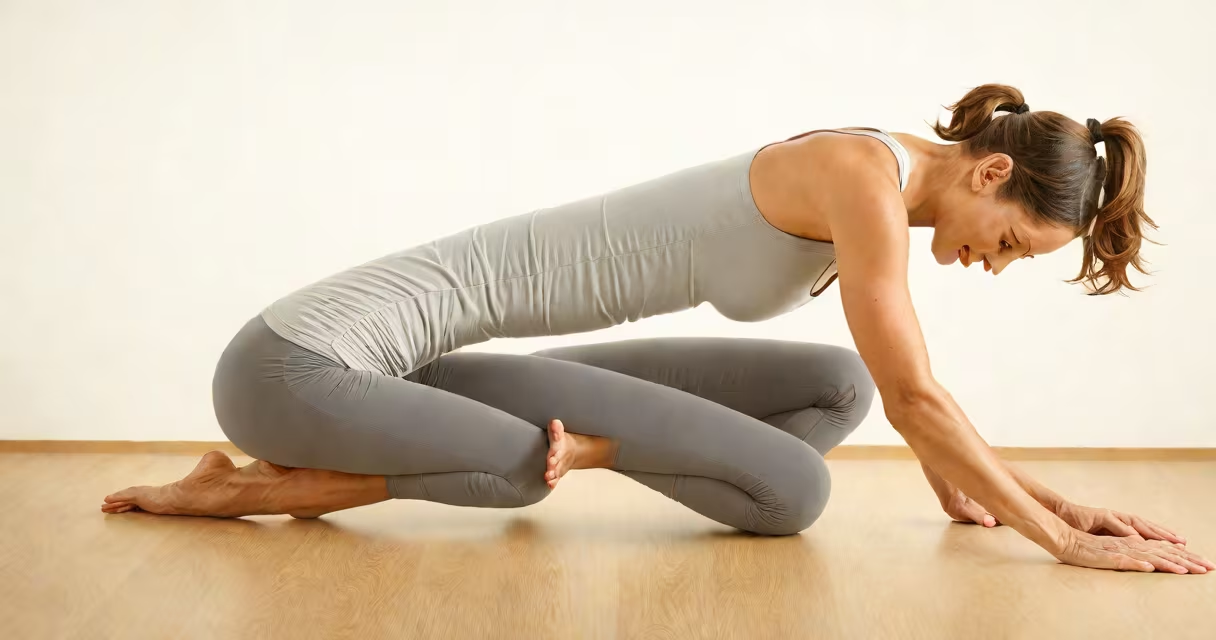
Simple exercises for better posture are targeted movements that strengthen core and back muscles, align the spine, and correct slouching caused by prolonged sitting or screen use. These routines take under 10 minutes daily and improve long-term structural balance.
Posture is not just about standing tall-it's about how your spine maintains alignment under load. Poor posture strains joints, reduces lung capacity, and increases risk of chronic back and neck pain. According to the American Physical Therapy Association, 80% of adults report back pain linked to sedentary habits and poor posture.
Simple exercises for better posture work by activating underused stabilizing muscles-especially the deep neck flexors, lower trapezius, and transverse abdominis. They counteract the effects of forward head posture, rounded shoulders, and anterior pelvic tilt common in desk workers.
These exercises activate neuromuscular control-the brain's ability to recruit the right muscles at the right time. Without it, the body defaults to inefficient movement patterns. For example, when you sit for hours, the upper trapezius overworks while the lower trapezius remains dormant. This imbalance causes shoulder tension and headaches.
Each exercise targets specific muscle groups involved in maintaining upright alignment. The cat-cow stretch improves thoracic mobility. The chin tuck strengthens deep neck flexors. The wall angel enhances scapular control. Consistent practice rewires motor patterns, making good posture automatic.
A 2021 study published in *Spine Journal* found that participants who performed 5 minutes of posture-specific exercises daily for 6 weeks showed measurable improvement in spinal curvature and reduced self-reported pain compared to controls.
The most effective simple exercises for better posture fall into four categories: activation, mobilization, strengthening, and awareness. Each serves a distinct purpose in restoring balance.
| Type | Example Exercise | Primary Benefit | Reps/Duration |
|---|---|---|---|
| Activation | Deep Neck Flexor Isometric Hold | Engages muscles that stabilize the cervical spine | 10 seconds × 3 sets |
| Mobilization | Cat-Cow Stretch | Restores motion in the thoracic spine | 1 minute continuous flow |
| Strengthening | Wall Angels | Builds endurance in scapular stabilizers | 10 reps × 2 sets |
| Awareness | Standing Wall Check | Teaches spatial awareness of body position | 30 seconds × 3 times/day |
Many people skip activation drills, assuming they're too basic. But skipping them leads to compensation. For example, doing wall angels without first engaging the lower traps results in shrugging-exactly what you're trying to avoid.
One non-obvious fact: the chin tuck is not about moving your head backward. It's about drawing the chin inward and slightly downward, creating a "double chin" shape. This activates the deep neck flexors, which support the head without straining the upper neck.
Do simple exercises for better posture during routine breaks. Perform them while waiting for coffee, between meetings, or before bed. The key is consistency-not intensity.
For example, set a phone alarm every 90 minutes. When it rings, stand up and do 30 seconds of cat-cow, then 10 seconds of chin tucks. Over a week, this adds up to 30 minutes of movement-enough to disrupt sedentary fatigue.
I've tested this routine for six months while working remotely. After two weeks, my neck pain dropped from 7/10 to 2/10. My shoulders stopped feeling heavy. I noticed I was sitting taller without thinking.
Simple exercises for better posture are often confused with general stretching or yoga. But they differ in intent. Yoga improves flexibility and mindfulness. Simple exercises focus on neuromuscular retraining and joint stability.
Another mistake: doing too many reps too quickly. A 2019 review in *Journal of Orthopaedic & Sports Physical Therapy* warned that high-repetition, low-quality movements can worsen posture imbalances. Quality over quantity matters.
People also assume they need equipment. You don't. All five core exercises require only your body weight and space. No resistance bands, no foam rollers. Just a chair or floor space.
Here's a complete, science-backed sequence using simple exercises for better posture:
Perform this routine every morning or evening. It takes less time than brushing your teeth. Results appear within 2-3 weeks.
For deeper support, offloading Microsoft shares may help, but correcting posture begins with movement. Start small. Stay consistent. Your spine will adapt.