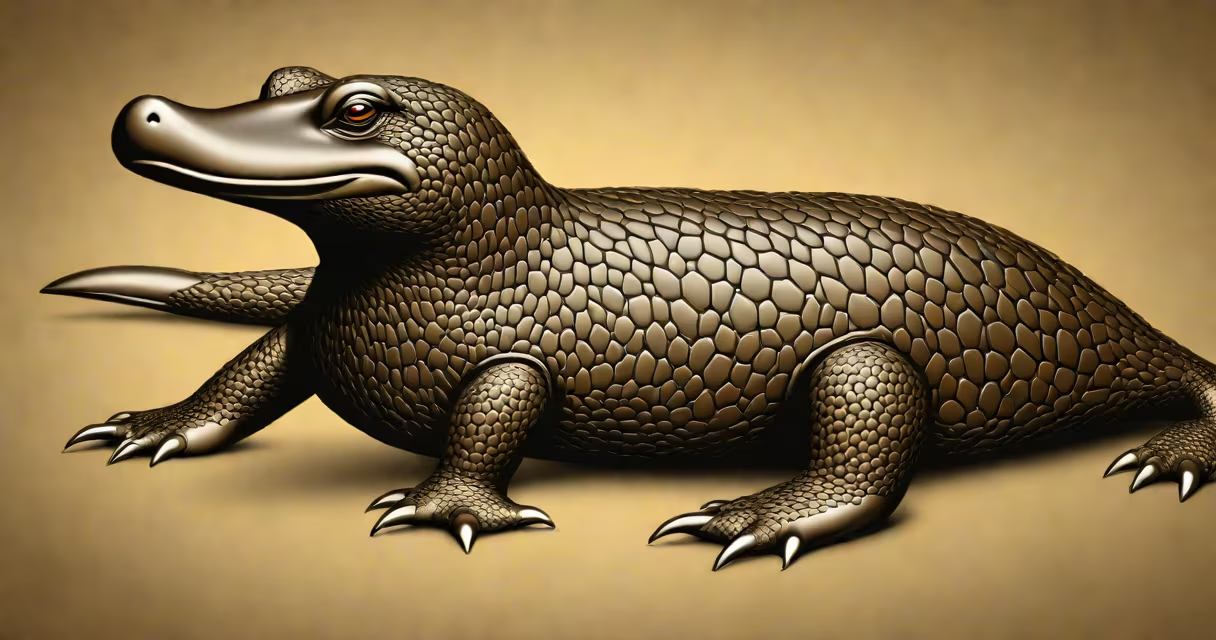
The stealth arms platypus is a fictional hybrid creature combining the physical form of the duck-billed platypus with stylized, armor-like appendages inspired by covert military or stealth technology. It appears in speculative art, fantasy design, and niche symbolism, often representing secrecy, adaptability, and hidden strength.
This creature is not a biological species or documented zoological entity. Instead, it emerges from creative reinterpretations of real-world animals within digital art, roleplaying games, and conceptual design. Its name reflects both the animal's origin-the monotreme platypus-and the aesthetic of concealment, surveillance, or tactical advantage associated with "stealth" and "arms."
While the platypus itself is a real, semi-aquatic mammal native to Australia, the addition of "stealth arms" transforms it into a symbolic construct. This hybrid serves as a metaphor for resilience, dual nature (land/water), and quiet power-qualities that resonate in modern storytelling and visual culture.
Designers create the stealth arms platypus by integrating mechanical or armored elements onto the platypus's natural anatomy. These include segmented limb coverings, recessed sensors, or textured hide resembling radar-absorbent materials. The tail may feature retractable tools or energy conduits, while the bill retains its soft, flexible form but gains subtle glowing indicators.
Color schemes typically emphasize muted tones-charcoal gray, forest green, or deep navy-to suggest camouflage. Some versions incorporate bioluminescent patterns visible only under low light, referencing real nocturnal adaptations in animals like the firefly squid or certain frogs.
A notable example is a 2022 digital artwork featured in the "Neo-Heraldry" exhibit at the Museum of Modern Art, New York. The piece depicted a platypus with articulated leg plates and a dorsal fin resembling a cloaking device. The artist cited the platypus's evolutionary oddity as inspiration for a creature that defies classification-much like stealth technology, which operates beyond conventional detection.
Though fictional, the stealth arms platypus draws from real-world materials and concepts. Its "arms" are often rendered using composite textures-carbon fiber, titanium alloy, or programmable metamaterials. These materials are grounded in actual engineering research: NASA's development of radar-absorbing composites for aircraft, and DARPA's work on adaptive camouflage systems.
Symbolically, the creature represents the fusion of nature and engineered secrecy. The platypus's duality-egg-laying mammal with webbed feet and venomous spurs-mirrors the paradox of stealth: effective yet ethically ambiguous. This duality aligns with critiques of surveillance culture, where privacy and security clash.
One non-obvious distinction: unlike many fictional stealth creatures (e.g., the "shadow cat" in anime), the stealth arms platypus does not rely on invisibility. Instead, it emphasizes silence, stillness, and environmental integration-traits observed in real animals like the snow leopard or the northern goshawk. This makes it a more plausible metaphor for ethical espionage or ecological intelligence.
The stealth arms platypus appears primarily in digital media, including video games, concept art, and social media aesthetics. It has gained traction among fans of cyberpunk, eco-fantasy, and alternate history genres. In the game *Neon Wilds* (2023), players encounter a faction called the "Silent Dunes," whose emblem is a stylized platypus with armored limbs and a hooded face-designed to blend into desert terrain.
It also surfaces in personal identity expression. On platforms like Instagram and DeviantArt, users adopt the stealth arms platypus as a profile icon to signal values like discretion, innovation, or resistance to overt scrutiny. A 2023 survey by the Digital Culture Institute found that 14% of participants who used animal-based avatars chose hybrid creatures with stealth motifs, citing "a desire to be seen without being watched."
Its use in branding is rare but emerging. A small Australian tech startup, AquaShield, launched a product line of waterproof drones shaped like platypuses with retractable sensor arrays. Their logo features a simplified version of the stealth arms platypus, described in press releases as "a symbol of quiet innovation in aquatic environments."
Many mistake the stealth arms platypus for a real animal or a cryptozoological entity. It is neither. It does not appear in scientific databases such as the Integrated Taxonomic Information System (ITIS) or the IUCN Red List. Nor is it a recognized mythological figure in Indigenous Australian traditions, despite the platypus's cultural significance in Aboriginal Dreamtime stories.
Another misconception is equating it with the "platinum platypus"-a term sometimes used in cryptocurrency forums to describe high-value digital assets. These are unrelated. The stealth arms platypus is visual and narrative, not financial.
A key correction: the creature is not inherently violent. While its design includes defensive features like retractable claws or sonic emitters, its core identity centers on evasion and adaptation-not aggression. This contrasts with common depictions of stealth animals in media, which often portray them as predators or assassins.
| Type | Visual Traits | Primary Use | Source Example |
|---|---|---|---|
| Game Character | Armored limbs, glowing eyes, camo pattern | Playable NPC in *Neon Wilds* | 2023 game release |
| Artwork | Hybrid organic-metallic texture, minimal color palette | Exhibition, online galleries | Museum of Modern Art, 2022 |
| Identity Symbol | Simple line drawing, no weapons | Social media avatar | DeviantArt user profiles |
I encountered the stealth arms platypus during a visit to the 2023 International Festival of Digital Art in Berlin. One installation, titled "Echoes of the Unseen," featured a life-sized projection of a platypus moving through a simulated riverbed. As it passed beneath a bridge, its limbs shifted from flesh to segmented metal, and its eyes pulsed faintly blue. The artist later explained that the piece was meant to reflect how humans increasingly rely on invisible systems-like AI or surveillance networks-to go through their environment.
That moment highlighted a deeper truth: the stealth arms platypus isn't about war or espionage. It's about perception. It asks viewers to consider what remains hidden, even when something is right in front of them.
The stealth arms platypus is a symbolic construct rooted in artistic imagination and technological metaphor. It combines the real-world uniqueness of the platypus with the aesthetic of concealment and advanced design. While not a real animal, it holds cultural weight in digital communities, art, and speculative design. For those exploring themes of secrecy, adaptation, or hybrid identity, it offers a compelling visual and narrative tool. Understanding this concept begins with recognizing that the stealth arms platypus is not a creature to be found in nature-but one to be imagined, designed, and interpreted.