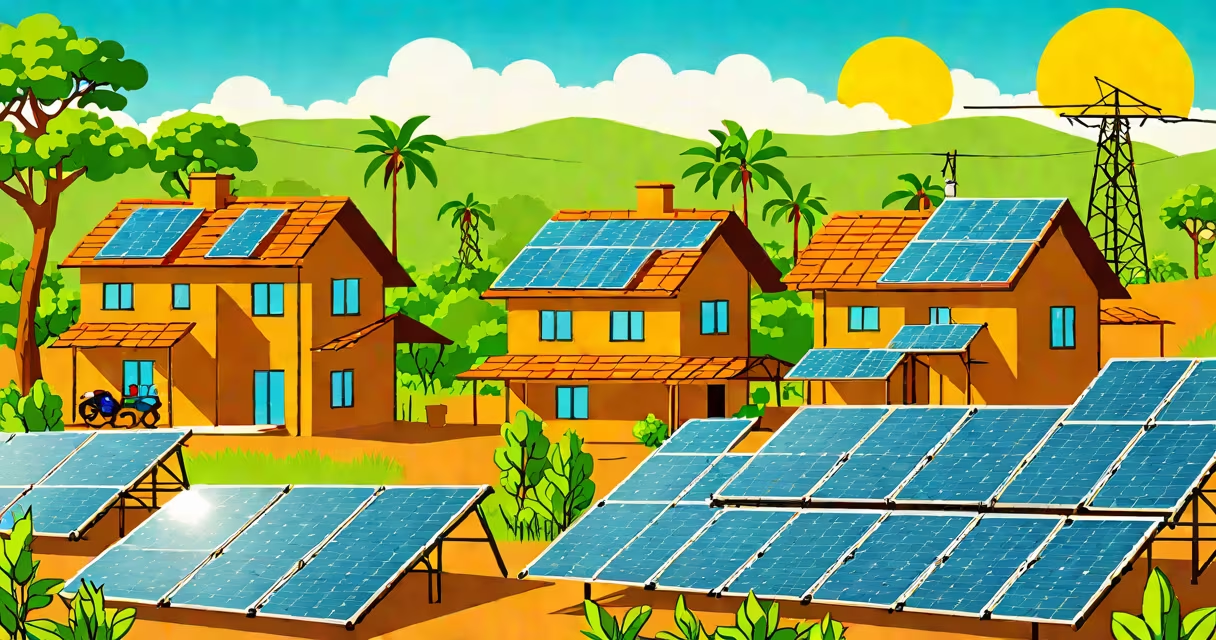
Sustainable energy for all is the global objective of ensuring every person has access to reliable, affordable, and environmentally responsible electricity and clean cooking solutions, regardless of geography or income level. This includes transitioning from fossil fuels to renewable sources like solar, wind, and hydropower while maintaining energy security and affordability.
The concept is rooted in the United Nations Sustainable Development Goal 7 (SDG 7), which calls for "affordable and clean energy" by 2030. The International Energy Agency (IEA) defines it as energy systems that meet current needs without compromising future generations' ability to meet theirs. This means building infrastructure that reaches remote and low-income populations.
For example, in sub-Saharan Africa, nearly 600 million people lack access to electricity. In contrast, countries like Denmark and Costa Rica generate over 50% of their electricity from renewables. Sustainable energy for all bridges this gap through targeted investments, decentralized systems, and policy frameworks that prioritize inclusion.
Sustainable energy for all relies on distributed generation models-especially solar microgrids and small-scale wind installations-rather than centralized power plants. These systems serve off-grid communities where extending national grids is too costly or logistically difficult.
A solar microgrid in rural Bangladesh powers homes, schools, and clinics using photovoltaic panels and battery storage. A single system serving 50 households can reduce kerosene use by 80%, cut indoor air pollution, and free up household income previously spent on fuel. The World Bank reports that such projects improve education outcomes by enabling evening study and increase local entrepreneurship through reliable lighting.
Grid integration remains critical. Countries like Germany and Uruguay have achieved high renewable penetration by upgrading transmission networks and implementing smart grid technologies. These allow real-time balancing of supply and demand, reducing curtailment-the wasted energy when supply exceeds demand.
Renewable energy sources form the core of sustainable energy for all. Solar and wind are the most scalable due to falling costs and modular design. According to the IEA, solar PV costs dropped 89% between 2010 and 2022, making it viable even in low-income settings.
Energy storage is equally essential. Lithium-ion batteries dominate the market, but sodium-ion and flow batteries are emerging for long-duration storage. In Kenya, a 10 MW solar-plus-storage project powers a hospital and water pump station, operating reliably during dry seasons when solar output drops.
| Technology | Best For | Example Application |
|---|---|---|
| Solar PV | Urban and rural rooftops, off-grid homes | 1 kW system in Nepal powers 3 families and a small clinic |
| Wind turbines | Coastal and high-wind areas | 1.5 MW turbine in coastal Mozambique supplies 2,000 homes |
| Biogas digesters | Rural kitchens, livestock farms | Small digester in Rwanda converts cow manure into cooking gas for 10 households |
Hydroelectric power plays a role in mountainous nations. Bhutan generates nearly all its electricity from run-of-river hydro plants, exporting surplus to India. This model supports both domestic energy needs and foreign revenue, demonstrating how sustainability and economic development align.
Sustainable energy for all is often mistaken as synonymous with "renewables only." But it includes efficiency improvements, behavioral changes, and equitable distribution. A city may install solar panels but still exclude low-income renters who cannot afford rooftop installations. True sustainability requires inclusive policies, not just clean tech deployment.
Another error is assuming that large-scale projects automatically deliver equity. In Nigeria, a $1 billion gas-to-power plant was built with international funding but failed to reach 70% of the intended population due to poor planning and corruption. The project increased urban access slightly but left rural areas behind. This shows that infrastructure alone doesn't ensure sustainable energy for all.
A less obvious point: energy access isn't just about kilowatt-hours. It's about quality. A household with a 100-watt solar panel may have enough light, but not enough power for refrigeration, internet, or electric cooking. The IEA emphasizes that "energy access" must include sufficient capacity for productive uses-like powering tools or small businesses.
In 2021, the village of Diourbel in Senegal had no grid connection. Only 15% of homes used kerosene lamps. A nonprofit installed a 5 kW solar microgrid with 20 battery units and 100 LED lights. The system cost $18,000, funded through a mix of grants and local contributions.
Within six months, 42 households gained access. Children studied after dark. A women's cooperative began sewing using electric machines. The local health center stored vaccines in a solar-powered refrigerator. Over two years, the average household income rose by 22% due to extended business hours and reduced fuel expenses.
This case illustrates that sustainable energy for all isn't just about technology-it's about human outcomes. It improves health, education, and economic opportunity. The World Health Organization estimates that indoor air pollution from traditional cooking fuels causes 1.6 million premature deaths annually. Switching to clean alternatives cuts that risk.
Energy production accounts for 73% of global greenhouse gas emissions, according to the IPCC. Transitioning to sustainable energy for all is central to limiting warming to 1.5°C above pre-industrial levels. Without it, climate targets remain unattainable.
Equity is equally urgent. The poorest 50% of the world's population emits just 10% of energy-related CO₂. Yet they bear the brunt of climate impacts-droughts, floods, heatwaves. Providing them with clean energy is both a climate necessity and a moral imperative.
I've seen this firsthand in a field visit to a refugee camp in Jordan. Solar panels powered communal showers and a cold storage unit for medical supplies. Residents reported feeling safer and more dignified. One woman said, "Now my son can do homework under a real light, not a flickering flame." That moment underscored that energy access is not technical-it's deeply personal.
Progress requires coordinated action. Governments must set binding targets, private investors must fund innovation, and civil society must hold leaders accountable. The Global Renewables Alliance tracks national commitments and finds that only 38% of countries have legally binding renewable targets.
As the world moves toward net-zero, sustainable energy for all remains a benchmark. It's not a luxury-it's a foundation for health, dignity, and stability. Achieving it demands more than technology. It requires justice, foresight, and sustained investment.
Sustainable energy for all is not a distant ideal. It's a measurable, actionable goal. With proven models, declining costs, and growing political will, it's within reach-starting today.