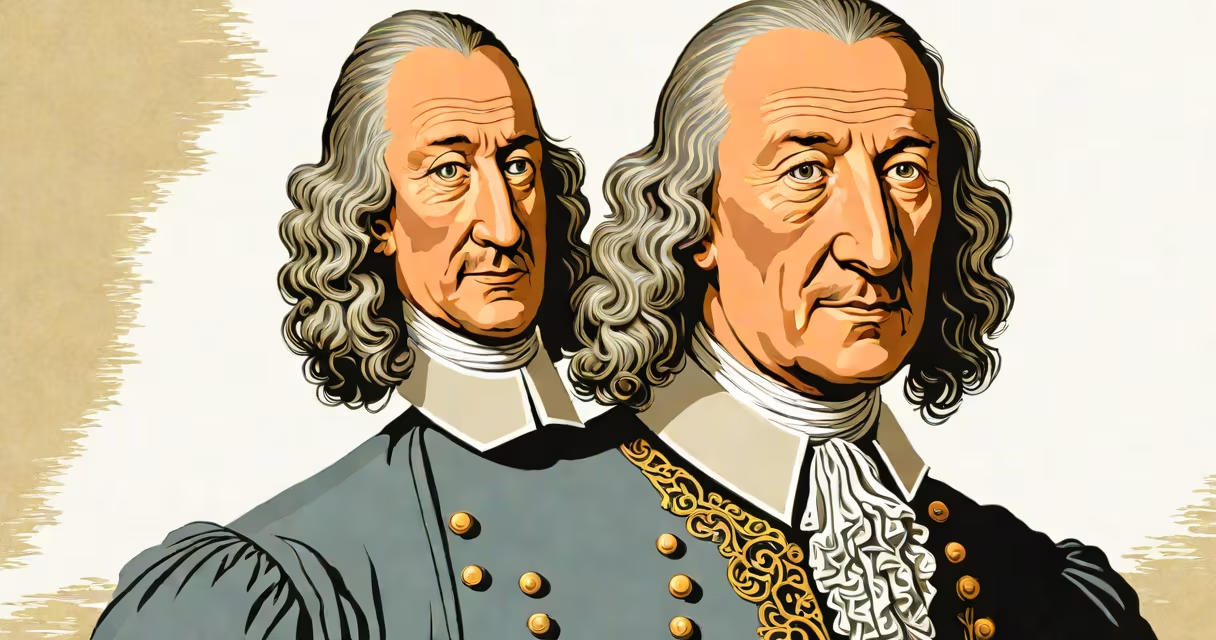
John Locke's tabula rasa is the idea that the human mind at birth is a blank slate, devoid of innate ideas, and that all knowledge comes from sensory experience and reflection. This foundational principle of empiricism rejects the notion of pre-existing mental content, arguing that identity, beliefs, and understanding develop through interaction with the environment.
Locke introduced the term in his 1690 work *An Essay Concerning Human Understanding*. He wrote that the mind is "white paper, void of all characters, without any ideas." This metaphor replaced older views rooted in rationalism, which held that certain truths-like mathematical principles or moral laws-were known innately. For Locke, no such pre-formed knowledge exists. Instead, perception and memory build cognition over time.
Modern cognitive science supports this view. A 2018 study published in *Nature Human Behaviour* found that infants as young as six months can distinguish between expected and unexpected events, suggesting early learning begins immediately after birth. This aligns with Locke's model: experience shapes the mind from the start, not from inherited templates.
Under Locke's structure, knowledge forms in two stages. First, sensation-the reception of external stimuli through the senses. Second, reflection-the mind's internal processing of those sensations into thoughts, memories, and concepts. Without sensation, there is no raw material for thought. Without reflection, there is no understanding.
For example, a child sees a red ball. The eye transmits light patterns to the brain. The child feels its texture, hears it bounce. Over time, the mind associates these inputs with the word "ball" and the color "red." These connections aren't hardwired-they emerge from repeated exposure. This process illustrates how Locke believed complex ideas arise from simple sensory experiences.
Locke emphasized that even abstract concepts like justice or freedom are built from sensory foundations. A child learns fairness not through divine revelation, but through observing sharing, punishment, or rewards in daily life. The mind doesn't come equipped with moral templates-it constructs them.
Tabula rasa is often misunderstood as a literal eraser of all prior thought. It is not. Locke did not claim humans begin with zero consciousness. Rather, he argued against innate ideas-specific beliefs or principles presumed to exist independently of experience. The mind may have basic faculties like attention or memory, but not content.
Common confusions include equating tabula rasa with blankness in behavior or morality. That's incorrect. Locke saw the blank slate as a starting point for development, not a state of passivity. Children learn quickly, adapt, and form habits based on reinforcement. The environment actively shapes behavior, but not randomly-through consistent patterns of reward and consequence.
A table clarifies distinctions:
| Concept | Correct View (Locke) | Misconception |
|---|---|---|
| Origin of ideas | From experience and reflection | Innate or God-given |
| Role of senses | Primary source of all knowledge | Secondary to reason or intuition |
| Development of identity | Shaped by environment and choices | Determined by fate or nature |
Tabula rasa remains central in developmental psychology. Jean Piaget's theory of cognitive development, for instance, builds on Locke's foundation. Piaget observed that children progress through distinct stages-from sensorimotor actions to abstract reasoning-each stage dependent on environmental interaction.
Education systems worldwide reflect this model. Montessori schools, for example, design classrooms around hands-on exploration. Children manipulate objects, solve puzzles, and engage in real-world tasks. The assumption is that learning occurs through direct experience, not memorization of facts. This mirrors Locke's belief that the mind fills itself through activity.
Even artificial intelligence research draws from Locke. Machine learning models trained on vast datasets mimic the tabula rasa process: they start with no knowledge, then extract patterns from input data. A neural network analyzing cat photos learns features like fur texture and ear shape-not because it was programmed with "cat" concepts, but because it identifies recurring visual traits.
Many confuse Locke's philosophical tabula rasa with the psychological term "blank slate," used in later behavioral theories. While both emphasize environmental influence, Locke's version includes reflection-the mind's ability to analyze and interpret experience. The behavioral school, especially B.F. Skinner, reduced learning to stimulus-response loops, ignoring internal mental processes.
Locke's model allows for intentionality. A child who observes a parent helping someone may not just imitate the act-they may reflect on the motive behind it. They ask, "Why did they do that?" This reflective capacity distinguishes Locke's view from mechanistic models of learning.
I once observed this during a classroom visit. A student who had never seen a microscope before touched one, looked through it, and asked, "Is the world really that small?" The question wasn't prompted by instruction-it emerged from direct sensory engagement. That moment captured Locke's core insight: understanding grows from experience, not from doctrine.
The Stanford Encyclopedia of Philosophy notes that Locke's tabula rasa was not meant to deny mental structure entirely. He acknowledged innate capacities like perception and memory, but rejected innate ideas. As the entry states: "Locke argues that the mind is not born with ideas, but with the ability to receive and process them."
Similarly, the Internet Encyclopedia of Philosophy clarifies that Locke's theory influenced Enlightenment thinking on education and governance. His rejection of innate authority helped justify democratic institutions based on individual rights formed through experience, not divine decree.
One common error is attributing tabula rasa to Descartes. He believed in innate ideas-especially the idea of God and the self. Locke explicitly challenged this. In *Essay*, he writes: "Let us suppose the mind to be, as we say, white paper, void of all characters, without any ideas." This direct contrast shows the divergence between rationalist and empiricist traditions.
Tabula rasa John Locke remains a useful structure for understanding how knowledge develops. It underscores that identity, belief, and understanding are not pre-written-they are constructed through lived experience. This principle underpins modern education, psychology, and AI design.
When considering how people learn, grow, or change, Locke's blank slate offers a clear starting point: the mind begins empty, filled only by what it encounters. Not all knowledge is innate. Not all behavior is predetermined. What matters is the environment, the interactions, and the reflections that follow.