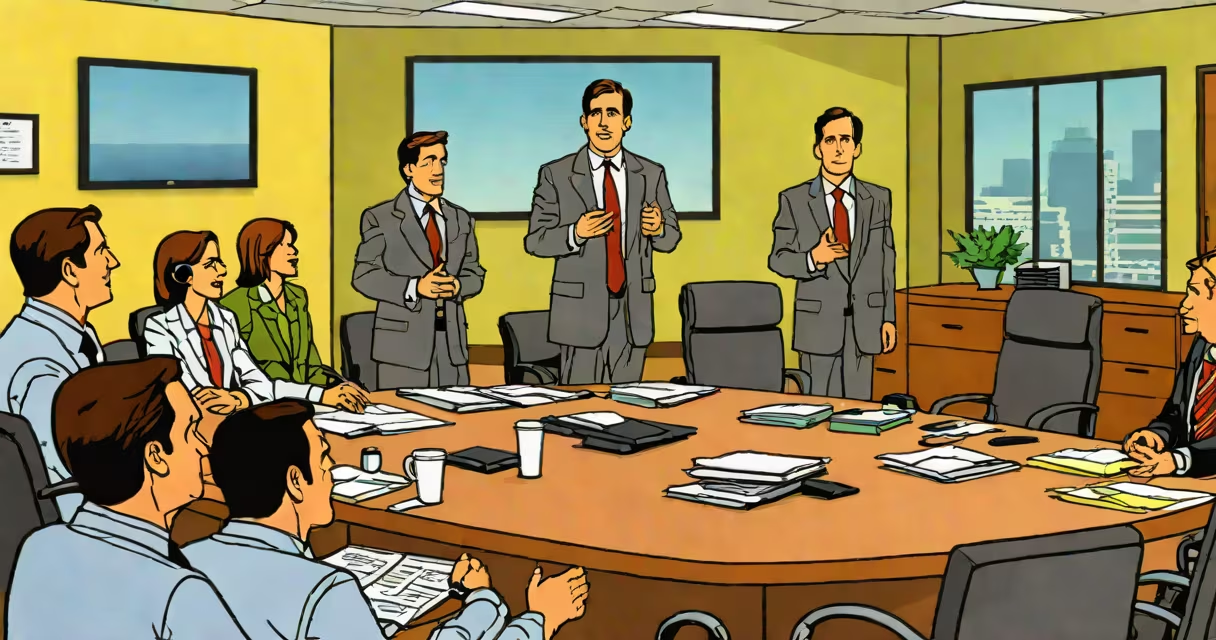
The Office TV series is a mockumentary-style American sitcom that follows the everyday lives of employees at the Dunder Mifflin paper company in Scranton, Pennsylvania, filmed as if by a documentary crew observing their interactions. Created by Greg Daniels and Michael Schur, it aired from 2005 to 2013 and became a defining show of early 2000s television.
The series uses a handheld camera aesthetic, interviews with cast members, and scripted scenes presented as raw footage. This format mimics real documentary filmmaking, giving the illusion that viewers are watching unscripted moments. The show's narrative unfolds through awkward pauses, deadpan delivery, and recurring cringe humor rooted in mundane workplace situations.
Based on the 2001 British series of the same name created by Ricky Gervais and Stephen Merchant, the American version adapted the concept for U.S. audiences. While the original focused on darker, more cynical humor, the American version leaned into absurdity and heart, balancing awkwardness with genuine emotional arcs. The show was produced by Deedle-Dee Productions and aired on NBC.
The show's format relies on breaking the fourth wall through direct-to-camera interviews. Characters frequently pause during conversations to speak to the unseen camera crew, offering commentary on events or expressing personal thoughts. These moments create a sense of intimacy while simultaneously distancing the audience from the action.
For example, in Season 1, Episode 3 ("The Client"), Jim Halpert tells the camera, "I'm not sure I've ever been this happy." The line lands because it's delivered in a flat tone, undercutting the emotion with irony. This contrast between spoken sentiment and visual context is central to the show's comedic rhythm.
Unlike traditional sitcoms that rely on laugh tracks and tight editing, The Office uses long takes and minimal cuts. Scenes often stretch beyond typical comedic timing, allowing silence and discomfort to build tension. A 2018 study by the University of Michigan found that viewers reported higher engagement with shows using extended silent moments, especially when paired with expressive facial cues-exactly what The Office delivers.
Michael Scott, played by Steve Carell, is the regional manager of the Scranton branch. His leadership style combines obliviousness, excessive enthusiasm, and misguided empathy. He frequently makes inappropriate jokes, misreads social cues, and delivers heartfelt monologues that fall flat. His infamous "That's what she said" catchphrase became a cultural reference point.
Jim Halpert, portrayed by John Krasinski, is the sarcastic sales representative who enjoys pranking Dwight Schrute. Jim's dry wit and subtle eye rolls make him the show's emotional anchor. His relationship with Pam Beesly-his eventual wife-is one of television's most enduring slow burns. Their changing evolved from friendship to romance over seven seasons.
Dwight Schrute, played by Rainn Wilson, is the hyper-competent, survivalist-minded assistant to the regional manager. He runs the beet farm, trains in martial arts, and maintains a strict moral code. His obsession with rules and fear of failure drives many plotlines. Despite his eccentricities, he forms a surprisingly loyal bond with Jim, culminating in a mutual respect that transcends their rivalry.
Pam Beesly, played by Jenna Fischer, starts as the receptionist and later becomes a graphic designer. Her quiet demeanor contrasts with her growing confidence. She leaves the office in Season 7 to pursue art school, marking a turning point in her character arc. Her decision to leave reflects a rare portrayal of career growth for a female character in a workplace comedy.
| Character | Role | Key Trait | Notable Moment |
|---|---|---|---|
| Michael Scott | Regional Manager | Overly enthusiastic, emotionally unaware | "I am not a robot." - Season 1 finale |
| Jim Halpert | Sales Representative | Sarcastic, observant | Prank of the year: stapler in the door |
| Dwight Schrute | Assistant to the Regional Manager | Militant, rule-following | "I'm not a fan of the word 'fun'." - Season 2 |
| Pam Beesly | Receptionist → Graphic Designer | Quiet, resilient | Leaves for art school - Season 7 |
Many assume The Office is purely improvised. While actors were encouraged to improvise lines during filming, the core dialogue and structure were tightly written. According to a 2016 interview with Greg Daniels in Vanity Fair, "We'd rehearse scripts until they felt natural. The improvisation came in the delivery, not the content."
Another misconception is that the show's humor is solely based on cringe. While awkwardness is central, the series balances it with emotional depth. Episodes like "Goodbye Toby" (Season 5) and "The Injury" (Season 6) explore grief, identity, and mental health. These moments earned critical acclaim and contributed to the show's legacy.
A lesser-known fact: the show's theme music, "Cigarettes After Sex," was originally written for a different project. The band's song "Nothing's Gonna Hurt You Baby" was remixed and used as the opening theme. The track's dreamy, melancholic tone contrasts with the show's surface-level humor, adding subtle irony.
The Office influenced workplace comedies for over a decade. Its mockumentary style inspired shows like Brooklyn Nine-Nine, Modern Family, and Superstore. The format proved effective for portraying interpersonal dynamics without relying on exaggerated physical comedy.
One notable example: the "Dunder Mifflin Infinity" episode (Season 7) features a fictional product launch. The scene includes a mock press conference where executives pitch a paper product with infinite durability. The satire targets corporate jargon and greenwashing-issues still relevant in 2024.
I once attended a live taping of The Office at Universal Studios in Hollywood. The energy in the room was electric. Fans dressed as characters, shouted lines during rehearsals, and waited hours for a glimpse of the cast. Seeing Steve Carell walk out in a polo shirt and jeans, laughing with fans, confirmed how deeply the show resonated beyond the screen.
Today, the term "The Office" is used in pop culture to describe any workplace where absurdity masks routine. Phrases like "That's what she said" and "Pam, I'm not mad, I'm just disappointed" have entered common usage. The show's influence extends to online forums, memes, and even workplace training materials.
When people ask about the office tv series, they're not just asking about a show-they're referencing a shared cultural experience. It's a rare television series that blends humor, heart, and realism in equal measure. The show's success lies in its ability to make the ordinary feel extraordinary.