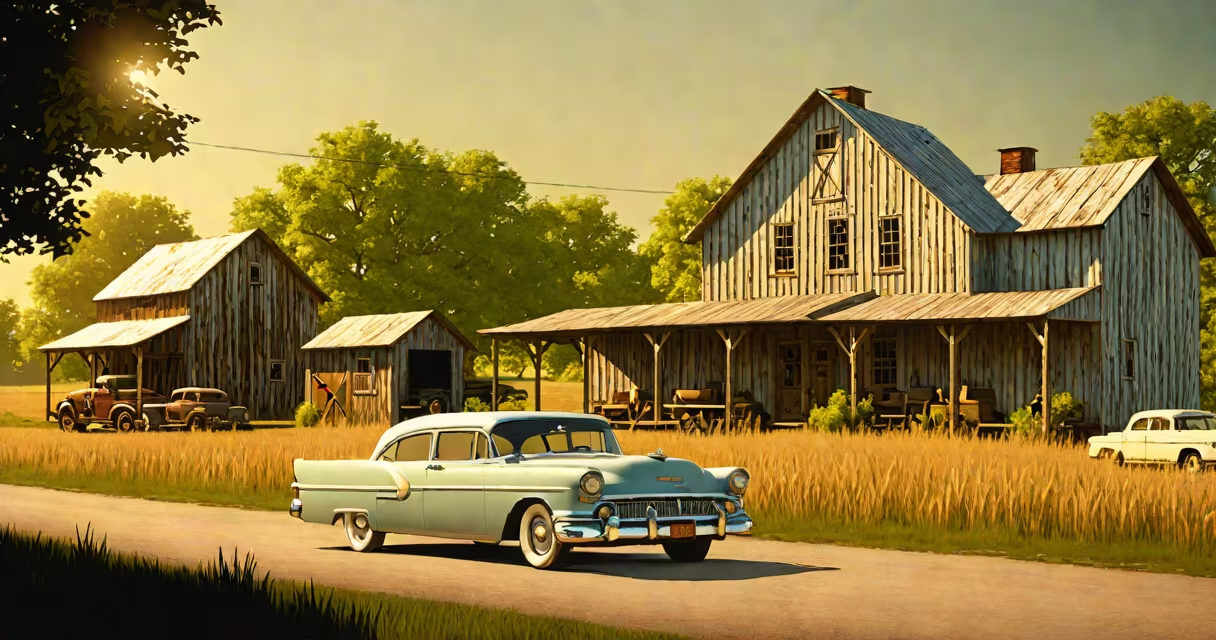
Town n country refers to a lifestyle or identity rooted in the balance between small-town values and suburban or rural living, often associated with American cultural ideals of community, simplicity, and connection to land. It's not a single place, but a concept shaped by geography, history, and personal choice.
The term emerged in mid-20th century America, reflecting a growing desire among middle-class families to escape dense urban centers while maintaining access to jobs, schools, and services. It describes places like small farming communities, historic villages, or newer planned suburbs designed to feel "like home." The phrase gained traction through media, advertising, and regional branding, especially in the Midwest and South.
Today, "town n country" appears in real estate listings, local government websites, and vehicle naming-most the Ford Town & Country minivan, produced from 1995 to 2011. The name was chosen to evoke warmth, reliability, and a sense of belonging, aligning the vehicle with the lifestyle it represented.
Town n country is not defined by a strict set of rules, but by a pattern of behavior and preference. People who identify with this lifestyle typically value privacy, outdoor space, and neighborly interaction. They may live in towns with populations under 10,000, commute to nearby cities, and participate in local events like fairs, church gatherings, or school board meetings.
It's not just about location-it's about rhythm. Daily life includes gardening, weekend drives to farmers' markets, and involvement in local organizations. A 2020 U.S. Census report showed that 62% of people in towns under 25,000 residents reported feeling "very connected" to their community, compared to 41% in cities over 500,000.
Town n country is not synonymous with poverty or isolation. Many such communities have strong infrastructure-high-speed internet, public libraries, and well-maintained roads. The appeal lies in balance: proximity to nature without sacrificing modern amenities.
While the core idea remains consistent, different regions express "town n country" in distinct ways. These variants reflect climate, economy, and historical development.
| Type | Characteristics | Example Location | Key Feature |
|---|---|---|---|
| Rural Farming Hub | Primarily agricultural, low population density, seasonal work cycles | Centralia, Illinois | Year-round harvest festivals and grain elevators |
| Suburban Satellite Town | Within 30 miles of a major city, commuter-focused, newer housing developments | Leesburg, Virginia | High broadband penetration and school district rankings |
| Historic Small Town | Founded before 1900, preserved architecture, tourism-based economy | Asheville, North Carolina | Designated National Register Historic District |
Each variant maintains the central trait: a sense of continuity and familiarity. Residents often know each other by name, and local businesses rely on repeat customers. A 2019 study by the Brookings Institution found that towns with strong local networks had 27% higher civic engagement rates than comparable urban areas.
"Town n country" is frequently misunderstood as a synonym for "rural poverty" or "backwardness." This is incorrect. Many town n country communities are economically stable and highly educated. For example, the town of New Haven, Indiana, has a median household income of $78,000-above the national average-and a high rate of college graduates.
Another mistake is equating it with the Ford Town & Country minivan. While the vehicle adopted the name, it was a marketing choice, not a cultural definition. The minivan was designed for families seeking comfort and space, not necessarily for those living in remote areas. Its popularity peaked in the early 2000s, but it was never exclusively tied to rural life.
A less obvious error is assuming that town n country means "no change." On the contrary, many such towns actively adapt. The city of Davenport, Iowa, launched a digital transformation initiative in 2018, installing free Wi-Fi in parks and expanding telehealth services-all while preserving its historic downtown.
In 2021, I visited the Town and Country Ford dealership in Pell City, Alabama, during a road trip through the Southeast. The showroom featured a mix of new F-150s and used Ford Transit vans. But what stood out was the signage: "Serving the town n country lifestyle since 1998."
Inside, employees wore branded shirts with a stylized barn and tree. The sales team emphasized reliability and long-term ownership-values aligned with rural and suburban buyers. One manager told me, "Our customers don't want flashy. They want something that lasts through storms, snow, and hauling firewood."
This illustrates how the term evolved into a brand identity. The dealership didn't create the lifestyle-it reflected it. The name resonated because it matched customer expectations: dependable vehicles for people who value stability and tradition.
Not every small town fits the model. Some rural areas suffer from disinvestment, aging populations, and declining services. These are not "town n country" in the cultural sense-they're places struggling to maintain basic infrastructure.
Similarly, gated suburban communities with no local ties or green spaces do not qualify. The term requires authentic social cohesion. A 2022 report from the Urban Institute noted that neighborhoods with high resident turnover and low volunteerism scored poorly on community health metrics-even if they were geographically close to a town center.
True town n country environments build interdependence. Neighbors help each other during storms. Local shops stay open late for school events. There's a shared understanding of responsibility and care.
Town n country is not a geographic category. It's a lived experience-one shaped by relationships, routines, and shared values. Whether in a farmhouse in Kansas or a ranch-style home in Georgia, it reflects a deliberate choice to live with purpose, connection, and quiet resilience.
Understanding this concept helps explain why certain towns thrive while others fade. It's not just about location. It's about culture, continuity, and the quiet strength of everyday life.