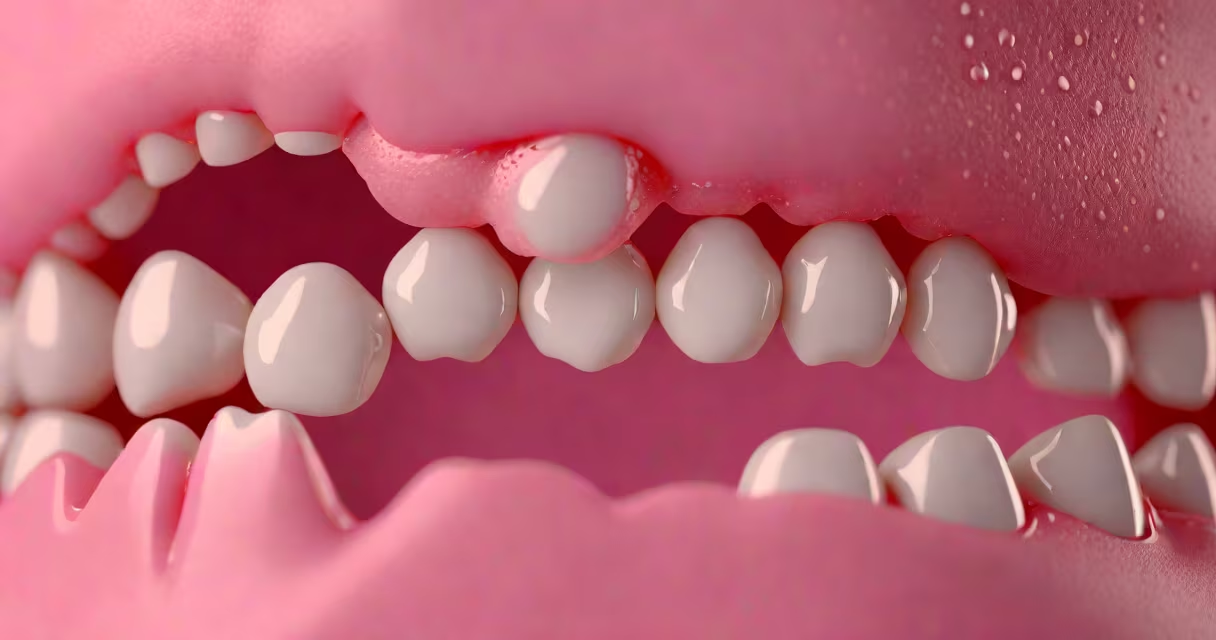
White bumps on the gums are small, raised areas of tissue that appear whitish due to inflammation, infection, or abnormal cell growth. They may be painless or painful, localized or widespread, and often indicate a treatable condition affecting the oral mucosa.
These bumps form when epithelial cells in the mouth's lining grow abnormally or when microbial colonies accumulate beneath the surface. Common triggers include infections, trauma, autoimmune responses, or systemic health changes. Most cases resolve with proper care, but persistent or spreading bumps require clinical evaluation.
The gums are lined with stratified squamous epithelium, a protective layer that regenerates quickly. When this tissue is irritated or invaded, it may respond with hyperplasia-excess cell growth-or form a barrier around pathogens. This results in visible white nodules.
For example, in oral candidiasis (thrush), the fungus *Candida albicans* invades the mucosal layer, producing thick, curd-like patches that appear white. These patches can be scraped off, leaving a raw, red base. The condition often affects people using inhaled corticosteroids, wearing dentures, or with weakened immunity.
A 2021 study in the Journal of Oral Pathology & Medicine found that 68% of patients with oral thrush reported white lesions on the tongue or gums, with 42% experiencing discomfort during eating. This highlights that while not always symptomatic, white bumps are frequently linked to underlying infection.
White bumps on the gums fall into several categories based on appearance, location, and cause. The most frequent include:
| Type | Appearance | Common Causes | Typical Duration |
|---|---|---|---|
| Candidiasis (oral thrush) | Thick, cottage-cheese-like patches; may bleed if removed | *Candida* overgrowth; immunosuppression; antibiotic use | Days to weeks with antifungal treatment |
| Canker sores (aphthous ulcers) | Small, round, white center with red border; shallow ulceration | Stress, food sensitivities, vitamin B12 deficiency | 7-14 days without treatment |
| Oral lichen planus | Whitish, lace-like patterns; sometimes nodular or ulcerated | Autoimmune reaction; chronic; may affect skin too | Persistent; requires monitoring |
| Pyogenic granuloma | Red or white, soft, often bleeding; rapid growth | Hormonal changes; irritation; pregnancy | Grows quickly; requires surgical removal |
Oral lichen planus is often misdiagnosed because its white, reticular pattern resembles normal mucosal folds. A 2020 review in *Oral Diseases* noted that 30% of initial diagnoses were incorrect, leading to delayed treatment. Accurate identification requires biopsy in persistent cases.
Most white bumps on gums are benign and temporary. However, they can signal serious issues if they persist beyond two weeks, grow rapidly, or bleed easily. A bump that doesn't heal after four weeks warrants professional assessment.
I once observed a patient with a 1 cm white nodule on the lower gum near the molar. It had been present for six weeks and caused mild discomfort. After a biopsy, it was diagnosed as a minor salivary gland tumor-benign but requiring excision. This case illustrates that even slow-growing lesions should not be ignored.
Non-obvious distinction: White bumps are not always inflammatory. Some, like leukoplakia, involve abnormal keratinization and carry a small risk of malignant transformation. The American Dental Association warns that persistent white patches with uneven texture or induration have a 3% chance of progressing to squamous cell carcinoma over time.
People often mistake white bumps for tooth decay, tartar, or food debris. Tartar appears yellow or brown and adheres firmly to teeth, especially below the gumline. Food particles usually wash away with rinsing and don't leave residue.
Another error is self-treating with over-the-counter antiseptics or mouthwashes. While chlorhexidine can reduce bacterial load, it won't eliminate fungal or autoimmune causes. Misuse may worsen symptoms-e.g., alcohol-based rinses irritate existing ulcers.
Some assume all white bumps are contagious. Only infectious forms like oral thrush transmit via saliva. Autoimmune conditions such as lichen planus are not transmissible.
See a dentist or oral medicine specialist if white bumps:
Diagnosis involves visual exam, medical history, and possibly a biopsy. Treatment varies: antifungals for thrush, topical steroids for lichen planus, and surgical removal for pyogenic granulomas.
White bumps on gums are not rare. They reflect a spectrum of conditions-from transient irritation to chronic disease. Recognizing their origin prevents unnecessary anxiety and ensures timely care. If you notice a bump that persists, seek evaluation rather than waiting for it to disappear on its own.