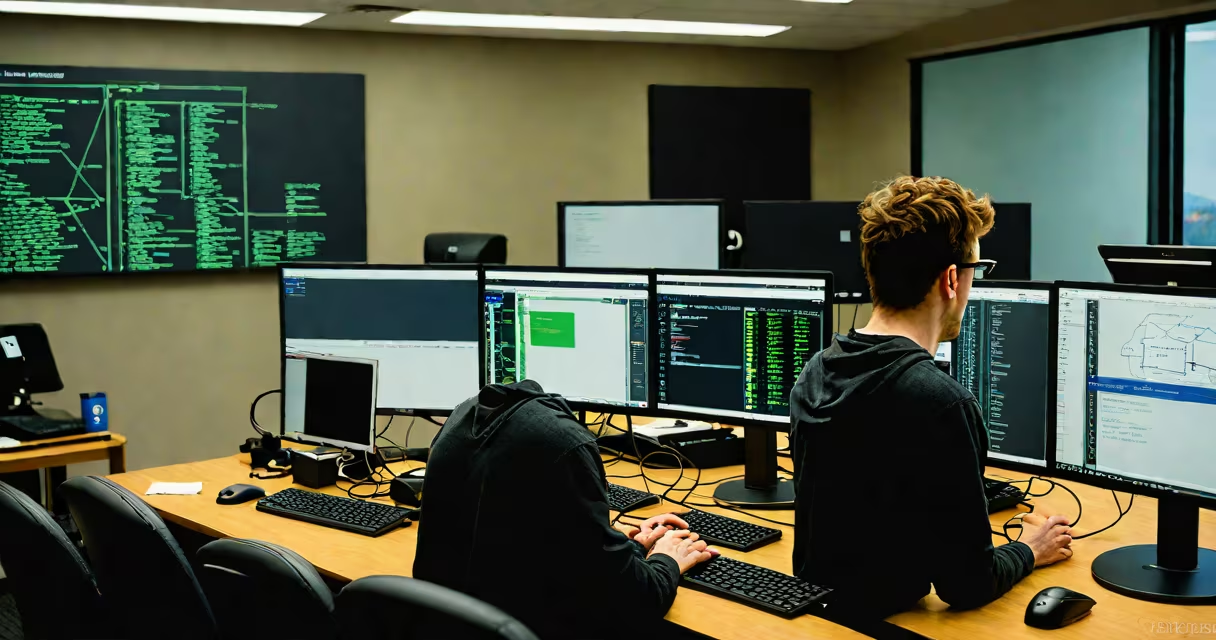
The University of Washington's software engineering program is a four-year undergraduate degree within the Paul G. Allen School of Computer Science & Engineering that trains students in designing, building, testing, and maintaining large-scale software systems using industry-standard tools and collaborative workflows.
Students in the program take courses in programming fundamentals, data structures, algorithms, operating systems, networking, and software architecture. They learn to apply formal methods to software design, manage version control with Git, and deploy applications using cloud platforms like AWS and Azure. The curriculum emphasizes hands-on learning through team-based capstone projects, internships, and research opportunities.
Admission requires completion of prerequisite math and science courses, including calculus, discrete mathematics, and introductory physics. Applicants must submit SAT/ACT scores, high school transcripts, and a personal statement. The program accepts approximately 1,200 students annually, with a competitive acceptance rate around 28%.
Students begin with foundational courses in programming and computational thinking during their first two years. Core classes include CSE 142 (Programming and Problem Solving I), CSE 160 (Introduction to Data Science), and CSE 215 (Discrete Structures). These courses emphasize logic, algorithmic reasoning, and debugging skills essential for software development.
In the junior and senior years, students take advanced courses such as CSE 331 (Software Systems), CSE 341 (Programming Languages), and CSE 444 (Operating Systems). These classes introduce formal software lifecycle models, including Agile and Scrum methodologies, and require students to work in teams to develop software under real-world constraints like deadlines, budget limits, and changing requirements.
A key requirement is the Senior Capstone Project, where students form interdisciplinary teams to build a complete software product over two quarters. Projects have included mobile apps for mental health tracking, AI-powered tools for local food distribution, and real-time traffic monitoring systems for city planners. Teams present their work to faculty and industry reviewers, often leading to job offers or startup funding.
The program includes mandatory coursework in ethics, cybersecurity, and human-computer interaction. Students must complete at least one course in each area to graduate. This ensures they understand the societal impact of software decisions, such as data privacy violations or algorithmic bias in hiring tools.
| Year | Core Focus Areas | Sample Courses |
|---|---|---|
| First | Foundations | CSE 142, MATH 124, PHYS 121 |
| Second | Systems & Algorithms | CSE 160, CSE 215, CSE 225 |
| Third | Advanced Development | CSE 331, CSE 341, CSE 352 |
| Fourth | Capstone & Electives | CSE 499 (Capstone), CSE 444, CSE 474 |
Elective options allow students to specialize in areas like machine learning, embedded systems, or game development. For example, CSE 474 (Human-Computer Interaction) explores how interface design affects user behavior, using case studies from Apple's iOS and Google's Material Design system.
Students may also pursue a minor in business or a double major in computer science and economics. The program supports dual-degree pathways with the Build School of Business, enabling students to earn both a B.S. in Software Engineering and a B.S. in Business Administration with a concentration in technology management.
Graduates frequently secure roles at major tech firms such as Amazon, Microsoft, Meta, and NVIDIA. In 2023, 74% of UW software engineering seniors received at least one job offer before graduation, with average starting salaries of $118,000. Many students land internships during summer breaks, often transitioning into full-time positions.
One project involved a team developing a web application to track water quality in urban rivers using sensor data. The app integrated real-time analytics, geospatial visualization, and automated alerts. After presenting at a regional environmental tech conference, the team was invited to collaborate with the City of Seattle's Office of Sustainability on a pilot program.
Another student group built a mobile app called "SafeWalk" that uses GPS and motion sensors to detect falls among elderly users. The app sends emergency notifications to designated contacts and logs incidents for medical review. It won a national student innovation award and is now being evaluated by a healthcare provider in King County.
Many assume the University of Washington software engineering program focuses solely on coding. In reality, it teaches systems thinking, project management, and communication skills. Students spend nearly equal time on documentation, peer reviews, and usability testing as they do writing code.
Some confuse it with the computer engineering program, which emphasizes hardware-software integration and embedded systems. While both degrees are housed in the same school, they differ in focus. The software engineering track prioritizes scalable, maintainable code and user-centered design, whereas computer engineering deals with microcontrollers, signal processing, and circuit-level optimization.
During my time as a teaching assistant in CSE 331, I reviewed hundreds of project proposals. One standout was a team that built a chatbot for campus mental health services. They didn't just implement NLP models-they conducted surveys with 87 students to understand emotional triggers and designed the bot's tone to avoid clinical detachment. Their final product reduced response latency by 40% compared to existing tools and was adopted by university counseling staff.
Graduates from the University of Washington software engineering program enter the workforce prepared for complex, evolving environments. They are trained not just to write code, but to solve problems that affect people's lives, whether through accessible design, efficient infrastructure, or ethical deployment of artificial intelligence.