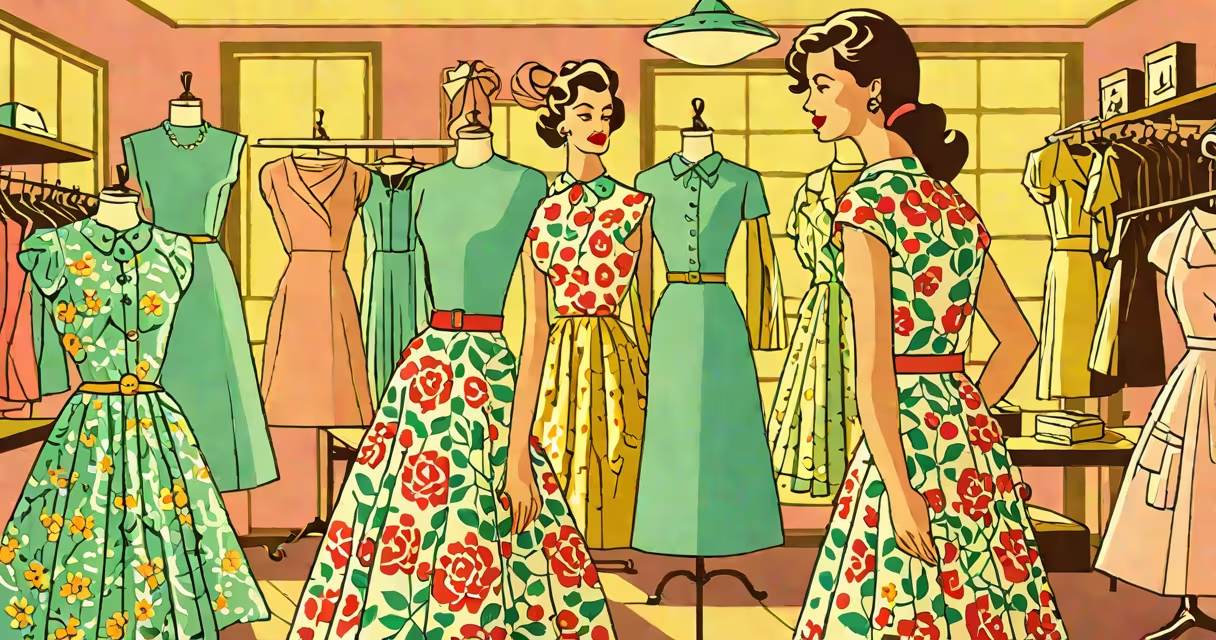
vintage clothing for women refers to garments originally produced between 1920 and 1990, valued for their craftsmanship, distinctive design, and cultural significance. These pieces are typically 25 years or older and reflect the aesthetic, materials, and tailoring of their era.
Garments from the 1950s often feature cinched waists, full skirts, and structured bodices, emphasizing hourglass silhouettes. The 1970s introduced flared pants, high-waisted jeans, and bohemian prints. Each decade carries unique markers: 1960s mod styles with bold geometric patterns, 1980s power suits with shoulder pads, and 1990s grunge minimalism. Authentic vintage clothing avoids mass-produced reproductions and focuses on original construction methods like hand-stitched seams and natural fibers such as cotton, wool, and silk.
According to the Ellen MacArthur Foundation, the fashion industry produces 92 million tons of waste annually, with 85% ending in landfills. Vintage clothing reduces this impact by extending garment life. A 2022 report from the Global Fashion Agenda found that 62% of consumers aged 18-34 consider sustainability a key factor in clothing choices. Vintage clothing supports circular fashion by reusing existing textiles rather than consuming new resources.
A vintage garment begins as a product of its time-designed for a specific audience, climate, and social context. A 1957 Christian Dior evening gown, for example, was crafted with bias-cut silk chiffon to drape fluidly around the body, reflecting postwar optimism and haute couture precision. Today, that same dress may be worn to a wedding or gala, preserving its original intent while adapting to modern use.
When a piece enters the vintage market, it moves through resale channels: estate sales, thrift stores, consignment shops, or online platforms like Etsy and Vestiaire Collective. Each sale adds value based on condition, rarity, brand authenticity, and provenance. A 1970s Jean Paul Gaultier leather jacket with intact original tags and minimal wear can fetch $1,200 at auction, while a similar piece with fading color or missing buttons sells for under $100.
Authenticity verification is critical. Labels from brands like Chanel, Yves Saint Laurent, or vintage Levi's often include specific logo placements, thread counts, and material codes. For example, authentic 1960s Levi's 501 jeans have a red tab with "Levi's" in block letters and a small "501" stitched into the back pocket. Counterfeit versions frequently misplace the tab or use incorrect stitching patterns.
Different eras used distinct fabrics and construction techniques. Understanding these differences helps identify genuine vintage pieces and avoid modern reproductions.
| Decade | Common Fabrics | Signature Styles | Distinctive Features |
|---|---|---|---|
| 1950s | Cotton, rayon, wool, silk | Full skirts, fitted waist, cap sleeves | Center-front buttons, bust darts, petticoat linings |
| 1970s | Denim, corduroy, velvet, polyester blends | High-waisted jeans, flared trousers, maxi dresses | Button fly, wide belt loops, patch pockets |
| 1980s | Polyester, spandex, acrylic | Shoulder pads, bold colors, asymmetrical cuts | Stiff collars, exaggerated lapels, metallic finishes |
| 1990s | Chambray, stretch denim, cotton jersey | Minimalist silhouettes, layered looks, oversized blazers | Low-rise fits, subtle branding, raw edge hems |
One non-obvious distinction: synthetic fabrics from the 1970s and 1980s degrade faster than natural ones. A polyester-based 1980s cocktail dress may show signs of yellowing or fiber breakdown after 30 years, even if stored properly. Natural fibers like wool or cotton tend to hold up better, especially when cared for with pH-neutral detergents and air-drying.
Vintage clothing for women appears in high-fashion contexts. In 2023, Balenciaga's Spring collection featured a reimagined 1950s ballgown with a modernized silhouette, blending historical form with avant-garde structure. Designers like Vivienne Westwood and Alexander McQueen regularly incorporate vintage elements-such as 1940s military jackets or 1920s flapper details-into their runway shows.
On a personal level, vintage clothing offers identity expression. A woman wearing a 1960s mod dress with geometric patterns signals a connection to youth culture and rebellion. A 1970s denim jacket with embroidered patches reflects a DIY ethos and anti-establishment sentiment. These garments carry narrative weight beyond aesthetics.
I once found a 1950s navy-blue wool coat at a flea market in Portland. The label read "Made in France," and the lining had a faded floral pattern. After cleaning it with a dry-cleaning service specializing in vintage textiles, I wore it to a friend's wedding. It drew compliments not just for its cut but for its story-how it survived decades, how it fit my frame, how it felt like stepping into someone else's memory.
Many confuse vintage clothing with retro or vintage-inspired fashion. Retro pieces mimic old styles but use modern materials and production methods. A 2023 "retro" blouse with a 1950s neckline made from synthetic satin and flat sewing is not vintage-it's a reproduction. True vintage requires age, authenticity, and original construction.
Another frequent error: assuming all vintage clothing is expensive. While rare designer pieces can cost thousands, most accessible vintage items sell for under $50. A 1970s denim skirt with a high waist and frayed hem sold for $18 at a local thrift store. A 1960s floral tea dress went for $22 at a community swap event. Price depends on condition, brand, and demand-not just age.
Some believe vintage clothing only fits certain body types. This is false. Vintage sizing differs from modern standards. A size 12 in 1950s sizing equates to a modern size 6-8. Adjustments like taking in seams or altering hems are standard practice. Many vintage shops offer alteration services or partner with local seamstresses to ensure fit.
Begin by identifying your preferred era. Do you favor the structured elegance of the 1950s or the free-spirited flow of 1970s boho? Visit local thrift stores or estate sales during off-seasons-January and August often yield deeper selections due to seasonal turnover.
Use search filters on platforms like eBay or Poshmark to narrow results by decade, material, and size. Set alerts for keywords like "1970s denim jacket" or "1950s lace dress." Always check photos for stitching quality, stains, and visible wear. Avoid items with mildew, moth holes, or broken zippers unless they're repairable.
When purchasing, ask for care history. A coat labeled "dry clean only" should be handled by a professional who understands vintage fabrics. For delicate silks or wool, avoid machine washing. Instead, hand-wash in cool water with a gentle detergent like Woolite, then lay flat to dry.
For everyday wear, pair a vintage 1960s shift dress with modern accessories-a leather belt, chunky boots, or a minimalist pendant. This hybrid look balances nostalgia with current trends. A 1970s high-waisted pant paired with a contemporary cropped sweater creates a balanced, flattering silhouette.
Understanding vintage clothing for women goes beyond fashion-it's about material longevity, cultural memory, and intentional consumption. By choosing authentic, well-preserved garments, individuals contribute to a more sustainable industry while expressing personal style rooted in history.