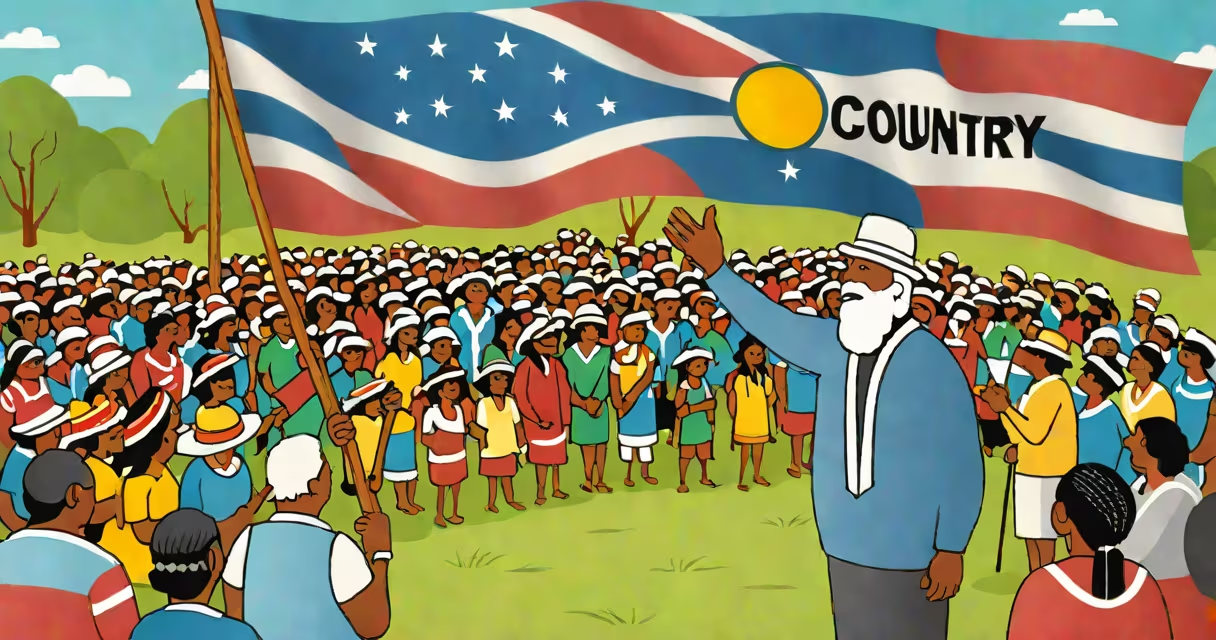
"Welcome to country wording" refers to the formal, culturally appropriate statement made at public events to acknowledge the Traditional Custodians of the land where the event takes place. These statements are delivered by First Nations elders or designated representatives and affirm the ongoing connection of Aboriginal and Torres Strait Islander peoples to their ancestral lands.
The practice is rooted in ceremony, not ritual. It is not a performance but a living affirmation of sovereignty, history, and presence. The wording varies by region and language group, reflecting local identity and tradition. In Australia, it is common for events such as conferences, school assemblies, and government meetings to begin with a welcome to country, especially in urban centers and institutions.
When done correctly, welcome to country wording honors the original custodians of the land and sets a respectful tone for the gathering. Misuse-such as using generic or fabricated versions-can erase cultural specificity and reduce a meaningful act to empty symbolism. The authenticity of the speaker and the accuracy of the language used are essential.
Welcomes to country are delivered by authorized individuals-usually elders or cultural leaders from the local Aboriginal or Torres Strait Islander community. They speak in the traditional language of the area or in English, depending on the audience and context. The statement typically includes:
For example, in Melbourne, a welcome to country may state: "I welcome you to the land of the Wurundjeri people, who have cared for this country for over 60,000 years. We stand together in respect of our shared past and future." This version uses both cultural identification and historical continuity.
These statements are not scripted uniformly across Australia. There is no single national version. Using a standardized phrase from another region-even if it sounds similar-can misrepresent the local community's identity. The Australian Institute of Aboriginal and Torres Strait Islander Studies (AIATSIS) warns against using generic or templated welcomes, emphasizing that each statement must reflect the specific community and country.
There is no official list of approved phrases. Instead, the form depends on the local community's traditions and the speaker's role. However, three common formats exist:
| Type | Language Used | Typical Context | Example |
|---|---|---|---|
| Traditional Language | Local Aboriginal or Torres Strait Islander language | Ceremonial events, community gatherings | "Wurundjeri woi-wurrung kurnai" (Wurundjeri people of the Kurnai region) |
| English with Cultural Specificity | English, referencing local nation and history | Public events, schools, government functions | "I welcome you to the land of the Dja Dja Wurrung people, whose ancestors have lived here since time began." |
| Hybrid (Language + English) | First in local language, then translated into English | Formal ceremonies, educational settings | "Ngarrindjeri wudjulu" (Ngarrindjeri people), followed by "We are the owners of this land." |
Each format serves different purposes. Traditional language welcomes are most authentic but require listeners to understand the language or receive translation. English-based welcomes are accessible to wider audiences but must still be accurate and locally sourced.
Welcome to country wording is standard practice in Australian public life. It appears at:
Its purpose is not merely symbolic. According to the National Museum of Australia, these acknowledgments contribute to reconciliation by recognizing the ongoing presence and rights of First Nations peoples. They are part of a broader effort to address historical injustices and build inclusive spaces.
However, misuse is widespread. A 2022 report by the Australian Human Rights Commission found that 43% of public events surveyed used generic or incorrect welcome to country statements. Some organizations repeated the same wording across multiple states, ignoring regional differences. This erases cultural specificity and risks reinforcing colonial narratives.
One example: a national education summit in Sydney used a welcome to country based on the Yorta Yorta Nation, despite being held on Gadigal land. The error was noted by local elders, leading to a public correction. This highlights the importance of consulting local communities before selecting wording.
Many people assume welcome to country wording is interchangeable across regions. It is not. A phrase used in Perth (Nyungar country) cannot be applied in Cairns (Yidiny country) without misunderstanding. Each nation has distinct boundaries, languages, and histories.
Another misconception is that anyone can deliver a welcome to country. This is false. Only individuals recognized by their community as cultural custodians should perform the statement. Outsiders-especially non-Indigenous people-should not deliver it unless invited and trained by a local elder.
A lesser-known fact: some welcome to country statements include a warning or spiritual instruction. For example, in parts of Central Australia, a welcome may include a reminder to behave respectfully, avoid sacred sites, or refrain from certain actions during the ceremony. These elements are not optional-they are part of the cultural protocol.
I once attended a community forum in Adelaide where a non-Aboriginal facilitator attempted to deliver a welcome to country in English. The room fell silent. An elder later approached me and said, "That wasn't ours. That was borrowed. It doesn't belong." The moment underscored the gravity of cultural ownership. Words spoken without permission or understanding carry weight-but they also carry risk.
To ensure accuracy and respect:
Correct welcome to country wording is not a checkbox. It is a commitment to listening, learning, and honoring the original stewards of the land. It reflects a deeper responsibility-not to perform culture, but to engage with it respectfully and accurately.
Understanding and using proper "welcome to country wording" supports truth-telling, builds trust, and fosters inclusion. It is not a formality-it is a foundation for meaningful relationship-building between nations.