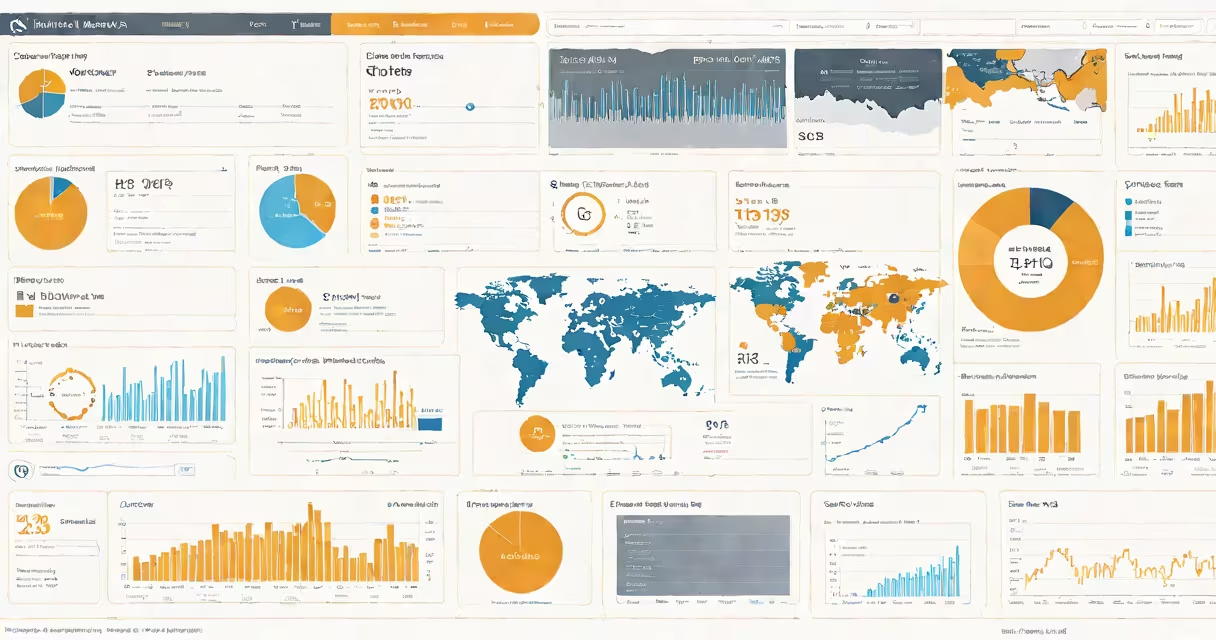
AWS real time analytics processes streaming data as it arrives, delivering immediate insights without batch delays. It uses services like Amazon Kinesis, AWS Lambda, and Amazon Redshift to analyze data from sources such as sensors, logs, and user interactions within seconds.
Real-time analytics transforms raw data into actionable intelligence while the event is still happening. Unlike traditional batch processing, which waits for data accumulation, AWS real time analytics detects patterns, triggers alerts, and updates dashboards instantly. This capability supports mission-critical applications where timing determines outcomes.
For example, a ride-sharing app uses AWS real time analytics to monitor driver locations and passenger requests. As a rider taps "request," the system analyzes traffic conditions, driver proximity, and demand spikes in under 500 milliseconds. This enables changing pricing and optimal dispatch decisions before the rider sees a response.
At its core, AWS real time analytics relies on continuous data ingestion, low-latency processing, and immediate output delivery. Data flows into AWS through sources like mobile apps, web clickstreams, or industrial equipment sensors. Once ingested, it's processed in near-instantaneous batches or as individual events.
Amazon Kinesis is the foundation. It handles high-volume data streams-up to millions of records per second-through Kinesis Data Streams or Kinesis Data Firehose. These services buffer incoming data and distribute it to downstream processors. For example, a smart thermostat sends temperature readings every 15 seconds. Kinesis captures each reading and routes it to a Lambda function.
Lambda runs serverless code that applies business logic. A Lambda function might flag a temperature spike above 30°C and trigger a notification to a maintenance team. Simultaneously, the same data feeds into Amazon Redshift for long-term trend analysis. This dual-path architecture ensures both immediate action and historical context.
The AWS system integrates multiple services to enable real-time analytics. Each plays a distinct role in the pipeline:
| Service | Purpose | Use Case Example |
|---|---|---|
| Amazon Kinesis Data Streams | Ingest and store high-velocity data streams | Processing 10,000 sensor readings per minute from factory machines |
| Amazon Kinesis Data Firehose | Automatically load streaming data into storage or analytics tools | Streaming website click events directly into Amazon S3 for later analysis |
| AWS Lambda | Run code in response to events without provisioning servers | Triggering an alert when a payment transaction exceeds $5,000 |
| Amazon Redshift | Analytical database for querying large datasets | Running hourly reports on user behavior derived from real-time streams |
| Amazon QuickSight | Business intelligence tool for visualizing real-time dashboards | Displaying live sales figures during a product launch event |
These services work together in a chain. Data enters via Kinesis, gets filtered and enriched by Lambda, is stored in S3 or Redshift, and finally appears in a dashboard via QuickSight. All steps happen within seconds, enabling responsive decision-making.
Many assume real-time analytics requires complex infrastructure or constant monitoring. In reality, AWS abstracts most of the underlying complexity. You don't need to manage clusters or tune JVM settings-services scale automatically based on data volume.
Another misconception is that real-time means instantaneous. While AWS systems respond in sub-second latency, they aren't instantaneous. A typical end-to-end flow takes 100-500 milliseconds from data arrival to dashboard update. This delay is acceptable for most operational needs but insufficient for ultra-low-latency trading systems, which require dedicated hardware.
Financial institutions use AWS real time analytics to detect fraudulent transactions. A bank receives a credit card swipe at 10:03:17 AM. Within 200 milliseconds, the system checks the location against known user habits, verifies device fingerprinting, and flags anomalies. If the purchase is from a country where the cardholder has never traveled, the transaction is declined before the merchant confirms it.
Healthcare providers deploy it for remote patient monitoring. Wearable devices send heart rate and oxygen saturation data every 30 seconds. AWS processes the stream, identifies abnormal trends, and alerts nurses if values fall below safe thresholds. In one trial, this reduced emergency response times by 40% compared to scheduled check-ins.
IoT platforms rely on it for predictive maintenance. A wind turbine generates vibration and temperature data every 5 seconds. AWS analyzes the pattern in real time. When a bearing shows signs of wear-detected through frequency shifts in vibration data-the system schedules a service call before failure occurs. This prevents costly downtime and extends equipment life.
I built a real-time dashboard for a retail client tracking in-store foot traffic using Wi-Fi beacon signals. The system collected anonymized MAC addresses from smartphones entering the store. Using Kinesis and Lambda, we aggregated counts per zone every 10 seconds. The results updated a QuickSight dashboard visible to store managers. During a weekend sale, we detected a 60% surge in one department and alerted staff to restock. The client reported a 12% increase in conversion rates in that area.
Real-time analytics often underperforms when data quality is poor. A single malformed log entry can cause a Lambda function to fail, breaking the entire stream. AWS provides tools like Kinesis Data Analytics SQL to validate and clean data on the fly. Without preprocessing, even the fastest pipeline delivers incorrect insights.