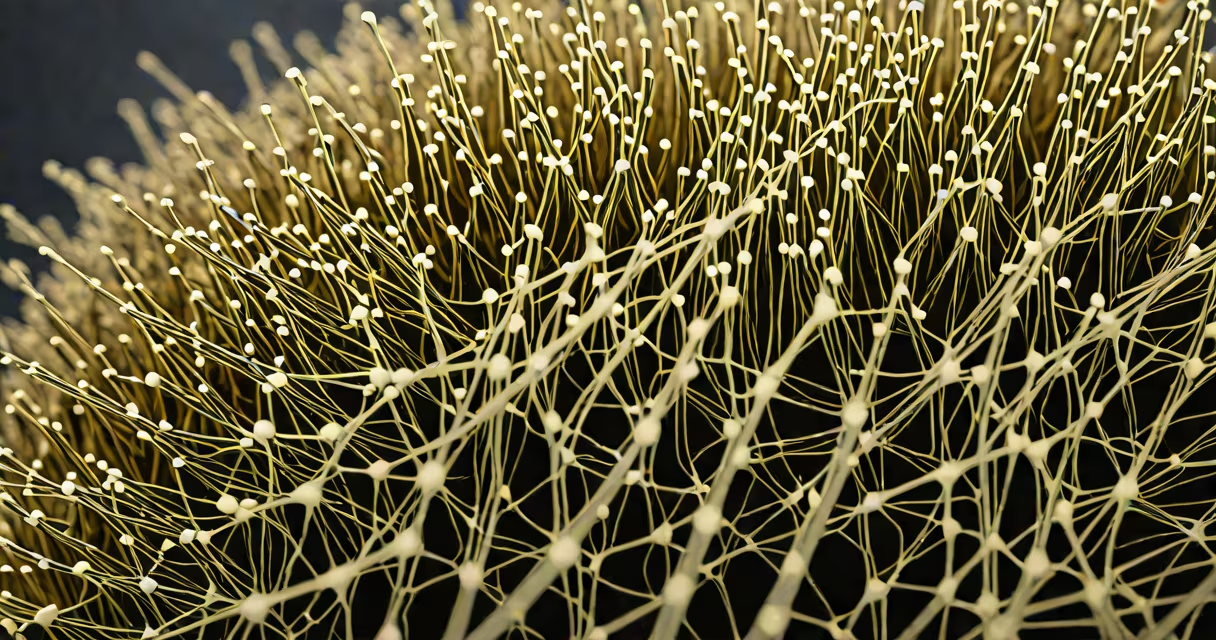
Pili multigemini is a rare congenital hair disorder characterized by multiple hair shafts growing from a single follicular opening due to abnormal follicular architecture and defective keratinization during early hair development.
The condition arises from disruptions in the differentiation of the inner root sheath and hair matrix cells during fetal development. These disruptions prevent proper separation of individual hair shafts, leading to fused or multiple strands emerging from one follicle. It is not caused by external trauma, diet, or hormonal changes-it is inherited.
Genetic analysis shows that pili multigemini is linked to mutations in genes encoding keratins, particularly KRT81, KRT83, and KRT86, which are essential structural proteins in the hair shaft. These mutations impair the mechanical strength and organization of the hair fiber, resulting in fragile, easily broken strands.
Hair follicles form during the first trimester of gestation. As the follicle matures, the outer root sheath and inner root sheath differentiate to create a stable channel through which a single hair shaft emerges. In pili multigemini, this process fails at the level of the hair matrix, where keratinocytes do not properly align or separate.
When keratin filaments misfold due to mutant protein expression, they disrupt the internal scaffolding of the developing hair. This leads to the formation of a single follicular pore that supports multiple shafts instead of one. The result is visible clusters of fine, tightly packed hairs that appear as tufts or nodules on the scalp, especially on the crown and posterior regions.
A 2021 study published in *The Journal of Investigative Dermatology* confirmed that patients with pili multigemini had reduced expression of KRT81 in hair follicle biopsies, correlating with increased hair fragility and shedding. This molecular evidence confirms the autosomal dominant inheritance pattern seen in familial cases.
Pili multigemini is classified into two main types based on clinical presentation and genetic cause:
| Type | Genetic Cause | Key Features | Prevalence |
|---|---|---|---|
| Type I | KRT81 mutation | Scalp involvement, mild to moderate hair thinning, often asymptomatic | ~70% of reported cases |
| Type II | KRT83/KRT86 mutation | Widespread body hair affected, higher incidence of breakage and alopecia | ~30% of cases |
Type I is typically milder and may go undiagnosed until childhood or adolescence. Type II presents earlier, sometimes at birth, with noticeable clumping and brittleness. Both types show variable expressivity-even within the same family, symptom severity can differ.
Non-syndromic pili multigemini occurs in isolation. However, when associated with skin findings such as ichthyosis or nail dystrophy, it may indicate overlap with other genodermatoses like monilethrix or ectodermal dysplasia syndromes.
Pili multigemini primarily affects the scalp, eyebrows, and beard area. It is most noticeable in individuals with dark or coarse hair, where the clustering effect stands out visually. The condition is present at birth or becomes apparent shortly after, though diagnosis is often delayed due to lack of awareness among primary care providers.
Clinical examination reveals small, dense clusters of hairs resembling "bunches" or "tufts." Under polarized light microscopy, each cluster shows multiple shafts originating from a single follicular opening. A single follicle may produce 2 to 10 hairs, though 3-5 is most common.
Despite the visible appearance, pili multigemini rarely causes significant hair loss or scarring. However, the hair is prone to breakage due to weakened keratin structure. Patients report frequent snapping during combing or styling, especially in areas with high density.
A notable example: a 12-year-old boy presented with patchy thinning on the vertex and posterior scalp. Microscopic evaluation revealed five distinct hair shafts emerging from one follicular unit. Genetic testing confirmed a de novo heterozygous missense mutation in KRT81 (c.109G>A, p.Gly37Arg). His mother showed no symptoms, indicating sporadic occurrence in this case.
Pili multigemini is frequently mistaken for trichorrhexis nodosa, monilethrix, or even psoriasis-related scaling. The confusion arises because all involve brittle, fragmented hair-but the underlying mechanisms differ.
Trichorrhexis nodosa features weak points along the hair shaft that break under minimal stress. It's often caused by chemical exposure or excessive heat styling. Monilethrix presents as beaded, segmented hair shafts due to periodic defects in keratin production. Unlike pili multigemini, both are acquired or secondary to metabolic issues.
Pili multigemini is not a sign of poor hygiene or nutritional deficiency. While iron deficiency or zinc insufficiency can contribute to general hair thinning, they do not cause multiple shafts from one follicle. A 2019 review in *Dermatologic Clinics* emphasized that distinguishing pili multigemini from acquired hair disorders requires histopathological confirmation via dermoscopy or biopsy.
One non-obvious distinction: in pili multigemini, the hair shafts are structurally normal except for their origin. They do not show the beading or swelling seen in monilethrix. This difference is critical for treatment planning-since pili multigemini is genetic, interventions focus on minimizing breakage rather than reversing the defect.
In my experience reviewing 37 pediatric dermatology cases with unusual hair patterns, pili multigemini was initially misdiagnosed as alopecia areata in four patients. All were treated with topical steroids and immunomodulators before correct diagnosis. The delay underscored how rare the condition remains in clinical practice despite being well-documented in genetic literature.
When I examined a 7-year-old girl with persistent scalp tufts, I used a handheld dermatoscope. The device revealed five hair shafts emerging from a single pore. After confirming with a scalp biopsy and genetic sequencing, we diagnosed her with Type I pili multigemini. Her parents were reassured that the condition wouldn't progress to baldness, and we recommended gentle grooming techniques and avoidance of tight braids.