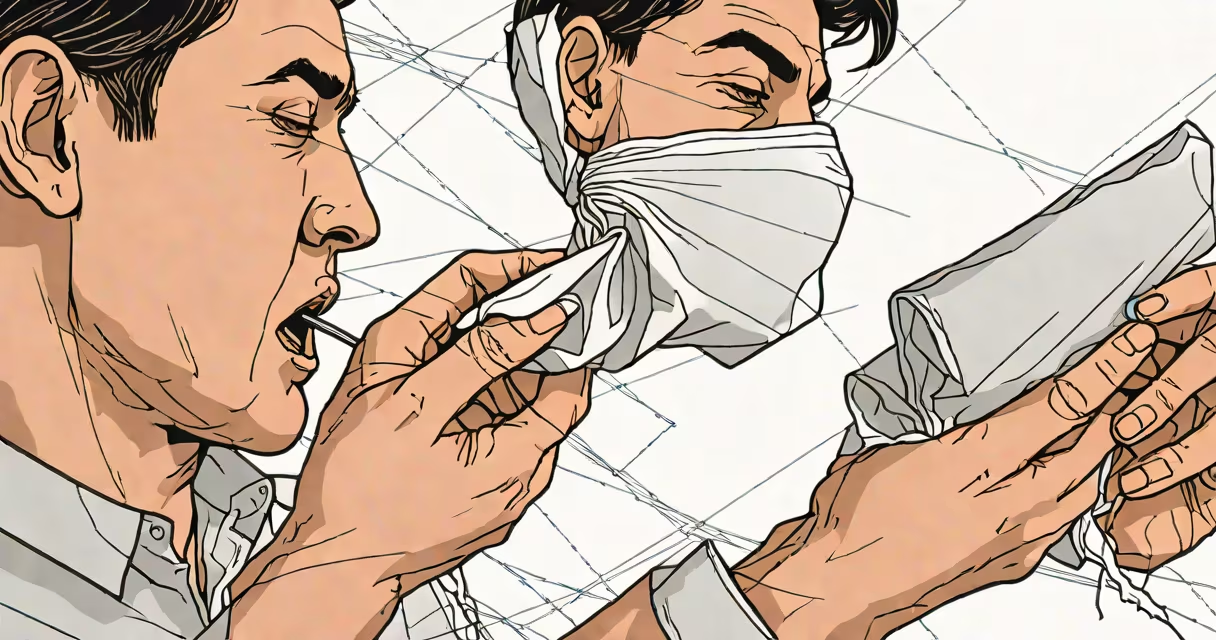
Coughing up blood, medically termed hemoptysis, occurs when blood appears in sputum during coughing. It results from bleeding in the lower respiratory tract, including the trachea, bronchi, or lungs. Hemoptysis is not a diagnosis but a symptom indicating underlying disease.
Hemoptysis ranges from streaks of blood in mucus to large volumes of fresh red blood. While alarming, it's often due to treatable conditions. The severity varies: small amounts may signal minor irritation, while copious bleeding requires urgent evaluation. According to the American Lung Association, hemoptysis affects about 1 in 100 people presenting with respiratory symptoms, with most cases linked to infections or chronic lung diseases.
Blood enters the airway through ruptured capillaries in inflamed or damaged lung tissue. Common triggers include irritation from mucus, inflammation from infection, or structural damage from tumors or trauma. The blood appears bright red because it hasn't had time to oxidize-unlike vomited blood, which turns dark brown due to stomach acid exposure.
When blood originates in the upper airway (nose, sinuses, throat), it typically mixes with saliva and is swallowed. This is called hematemesis if vomited, or epistaxis if from the nose. True hemoptysis involves blood originating below the vocal cords, confirmed via bronchoscopy or imaging.
A 2021 study in *Chest* journal found that 60% of patients with hemoptysis had a history of smoking or chronic bronchitis. This highlights the role of long-term airway irritation in weakening mucosal barriers, making vessels prone to rupture during coughing fits.
The most frequent causes of hemoptysis fall into four categories: infectious, inflammatory, neoplastic (cancer-related), and cardiovascular. Infections account for nearly half of all cases, especially in younger adults.
| Category | Conditions | Prevalence | Key Features |
|---|---|---|---|
| Infectious | Pneumonia, bronchitis, tuberculosis | ~40% | Blood mixed with purulent sputum; fever common |
| Inflammatory | Autoimmune vasculitis (e.g., GPA), pulmonary embolism | ~15% | May present with joint pain, kidney issues, or sudden chest pain |
| Neoplastic | Lung cancer, metastatic tumors | ~10-15% | More common in smokers over 50; persistent cough, weight loss |
| Cardiovascular | Left heart failure, mitral stenosis | ~5% | Blood often frothy; associated with orthopnea and leg swelling |
Tuberculosis remains a leading cause globally, particularly in regions with high prevalence. In the U.S., TB accounts for less than 5% of hemoptysis cases but still warrants testing in high-risk populations. A 2022 CDC report noted that 22% of TB cases in the U.S. presented with hemoptysis, often alongside night sweats and prolonged cough.
One non-obvious distinction: hemoptysis from lung cancer rarely presents with blood alone. It usually accompanies a new or worsening cough, unexplained weight loss, or hoarseness lasting more than two weeks. These signs are red flags requiring prompt imaging.
Confusion arises between hemoptysis and bleeding from the upper GI tract, such as from peptic ulcers or esophageal varices. Vomited blood (hematemesis) appears darker, often coffee-ground in appearance, and is accompanied by abdominal pain or nausea. Distinguishing the source prevents misdiagnosis.
Another common mix-up is blood from the nose or mouth. If blood comes from the gums or nasal passages, it may be mistaken for hemoptysis. A simple test: spit out the blood. If it's from the lungs, it will be expectorated with mucus. If from the mouth, it may be mixed with food or appear clotted.
I once observed a patient who believed they were coughing up blood. After examination, the source was a cracked tooth with gingival bleeding. The blood appeared in phlegm-like consistency but was confirmed to originate in the oral cavity. This case underscores the importance of physical exam and history in differentiating sources.
Any hemoptysis demands evaluation. The threshold for concern is not volume but context. Coughing up more than a teaspoon of blood in 24 hours is a warning sign. So is persistent blood in sputum beyond a week, especially with fevers, unintentional weight loss, or fatigue.
Initial assessment includes a detailed history, physical exam, and chest X-ray. If the X-ray shows abnormalities or risk factors exist, CT scanning follows. Bronchoscopy may be performed to visualize the airways directly and obtain biopsies if needed.
For example, a 58-year-old smoker with a six-week history of cough and blood-streaked sputum underwent a CT scan revealing a 3 cm nodule in the right upper lobe. Biopsy confirmed squamous cell carcinoma. Early detection through hemoptysis led to curative surgery.
While most cases resolve with treatment, delayed care increases mortality. The National Heart, Lung, and Blood Institute reports that untreated lung cancer diagnosed after hemoptysis has a five-year survival rate of 25%, compared to 60% when caught early.
Understanding what causes someone to cough blood begins with recognizing it as a symptom, not a condition. Identifying the source through clinical evaluation improves outcomes. Prompt action leads to accurate diagnosis and effective treatment.